




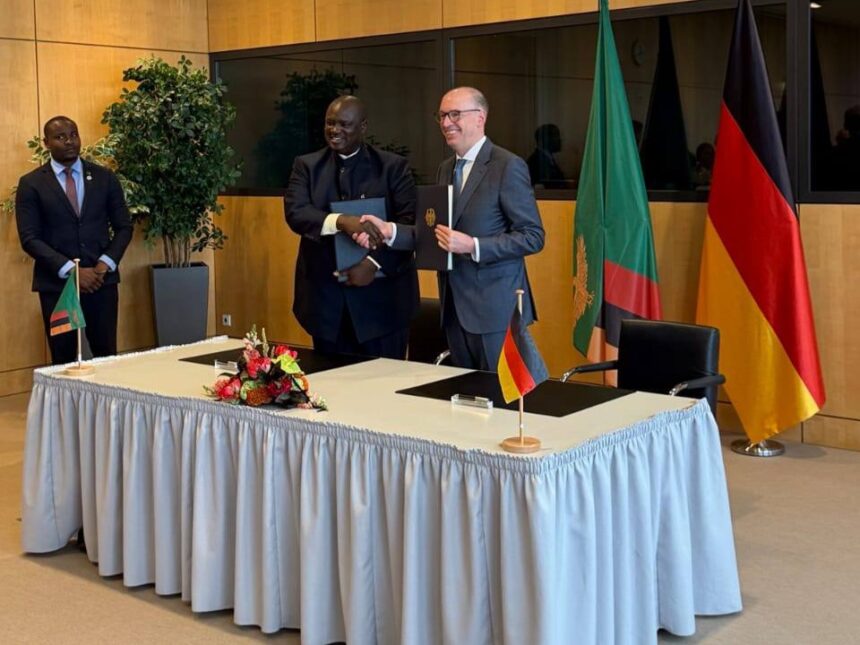
Germany and Zambia have concluded high-level bilateral talks on development cooperation, resulting in a major financial commitment of approximately K1.8 billion from the German government to support Zambia’s development agenda over the next two years. The agreement marks a significant reinforcement of a partnership that has lasted for more than 60 years and continues to evolve in response to changing global and national priorities. According to a statement from the German Embassy, the funding will be delivered through both financial and technical assistance. The support will target key sectors including good governance, access to water and energy, as well as nutrition and food security through climate-resilient agriculture. The talks also focused on aligning development cooperation with Zambia’s Eighth National Development Plan, ensuring that the support directly contributes to national priorities. This renewed partnership reflects a shared commitment to sustainable development and long-term economic resilience.
The bilateral discussions placed strong emphasis on improving governance systems and strengthening public institutions as a foundation for effective development. Both governments agreed that good governance is essential for ensuring accountability, transparency and efficient use of public resources. The German support is expected to enhance institutional capacity and support reforms that improve service delivery across key sectors. In addition, water and energy access were highlighted as critical areas where investment will directly improve living conditions and support economic activity. Zambia continues to face demand pressures in these sectors, making external support a key factor in bridging infrastructure gaps. The cooperation is designed to ensure that development outcomes are both inclusive and sustainable.
A major component of the agreement focuses on climate-smart agriculture and food security, reflecting growing concerns about climate change impacts on agricultural productivity. The German government’s support will help promote sustainable farming practices that increase resilience among smallholder farmers. This includes investment in nutrition programmes and improved agricultural systems that can withstand droughts and changing weather patterns. Zambia’s agricultural sector remains a key pillar of the economy, employing a large portion of the population, particularly in rural areas. Strengthening this sector is expected to improve food security while also increasing household incomes. The cooperation aims to ensure that agricultural development aligns with environmental protection and long-term sustainability goals.
The discussions also highlighted the role of private sector partnerships in driving development outcomes, with a special focus on the contributions made during a Business Day held alongside the negotiations in Berlin. One notable example cited was Liebherr Mining’s involvement in supporting vocational training through initiatives such as the Fountain Gate Crafts and Trades School. This partnership reflects a growing recognition that development cooperation is no longer limited to government-to-government engagement but increasingly includes private sector participation. Skills development and technical training were identified as key areas where industry collaboration can support youth employment and industrial growth. The initiative aims to equip young people with practical skills that match market demands. This approach is expected to strengthen Zambia’s workforce and improve employability across multiple sectors.
Permanent Secretary Mulele M. Mulele emphasized the importance of collaborative partnerships in achieving meaningful development results. He noted that the strengthened cooperation between Zambia and Germany reflects a shared commitment to delivering tangible outcomes for citizens. He further stated that combining government efforts with private sector participation creates stronger and more sustainable development impact. His remarks highlighted the value of aligning international support with Zambia’s national development strategy. He also stressed that partnerships must translate into real improvements in livelihoods, particularly in areas such as jobs, infrastructure and social services. His message reinforced the idea that development cooperation must be practical, inclusive and results-driven.
The German and Zambian governments both reaffirmed their commitment to ensuring that the K1.8 billion support package is effectively implemented and closely monitored. The funding will be directed toward programmes that deliver measurable impact in governance, infrastructure, agriculture and social development. Both sides emphasized the importance of accountability and coordination in ensuring that resources achieve intended outcomes. The partnership is expected to contribute significantly to Zambia’s development trajectory over the next two years, particularly in strengthening resilience against economic and environmental challenges. With this renewed commitment, both countries have signaled their intention to deepen cooperation and build on decades of diplomatic and development engagement. The agreement stands as a clear demonstration of shared priorities and a long-term vision for sustainable growth and prosperity.