
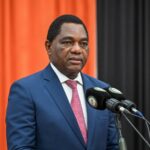



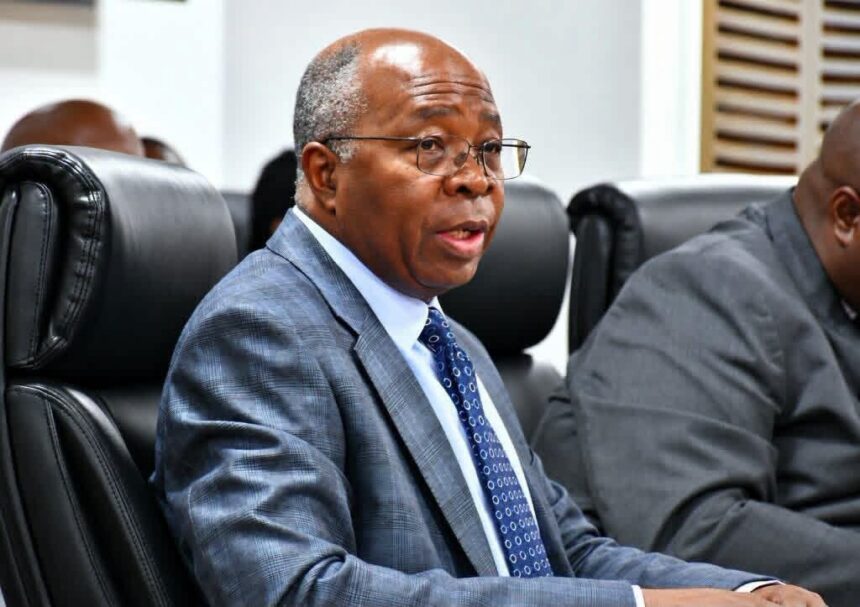
The Government of Zambia released K14.6 billion in September 2026 to finance public services, meet debt obligations, support vulnerable households and fund development programmes. The announcement, highlighted in a statement by Minister of Finance and National Planning Dr. Situmbeko Musokotwane, outlines the government’s priorities as the country continues efforts to strengthen macroeconomic stability and promote inclusive economic growth. The funds cover essential government expenditure, social protection programmes, infrastructure development and payments to domestic and external creditors. The allocation also demonstrates the importance of balancing public spending with responsible debt management and fiscal discipline. Through these financial commitments, the government aims to sustain essential services while creating conditions for increased production, investment and employment across Zambia.
Of the K14.6 billion released in September 2026, K5.4 billion was allocated to the public service wage bill and related obligations. This funding supports the government’s responsibility to meet salary commitments and other employment-related costs within the public sector. Public service workers play an important role in delivering education, healthcare, administration and other essential services to citizens. Ensuring that the government meets its wage obligations helps maintain the functioning of public institutions and supports the livelihoods of employees and their families. The allocation also highlights the significant share of public resources required to maintain government services and meet recurring expenditure commitments.
Another K5.4 billion was directed towards domestic and external debt servicing and the clearance of domestic arrears. This allocation included K4.1 billion for domestic debt servicing, K625.1 million for external debt servicing and K674.2 million to settle outstanding payments owed to local suppliers and contractors. Debt servicing remains a major responsibility for the government because it must meet its financial obligations while continuing to fund public services and development priorities. Clearing domestic arrears is also important because delayed payments can place pressure on businesses that supply goods, services and construction work to government institutions. By releasing funds for these obligations, the government aims to improve payment discipline, support business activity and strengthen confidence in public financial management.
The government also allocated K1.8 billion to transfers, subsidies and social benefits, reflecting the importance of social protection in its expenditure priorities. Of this amount, K857 million went to grant-aided institutions, including hospitals and universities. A further K435.8 million was allocated to the Social Cash Transfer Programme, while K200 million supported the Food Security Pack Programme. The Local Authorities Equalisation Fund received K120.8 million to help local authorities meet their responsibilities and provide services within their jurisdictions. These allocations support different groups and institutions, from vulnerable households and small-scale farmers to students, patients and communities that depend on public services.
The Social Cash Transfer Programme remains an important part of Zambia’s social protection system because it provides financial assistance to eligible vulnerable households. Such support can help beneficiaries meet basic needs, including food and other essential household expenses. The Food Security Pack Programme is intended to assist eligible farming households with agricultural inputs and strengthen their ability to produce food. Support for grant-aided hospitals and universities helps these institutions meet operational needs and continue delivering healthcare and education services. Together, these allocations illustrate how government spending can address immediate social needs while supporting longer-term human development and household resilience.
Government operations and programmes received K1.5 billion in September 2026. The Treasury released these funds to ministries, provinces and other government agencies to support their activities and responsibilities. The allocation included K441.2 million for general operations, which helps public institutions meet their routine administrative and operational costs. A further K101.1 million was set aside for expenditure related to the 2026 General Elections. The government also allocated K64.4 million to the Geological Mapping Exercise, which is intended to support mineral exploration and investment by improving geological information available for the country’s mineral resources.
The Geological Mapping Exercise is particularly relevant to Zambia’s efforts to strengthen its mining sector and attract investment. Reliable geological information can help identify areas with mineral potential and give investors a stronger basis for assessing exploration opportunities. Mineral exploration can contribute to economic activity through investment, employment and demand for supporting services, although actual benefits depend on exploration results, project development and market conditions. Funding for geological mapping therefore represents an investment in information that may support future decisions about mineral development. Its wider economic impact will depend on how effectively the government uses the resulting data to encourage responsible exploration and productive investment.
Capital expenditure accounted for K526.9 million of the September releases, with a substantial share directed towards infrastructure development. Road infrastructure received K459.9 million, while K67 million was allocated to infrastructure projects in various ministries. Investment in roads can improve transport connections, reduce travel difficulties and help businesses move goods between production areas and markets. Better infrastructure can also improve access to schools, healthcare facilities and other essential services, particularly in communities where transport remains a challenge. The effectiveness of this spending will depend on project implementation, cost control, maintenance planning and the timely completion of funded works.
The September expenditure figures show that the government is attempting to meet several competing financial responsibilities at the same time. Public sector wages, debt obligations, social protection, government operations and infrastructure all require funding, yet available public resources remain subject to revenue constraints and other fiscal pressures. Fiscal discipline involves making spending decisions that reflect these limitations while protecting essential services and meeting legally binding financial obligations. Responsible debt management also requires the government to plan repayments carefully and limit the accumulation of new arrears. Maintaining this balance is important as Zambia works to consolidate macroeconomic stability and encourage sustainable economic growth.
Dr. Situmbeko Musokotwane also highlighted the restoration of excise duty on fuel as a measure intended to ease fiscal pressures arising from the war in the Middle East. International conflicts can disrupt energy markets and contribute to uncertainty over fuel prices and government expenditure. Changes in fuel taxation can affect public revenue, although their broader effects also depend on international oil prices, exchange rates and domestic fuel pricing arrangements. According to the minister’s statement, restoring the duty will help sustain funding for important public programmes, including free education, school feeding and social cash transfers. The policy reflects the government’s effort to protect spending on essential services while responding to external economic pressures.
Free education and school feeding remain important areas of public expenditure because they affect access to education and the welfare of learners. Free education helps reduce direct schooling costs for families, while school feeding can provide meals to participating learners and support their ability to attend and engage in lessons. Social cash transfers complement these measures by helping eligible households manage basic expenses. Sustaining such programmes requires reliable public revenue and careful budget planning, particularly when economic conditions create additional spending pressures. The restoration of fuel excise duty is therefore presented as part of a broader effort to maintain funding for social programmes, although the overall impact will depend on revenue performance and expenditure management.
The minister also confirmed that consultations on the 2027 National Budget and the 2027 to 2029 Medium-Term Budget Plan had concluded. These consultations provide an opportunity for stakeholders to share views on the country’s spending priorities, revenue policies and development needs. The government will analyse the submissions with the aim of strengthening expenditure prioritisation, accountability and value for money. These considerations are important because a national budget must allocate limited resources across multiple demands, including healthcare, education, infrastructure, social protection and debt obligations. Careful assessment of public submissions can help inform budget decisions, although the final measures will depend on the government’s analysis and policy choices.
Detailed revenue and expenditure measures for 2027 will be announced when the National Budget is presented to Parliament. The minister also emphasised that the 2026 Budget remains under implementation, meaning the current budget continues to guide government spending and revenue management. The distinction between the two budget periods is important because preparations for 2027 do not replace existing commitments under the 2026 Budget. The government must continue implementing approved programmes while assessing the resources available for the next financial year. The eventual 2027 Budget will provide a clearer picture of proposed revenue measures, spending priorities and the government’s plans for managing public finances over the coming period.
The K14.6 billion released in September 2026 provides a broad picture of Zambia’s immediate public finance priorities under the Ministry of Finance and National Planning. The allocations cover public service wages, debt servicing, domestic arrears, social benefits, government operations and infrastructure investment. They also demonstrate the government’s stated intention to maintain essential services while pursuing fiscal discipline and responsible debt management. The restoration of fuel excise duty and preparations for the 2027 National Budget further highlight the need to balance revenue generation with social protection and development objectives. Ultimately, the success of these measures will depend not only on the amounts released but also on transparent spending, timely implementation, effective oversight and measurable improvements in the lives of Zambians.