



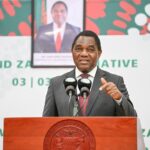




Zambia has strengthened its regional cooperation on sustainable finance after hosting a high-level delegation from Botswana for a three-day knowledge exchange focused on financing climate resilience, biodiversity conservation and sustainable development. The engagement took place from 2 to 4 September 2026 and brought together Zambia’s Securities and Exchange Commission (SEC), Government representatives, the United Nations Development Programme (UNDP) and private sector stakeholders. The discussions provided an opportunity for Botswana and Zambia to share practical experiences on using financial markets to support environmental and development priorities. The exchange also highlighted the growing role of capital markets in mobilising funding for projects that address climate change and protect natural resources. With both countries facing increasing pressure to finance sustainable development, the engagement created a platform for stronger regional cooperation and the development of innovative financial solutions.
The knowledge exchange brought together stakeholders from both countries, including representatives of the Kavango Zambezi Trans Frontier Conservation Area (KAZA TFCA) Secretariat. KAZA TFCA is a major regional conservation initiative that spans several southern African countries and requires sustainable financing to support conservation, communities and ecosystem protection. Bringing the KAZA TFCA Secretariat into the discussions helped connect capital market development with the practical financing needs of biodiversity and conservation programmes. Participants were able to examine how financial instruments can support environmental protection while also contributing to broader economic development. The discussions therefore extended beyond traditional conservation funding and considered ways to integrate sustainability into wider financial and investment systems.
Sustainable finance was a central focus of the engagement as stakeholders considered how Zambia and Botswana can expand access to funding for projects that deliver environmental and social benefits. Sustainable finance can help direct capital towards areas such as renewable energy, climate adaptation, sustainable infrastructure, conservation and responsible resource management. For countries seeking to strengthen economic growth while responding to climate and environmental pressures, these financing mechanisms can provide additional options beyond conventional public funding. The knowledge exchange allowed participants to compare approaches and identify practical lessons that could support the development of stronger sustainable finance markets. It also created an opportunity for stakeholders to consider how regulators, government institutions, financial institutions and investors can work together to increase the flow of capital into sustainable projects.
Green bonds formed part of the discussions as stakeholders explored opportunities to use capital markets to finance projects with measurable environmental benefits. Green bonds can allow governments, financial institutions and other eligible issuers to raise funds from investors for projects linked to areas such as clean energy, climate resilience, sustainable transport and environmental conservation. Developing credible green bond markets requires clear standards, strong reporting systems and investor confidence in how funds are used. The Zambia and Botswana engagement provided an opportunity to exchange experiences on these issues and consider how regional cooperation could help strengthen green finance. Greater coordination in this area could support the development of investment opportunities that contribute to both economic growth and environmental sustainability.
Another important area of discussion was conservation finance, which is becoming increasingly important as governments and conservation organisations seek long-term funding for biodiversity protection. Traditional funding sources can struggle to meet the scale of financing required to manage protected areas, support wildlife conservation and maintain ecosystems. Conservation finance seeks to develop mechanisms that can generate or mobilise sustainable funding while supporting measurable conservation outcomes. The participation of the KAZA TFCA Secretariat brought a practical regional perspective to these discussions because the conservation area requires coordinated approaches across national borders. Exploring innovative financing mechanisms could help create more predictable resources for conservation while strengthening the economic sustainability of communities and ecosystems connected to the region.
The engagement also considered the implementation of green taxonomies, an important component of developing credible sustainable finance markets. A green taxonomy provides a framework for identifying economic activities that can be considered environmentally sustainable based on defined criteria. Such frameworks can help financial institutions and investors distinguish between activities that contribute meaningfully to environmental objectives and those that may create misleading sustainability claims. Effective implementation can also improve transparency and help direct investment towards projects that support climate and environmental priorities. Sharing practical experiences on green taxonomy development and implementation therefore gives countries an opportunity to learn from one another while adapting international approaches to their own economic and environmental circumstances.
The discussions around sustainable finance instruments also highlighted the importance of creating financial systems that can respond to emerging development needs. Governments across the region need significant investment to strengthen climate resilience, protect biodiversity and support sustainable economic activity. Public resources alone may not be sufficient to meet these requirements, which increases the importance of mobilising private capital through appropriate financial instruments. Capital markets can provide mechanisms for connecting investors with projects that require long-term funding, provided that strong regulatory and governance frameworks are in place. The knowledge exchange therefore focused not only on individual financial products but also on the broader systems needed to make sustainable finance credible, transparent and accessible.
KAZA’s proposed conservation financing mechanisms added another significant dimension to the engagement. The initiative requires innovative approaches that can support conservation across borders while recognising the economic and social needs of communities living within or around the conservation landscape. Financing mechanisms linked to KAZA could help address some of the long-term funding challenges associated with biodiversity protection and sustainable ecosystem management. Regional cooperation is particularly important because conservation areas do not follow political boundaries and require countries to coordinate their approaches. The discussions between Zambia and Botswana could therefore contribute to wider efforts to establish financing solutions that support both conservation priorities and sustainable development across the KAZA region.
The involvement of private sector stakeholders was also important because sustainable finance depends on more than government policy and public funding. Banks, investors, financial institutions and businesses can play a major role in developing and financing projects that meet environmental and sustainability objectives. Their participation can help identify market opportunities, understand investor requirements and develop financial products that are commercially viable while delivering measurable sustainability outcomes. Regulatory institutions such as the Securities and Exchange Commission also have an important role in creating conditions that promote transparency, investor protection and confidence in emerging financial instruments. Cooperation between the public and private sectors can therefore help turn sustainable finance strategies into practical investment opportunities.
The three-day knowledge exchange reflects a broader recognition that regional cooperation can strengthen the ability of African countries to respond to shared climate and environmental challenges. Zambia and Botswana have important natural resources and biodiversity assets, but protecting these resources requires long-term financing and coordinated planning. By sharing experiences and examining successful approaches, both countries can identify opportunities to strengthen their financial systems and develop new sources of sustainable investment. The participation of regional initiatives such as KAZA TFCA also demonstrates how conservation and financial development can be considered together rather than as separate policy areas. These connections are increasingly important as countries seek development models that support economic growth while protecting natural resources for future generations.
The engagement from 2 to 4 September 2026 has therefore created a stronger foundation for continued cooperation between Zambia and Botswana on sustainable finance, biodiversity funding and capital market development. The exchange brought together regulators, government institutions, development partners, private sector stakeholders and conservation representatives around shared financing challenges. Its focus on green bonds, conservation finance, green taxonomy implementation and other sustainable finance instruments could support further work to mobilise capital for climate resilience and biodiversity protection. The discussions around KAZA’s proposed conservation financing mechanisms also demonstrate the potential for financial innovation to support regional conservation priorities. Continued collaboration will be important if the ideas discussed during the exchange are to develop into practical financing mechanisms that attract investment, strengthen environmental resilience and support sustainable development across the region.