







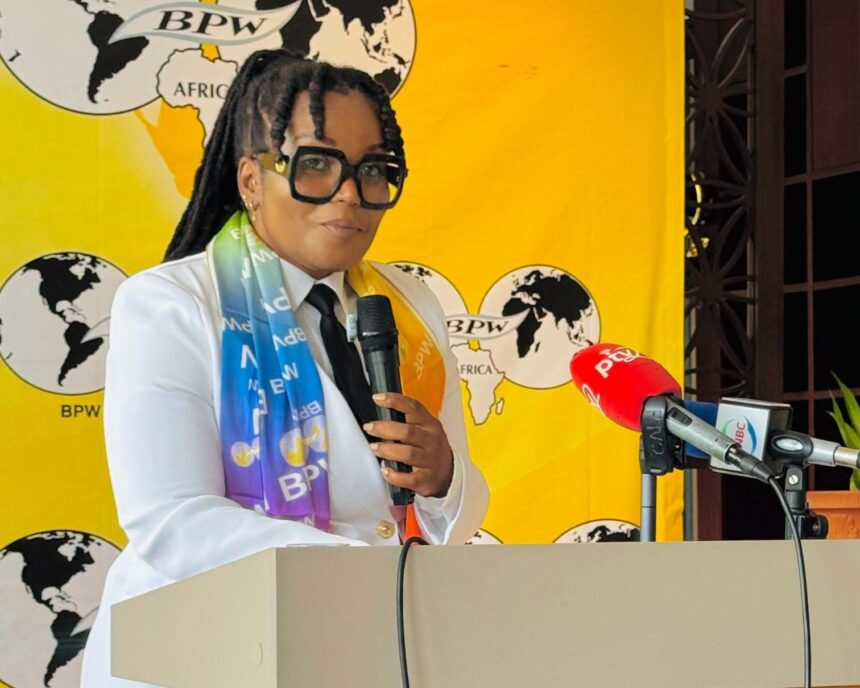
Minister of Trade and Exports, Hon. Dr. Caroline Katotobwe, has called for greater participation of women in Africa’s economic transformation, emphasising the need to create an environment where women can contribute fully to trade, entrepreneurship, manufacturing and other productive sectors. Speaking at the official opening of the 2026 Business and Professional Women (BPW) Africa Regional Conference in Lusaka, Dr. Katotobwe said women have an important role to play in driving sustainable economic growth across the continent. She reaffirmed the Government’s commitment to placing women at the centre of economic development, particularly in key sectors identified under the Grow Zambia Agenda. Her remarks highlighted the importance of creating practical opportunities that enable women to establish businesses, expand existing enterprises and participate meaningfully in national and regional economies. The conference brought together women leaders, entrepreneurs, policymakers and business professionals from more than 21 countries to discuss ways of strengthening women’s leadership and economic empowerment in Africa.
Dr. Katotobwe observed that empowering women economically requires more than simply creating opportunities or encouraging them to participate in business activities. Women must also have access to essential resources that allow them to build sustainable enterprises and compete effectively in the marketplace. These include affordable financing, business development skills, reliable markets, technology and productive resources. Without access to these opportunities, many women entrepreneurs may struggle to expand their businesses or move into larger and more competitive markets. The Minister therefore emphasised the need for policies and programmes that address the practical challenges women face while pursuing economic opportunities.
The Minister’s remarks also reinforced the importance of women’s participation in key sectors of the Zambian economy. Women contribute to economic activities across agriculture, manufacturing, trade, services and entrepreneurship, yet their full potential depends on access to resources and opportunities. Increasing their participation in these sectors can support business growth, create employment and strengthen household incomes. It can also help diversify the economy by encouraging more people to participate in productive activities. Under the Grow Zambia Agenda, the Government’s commitment to women’s economic empowerment reflects the broader objective of ensuring that economic development benefits different groups within society.
Access to finance remains one of the important issues affecting women-owned businesses across Africa. Many entrepreneurs require capital to purchase equipment, acquire raw materials, employ workers and expand their operations. However, limited access to affordable financing can prevent promising businesses from moving beyond small-scale operations. Improving access to financial services and suitable funding opportunities can help women entrepreneurs strengthen their businesses and become more competitive. Dr. Katotobwe’s emphasis on finance and resources therefore speaks to the need for practical interventions that support women throughout their business development journeys.
Market access is another important factor in strengthening women’s economic participation. Producing quality goods and services is not enough if entrepreneurs cannot reach customers or secure reliable business opportunities. Women-owned enterprises need opportunities to participate in local supply chains, regional markets and international trade. Better access to market information, business networks and trade platforms can help women identify customers and establish partnerships beyond their immediate communities. Strengthening these connections can also support the growth of small and medium-sized enterprises while increasing women’s contribution to national exports.
Speaking at the conference, BPW Secretary General Gertrude Mongella challenged delegates to set ambitious targets that would translate into meaningful economic opportunities for women across Africa. She stressed that discussions, declarations and commitments must lead to practical actions that improve women’s participation in business and leadership. Her message highlighted the need for measurable progress rather than relying on statements of support that do not produce tangible results. Women entrepreneurs and professionals need programmes that address real challenges, including limited financing, restricted market access and barriers to leadership positions. Setting clear targets can help organisations and governments assess progress and remain accountable for their commitments to women’s economic advancement.
Mongella’s call for practical action also reflects the importance of collaboration among governments, private sector institutions and organisations that promote women’s professional development. Economic empowerment requires more than individual determination because businesses operate within broader economic and regulatory environments. Governments can create supportive policies, financial institutions can improve access to suitable funding and private sector companies can provide opportunities through partnerships and supply chains. Professional organisations can also help women develop leadership skills, strengthen networks and share business knowledge. Working together can create a more supportive environment for women to establish successful enterprises and participate in decision-making.
Former BPW International President, Dr. Amany Asfour, also called on African countries to move beyond exporting raw materials and focus on producing and trading value-added Made in Africa products. She observed that the continent possesses significant resources and economic potential but needs to invest more in local production, innovation and industrial development. Her remarks highlighted the importance of transforming locally available resources into finished products that can compete in domestic and international markets. Rather than relying heavily on the export of unprocessed commodities, African countries can create additional economic value by strengthening manufacturing and processing industries. This approach can help retain more wealth within the continent while creating employment and business opportunities for local communities.
The call for increased value addition is particularly relevant to Africa’s efforts to strengthen its position in global trade. Many African economies have substantial natural and agricultural resources that can support the development of competitive industries. However, producing finished goods requires investment in technology, infrastructure, skilled labour and reliable production systems. Developing these capabilities can allow local businesses to participate in more stages of the production and distribution process. It can also create opportunities for women entrepreneurs to establish manufacturing businesses, develop innovative products and supply goods to regional and international markets.
The promotion of Made in Africa products also offers an opportunity to strengthen intra-African trade. By producing more goods locally and supporting businesses across national borders, African countries can increase economic cooperation and reduce dependence on imported finished products. Regional trade can provide growing enterprises with larger markets and opportunities to expand their operations. Women-owned businesses can benefit from these opportunities by participating in agricultural processing, textiles, food production, packaging and other manufacturing activities. Stronger regional supply chains can also encourage investment, improve business competitiveness and support industrial development across the continent.
The 2026 BPW Africa Regional Conference provides an important platform for addressing these issues through discussions, professional networking and the exchange of experiences. Bringing together delegates from more than 21 countries creates opportunities for women leaders and entrepreneurs to learn from different economic environments and business experiences. Participants can explore practical ways of overcoming barriers to women’s participation in economic activities while identifying opportunities for cooperation. The presence of policymakers and business professionals also creates an opportunity to connect policy discussions with the realities facing women-owned enterprises. Such engagements can help develop partnerships that support business expansion, leadership development and economic inclusion.
The conference theme, centred on advancing women’s leadership, economic empowerment and participation in Africa’s transformation, reflects the growing recognition that women must be active contributors to the continent’s development. Women’s leadership is important not only within businesses but also in government institutions, professional organisations and economic policymaking. When women participate in decision-making, they bring valuable experiences and perspectives that can contribute to more inclusive development strategies. Supporting women in leadership also creates opportunities for mentorship and professional growth among younger generations. These efforts can help build a stronger network of women leaders capable of influencing economic policies and driving business innovation.
For Zambia, hosting the BPW Africa Regional Conference in Lusaka provides an opportunity to highlight the country’s commitment to women’s economic participation and regional cooperation. The discussions align with the need to strengthen entrepreneurship, expand trade and support productive industries under the Grow Zambia Agenda. By bringing together representatives from different African countries, the conference also creates opportunities to explore partnerships that can benefit Zambian businesses and entrepreneurs. Women involved in agriculture, manufacturing, services and other sectors can gain from stronger professional networks and exposure to new business ideas. The gathering therefore extends beyond a conference setting by creating opportunities for future cooperation and economic engagement.
The three-day conference also draws attention to the importance of ensuring that women have the skills and resources needed to benefit from Africa’s changing economic landscape. As technology, regional trade and industrial development create new business opportunities, entrepreneurs must be equipped to respond to changing market demands. Skills development, digital access, innovation and business management training can help women improve productivity and strengthen their competitiveness. Access to professional networks can also support knowledge sharing and create opportunities for collaboration. These areas require sustained attention from governments, financial institutions and development partners if women’s economic participation is to increase meaningfully.
The messages delivered by Dr. Caroline Katotobwe, Gertrude Mongella and Dr. Amany Asfour highlight three closely connected priorities for Africa’s economic future. Women need access to finance, skills and markets to participate fully in economic activities. Their involvement must be supported by practical policies, measurable commitments and opportunities for leadership. At the same time, African countries must strengthen local production and value addition to create more wealth, jobs and competitive businesses within the continent. These priorities demonstrate that women’s empowerment and industrial development should be treated as connected parts of Africa’s broader economic transformation.
The 2026 BPW Africa Regional Conference has placed women’s economic empowerment firmly within discussions about Africa’s future growth and development. Dr. Katotobwe’s call for greater participation, Mongella’s emphasis on practical action and Asfour’s appeal for value-added Made in Africa products provide an important direction for policymakers and business leaders. The challenge now is to turn these discussions into policies, investments and partnerships that produce measurable results. Women must have the resources and opportunities to build successful businesses, access larger markets and occupy influential leadership positions. By investing in women’s potential and strengthening local industries, African countries can create more inclusive economies, generate employment and build a stronger foundation for sustainable economic transformation.