






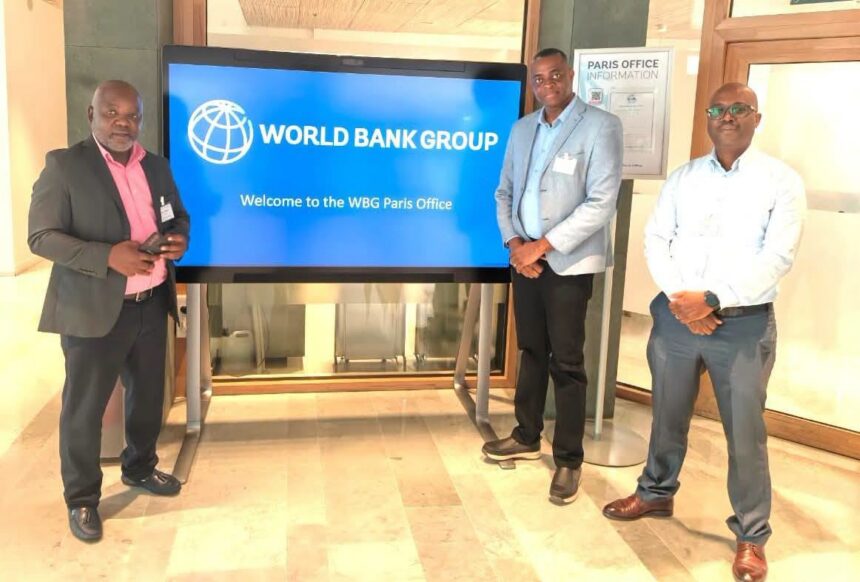
Zambia is stepping up its role in global climate discussions as it participates in high-level talks on green carbon finance in Paris, France. The engagement brings together government representatives, development partners, and technical experts focused on improving how forest-based carbon finance is designed and implemented. The Ministry of Green Economy and Environment is leading Zambia’s delegation at the Joint Green Carbon Funds Meeting hosted at the World Bank Country Office from 29 June to 2 July 2026. The discussions focus on how countries can scale up climate finance through structured and results-based programmes. This participation reflects Zambia’s growing commitment to climate action and sustainable development.
Zambia’s delegation includes key technical experts working on forest management and climate monitoring systems. The team features Mr. Noel Muchimba, Programme Coordinator for the Eastern Province Jurisdictional Sustainable Landscape Programme (EP-JSLP), Mr. Arthur Asumani, MRV Technical Officer, and Mr. John Banda, National Coordinator for TRALARD II. These officials bring technical expertise in emissions tracking, forest conservation, and programme coordination. Their presence ensures that Zambia contributes practical experience from ongoing national projects. It also allows the country to gain insights that can improve implementation on the ground.
The Joint Green Carbon Funds Meeting brings together several major global climate finance initiatives, including the Forest Carbon Partnership Facility (FCPF), the BioCarbon Fund Initiative for Sustainable Forest Landscapes (ISFL), Scaling Climate Action by Lowering Emissions (SCALE), and Enable. These platforms focus on supporting countries to reduce emissions from deforestation and forest degradation while promoting sustainable forest use. The meeting also addresses how to strengthen forest carbon stocks through better land management practices. Participants exchange lessons on how to implement jurisdictional REDD+ programmes more effectively. These discussions aim to improve the delivery of carbon finance at scale.
A major focus of the meeting is improving how countries measure, report, and verify emissions reductions linked to forests. This process, known as MRV, is essential for ensuring transparency and credibility in carbon finance systems. Delegates are sharing technical approaches that improve accuracy in tracking forest changes and carbon storage. The discussions also highlight challenges such as data limitations, funding gaps, and coordination between institutions. Countries are working together to identify practical solutions that can strengthen programme delivery and results-based payments.
The meeting also provides a platform for sharing success stories and innovative approaches from different regions. Countries are learning from each other on how to balance environmental protection with community development needs. The exchange of experiences helps improve policy design and implementation strategies for forest conservation programmes. Zambia is using the platform to showcase its ongoing efforts in sustainable landscape management and climate resilience. At the same time, it is absorbing lessons that can be applied to improve national programmes.
Through its participation, Zambia is reinforcing its commitment to advancing sustainable forest management and expanding access to green carbon finance. The Ministry of Green Economy and Environment views these engagements as critical for strengthening low-emission development pathways. By contributing to global discussions, Zambia is positioning itself as an active player in climate solutions that support both environmental protection and economic growth. The knowledge gained from the meeting is expected to improve national programmes like EP-JSLP and TRALARD II. This will help ensure more effective implementation and stronger outcomes for forest-dependent communities.
The engagement in Paris highlights Zambia’s broader ambition to build resilient ecosystems and support sustainable livelihoods. Stronger partnerships with international climate finance institutions will help the country scale up its environmental programmes. The discussions also underline the importance of collaboration in addressing global climate challenges that no single country can solve alone. Zambia’s involvement signals steady progress toward integrating science-based approaches into national environmental planning. It also reflects a long-term vision of greener development supported by effective carbon finance systems.