






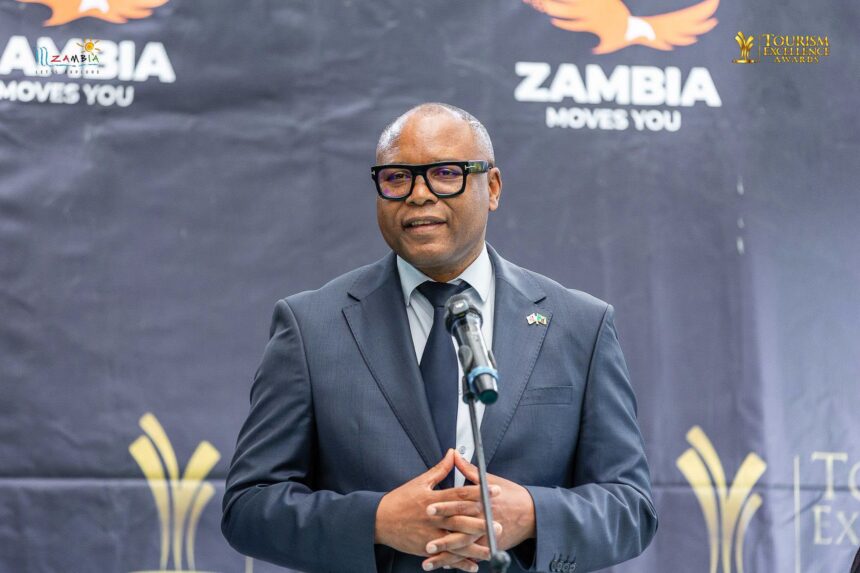
The Ministry of Tourism has called on tourism and hospitality operators across Zambia to improve service delivery, invest in professional development and provide consistently high-quality visitor experiences as the country works towards attracting five million international tourists annually by 2031. The government believes that improving the quality of services offered to visitors will be essential to strengthening Zambia’s reputation as a competitive tourism destination. The call comes as the country prepares for the fourth edition of the Tourism Excellence Awards, an initiative designed to recognise businesses, professionals and institutions that demonstrate outstanding performance in the tourism industry. Speaking during a media briefing in Lusaka, Ministry of Tourism Permanent Secretary Mr Evans Muhanga emphasised that attracting international visitors must go hand in hand with delivering experiences that encourage them to return. His message highlights the importance of customer satisfaction, professionalism and innovation in achieving Zambia’s long-term tourism development ambitions.
Mr Muhanga said tourism businesses must recognise that the quality of service visitors receive plays a major role in shaping their overall impression of a destination. Tourists consider several factors when choosing where to travel, including accommodation, customer service, transport, food, safety and the quality of available attractions. Even destinations with exceptional natural attractions can struggle to build a strong reputation if visitors experience poor service or inconsistent standards. Zambia therefore needs tourism operators who understand the importance of creating welcoming, reliable and memorable experiences. According to Mr Muhanga, attracting visitors represents only one part of the country’s tourism ambitions, while encouraging repeat visits and positive recommendations will be equally important.
The government’s target of attracting five million international tourist arrivals by 2031 represents an ambitious objective for Zambia’s tourism sector. The country has considerable tourism potential, supported by its natural landscapes, wildlife, national parks, cultural heritage and adventure tourism opportunities. Victoria Falls remains one of Zambia’s most recognised attractions, drawing visitors interested in natural scenery and adventure activities. The country also offers opportunities for wildlife viewing, birdwatching, cultural tourism and outdoor experiences across different regions. However, turning this potential into sustained growth will require more than promoting attractions internationally. Tourism businesses must ensure that visitors receive quality services throughout their journeys, from arrival and transportation to accommodation, dining and guided activities.
One of the key priorities identified by the Ministry of Tourism is investment in staff training and professional development. Employees working in hotels, lodges, restaurants, travel companies and tourism facilities have a direct influence on the visitor experience. Well-trained staff can communicate effectively, respond to customer needs, handle complaints professionally and provide accurate information about local attractions. Training also helps businesses maintain consistent standards across different departments and improve operational efficiency. As Zambia seeks to attract more international tourists, tourism operators will need employees who understand international hospitality expectations while maintaining the warmth and cultural identity that make the country distinctive.
Innovation is another area that Mr Muhanga encouraged tourism operators to embrace. The tourism industry continues to evolve as travellers increasingly use digital platforms to research destinations, compare accommodation options and organise their trips. Businesses that adopt modern booking systems, improve online communication and use digital marketing effectively can reach wider audiences. Technology can also help operators manage reservations, respond to customer feedback and improve the efficiency of their services. However, innovation should not be limited to technology alone. Tourism businesses can also introduce creative experiences, improve service delivery methods and develop products that respond to changing visitor interests.
The Ministry’s emphasis on recognised industry standards also reflects the need to strengthen professionalism across Zambia’s tourism and hospitality sector. Consistent standards help visitors understand what level of service to expect when booking accommodation, using transport services or participating in organised tourism activities. They also encourage businesses to improve hygiene, safety, customer care and operational management. Maintaining high standards can help build trust among international travellers who may be unfamiliar with local service providers. For Zambia to compete effectively with established tourism destinations, quality assurance must become an important part of everyday business operations.
The fourth edition of the Tourism Excellence Awards is expected to play an important role in encouraging these improvements. Zambia Tourism Agency Acting Chief Executive Officer Ms Abigail Shansonga said the awards provide a national platform for recognising businesses and professionals who deliver distinctive visitor experiences and demonstrate high standards within the industry. The initiative aims to celebrate organisations and individuals whose work contributes to the development and competitiveness of Zambia’s tourism sector. Recognition through the awards can also encourage businesses to invest in service improvements and adopt practices that benefit visitors. By highlighting successful operators, the awards can help demonstrate what excellence looks like across different areas of tourism.
Ms Shansonga also encouraged the media to highlight the achievements of tourism businesses and professionals while inviting members of the public to participate in the voting process. Public participation provides an opportunity for people to recognise businesses that have delivered positive experiences and contributed to the country’s tourism industry. The media also has an important role in promoting Zambia’s tourism products, sharing success stories and raising awareness about the country’s attractions. Positive coverage can help strengthen the visibility of local tourism operators and introduce potential visitors to experiences they may not have previously considered. Greater public engagement can therefore help make the Tourism Excellence Awards an important national event for the wider tourism community.
Tourism Council of Zambia Chairperson Ms Glyden Mungaila also stressed the importance of closer collaboration between the government and private sector. She called for stronger cooperation to improve professionalism and develop sustainable, competitive tourism products. The tourism industry depends on different businesses and institutions working together to deliver a complete visitor experience. Hotels, tour operators, transport providers, restaurants, travel agencies and attraction managers all contribute to how tourists experience a destination. When these stakeholders coordinate their efforts, they can improve service quality, address industry challenges and create more attractive travel packages. Strong public-private partnerships can also support investment, infrastructure development and the growth of tourism businesses across the country.
The development of sustainable tourism products will be particularly important as Zambia works towards its 2031 target. Sustainable tourism encourages businesses to protect natural resources, respect local communities and ensure that tourism activities generate long-term economic benefits. Zambia’s wildlife areas, national parks and natural attractions are valuable assets that require responsible management. Tourism operators must balance commercial activities with environmental protection and the preservation of cultural heritage. Sustainable practices can also create opportunities for local communities to participate in tourism through employment, cultural experiences and the supply of goods and services. By making sustainability part of tourism development, Zambia can strengthen its appeal to travellers who value responsible and environmentally conscious travel.
This year’s Tourism Excellence Awards will feature 28 categories covering individuals, enterprises and institutions across the industry. The categories recognise achievements in service delivery, innovation, professionalism and sustainability. This broad approach reflects the different contributions required to build a successful tourism sector. Excellence in tourism is not limited to luxury hotels or large travel companies. It also depends on tour guides, smaller accommodation providers, local tourism enterprises and professionals who interact directly with visitors. Recognising achievements across these areas can encourage wider participation and motivate businesses of different sizes to improve their performance.
The awards ceremony is scheduled to take place on 21 November 2026 at Ciela Resort under the theme “Celebrating Excellence-Driving Zambia’s Tourism Future.” The event will bring attention to the businesses, professionals and institutions contributing to the development of the country’s tourism industry. It also provides an opportunity for stakeholders to reflect on the progress made in improving service delivery and identify areas that require further investment. Celebrating excellence can create healthy competition among operators while encouraging businesses to learn from successful industry practices. The event is therefore expected to support the wider conversation about raising standards and positioning Zambia as a preferred destination for international travellers.
For tourism businesses, the government’s message presents an important opportunity to review their operations and identify practical ways to improve customer satisfaction. Operators can strengthen their services by training employees, maintaining facilities, responding to visitor feedback and ensuring that advertised services match what customers receive. Businesses should also consider how they can use digital platforms to make travel planning and bookings easier. Small improvements in communication, cleanliness, reliability and customer care can have a significant effect on how visitors evaluate their experiences. Consistency will be especially important as Zambia welcomes more tourists from different countries and cultural backgrounds.
The success of Zambia’s five million international tourist arrivals target will ultimately depend on cooperation across the entire tourism value chain. Government policies and international marketing can attract attention, but tourism businesses must deliver the experiences that turn interest into actual visits and encourage travellers to return. Investment in infrastructure, skills development, innovation and sustainable tourism will remain essential. The Tourism Excellence Awards provide a platform to recognise those already contributing to these goals while encouraging others to raise their standards. Zambia has the natural attractions and tourism potential to strengthen its position in the international travel market, but maintaining high service quality will be central to achieving lasting success. As the country moves towards 2031, excellence in hospitality, professionalism and sustainable tourism development must remain at the heart of its strategy to become a leading African tourism destination.