







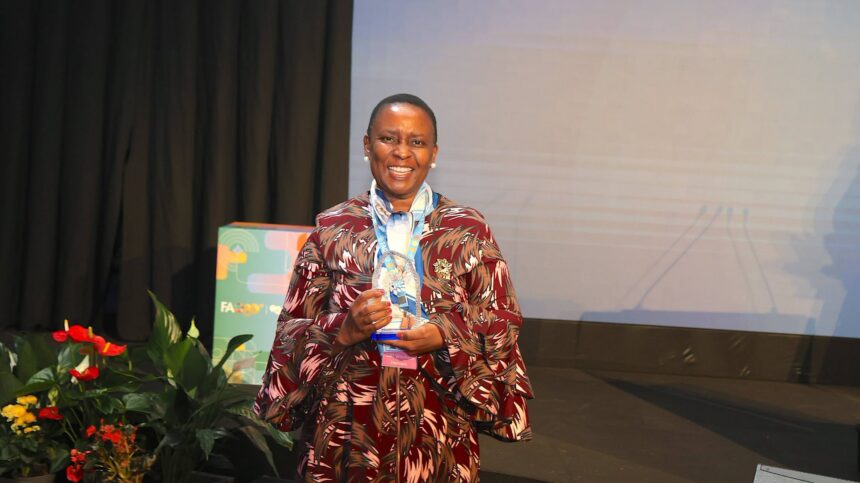
Zambian agribusiness leader Grace Tumeo Bwanali has earned international recognition for her contribution to agricultural development, food security and rural livelihoods after being named among the Food and Agriculture Organization of the United Nations (FAO) 100 Women Heroes in Agrifood Systems and Rural Development. The prestigious initiative celebrates women whose leadership, innovation and dedication are helping transform agriculture and improve lives in communities around the world. The recognition forms part of activities marking the International Year of the Woman Farmer 2026, which highlights the vital role women play in agricultural production and sustainable food systems. Bwanali’s achievement places Zambia among the countries represented in this global celebration of women’s leadership and agricultural excellence. It also highlights the importance of investing in agricultural innovation, strengthening farming communities and creating opportunities for women to participate fully in the agrifood sector.
The award was presented at FAO Headquarters in Rome by FAO Director-General Qu Dongyu, recognising 100 women whose work has contributed to agricultural progress and rural development across different regions. The honourees represent a wide range of professions, including farming, scientific research, entrepreneurship, community development and agribusiness management. Their experiences demonstrate that transforming food systems requires leadership at every level, from smallholder farms to major agricultural companies and international institutions. Bwanali’s inclusion reflects her career in the seed industry and her efforts to improve access to agricultural inputs, knowledge and services for farming communities. The recognition also draws attention to the role African agricultural leaders play in addressing food security challenges and building more resilient rural economies.
Zambia’s delegation in Rome witnessed the presentation of the award, highlighting the national significance of Bwanali’s achievement. The delegation included Minister of Green Economy and Environment Hon. Gilbert Siame, FAO Representative in Zambia Suze Percy-Filippini and Ministry of Agriculture Permanent Secretary John Mulongoti. It also included Dr. Max Choombe, Permanent Secretary of the Ministry of Fisheries and Livestock, Albert Halwampa, Director General of the Zambia Development Agency, and other members of the Zambian delegation. Their presence reflected the importance of agriculture to Zambia’s economic development, environmental sustainability and rural livelihoods. Bwanali’s recognition offers an opportunity to celebrate the contribution of Zambian professionals to agricultural innovation while encouraging continued collaboration among government institutions, development partners and private businesses.
Bwanali’s career spans more than three decades, during which she has contributed to the development of agricultural businesses and seed systems across Southern and Central Africa. Her professional journey began in management accounting, where she developed financial and business management expertise before progressing into senior leadership within the agricultural sector. She eventually became Cluster Managing Director within the Seed Co Group, taking on responsibilities in an industry that plays a central role in crop production and food security. Her progression demonstrates how financial knowledge, commercial experience and an understanding of farmers’ needs can support effective leadership in agribusiness. Throughout her career, she has helped advance efforts to make quality seed and agricultural knowledge more accessible to farming communities.
One of the most notable aspects of Bwanali’s professional journey is her achievement as the first woman to lead a major seed company in Zambia. Her appointment represented an important milestone for women working in agricultural business and corporate leadership. The agribusiness sector requires leaders who can manage complex operations, respond to changing market conditions and understand the practical needs of farmers. By occupying a senior leadership position in this environment, Bwanali has demonstrated the contribution women can make to commercial decision-making and agricultural transformation. Her experience also offers encouragement to women seeking careers in agricultural science, finance, business management and executive leadership.
Seed systems are essential to agricultural productivity because farmers depend on suitable, high-quality seeds to establish crops and achieve reliable harvests. Access to improved seed varieties can help farmers select crops suited to their growing conditions and production goals, although results also depend on rainfall, soil quality, farming practices and access to other agricultural inputs. Seed companies therefore play an important role in research, product development, production, quality assurance and distribution. Under Bwanali’s leadership, Seed Co expanded activities in seed production, research and development, farmer training and distribution networks designed to bring seed closer to agricultural communities. These efforts have supported the broader goal of helping farmers access the products and knowledge they need to improve their farming operations.
Research and development are particularly important as farmers respond to changing weather patterns, evolving market demands and pressure to produce more food from available land. Developing and supplying appropriate seed varieties can give farmers additional options when selecting crops for different growing conditions. However, farmers also need reliable information about seed selection, planting practices, soil management and crop care to make informed decisions. Farmer training can help bridge the gap between agricultural research and practical application in the field. By combining seed access with agricultural education and distribution services, agribusinesses can contribute to more informed farming decisions and stronger production systems.
Reaching farmers in remote and underserved communities has been an important part of Bwanali’s approach to agricultural development. Rural producers can face significant barriers when purchasing agricultural inputs, including long travel distances, transport costs, limited access to finance and a lack of timely technical information. These challenges can affect smallholder farmers who operate with limited resources and depend heavily on seasonal production. Stronger distribution networks can help bring quality seed closer to farming communities, reducing some of the difficulties associated with obtaining essential inputs. Improving access to agricultural services can also support rural businesses and strengthen connections between producers and markets.
Women farmers deserve particular attention because their contributions to food production and household livelihoods do not always translate into equal access to resources and economic opportunities. In many agricultural communities, women face barriers related to land ownership, finance, technology, training and participation in decision-making. These obstacles can limit their ability to expand production, improve household incomes and develop commercial farming enterprises. Bwanali’s emphasis on inclusive agricultural systems reflects the importance of ensuring that women can access quality seed, relevant information and support services. Addressing these barriers can strengthen agricultural productivity while creating more opportunities for women to participate in farming and agribusiness.
Her work also highlights the relationship between agricultural productivity and household food security. When farmers have access to appropriate seed varieties, useful technical information and dependable markets, they may be better positioned to improve production and manage their businesses. Higher and more reliable farm output can support household food supplies while creating opportunities to sell surplus produce. However, increased production does not automatically result in higher incomes, particularly when farmers face low prices, expensive transport or limited storage facilities. Agricultural development therefore requires a wider approach that connects production with markets, financing, infrastructure and processing opportunities. Bwanali’s experience in the seed industry illustrates the importance of addressing several parts of the agricultural value chain rather than focusing on production alone.
Beyond her corporate responsibilities, Bwanali has supported women’s empowerment, agricultural education and rural development. Her career has helped demonstrate the value of creating opportunities for women to take on leadership responsibilities across agricultural businesses and related institutions. Women who enter management positions can contribute professional expertise while helping broaden participation in strategic decisions that affect farmers, suppliers and rural communities. Their presence can also encourage younger women to pursue careers in fields where leadership opportunities have traditionally been less accessible. Building a stronger pipeline of women leaders requires practical investment in education, mentorship, professional development and fair recruitment practices.
Bwanali has also contributed to the wider agricultural sector through engagement with industry associations and corporate governance structures. Collaboration among agribusinesses, government institutions, researchers and farming organisations can help identify challenges that individual companies cannot solve on their own. Seed quality, agricultural research, market access and sector competitiveness all benefit from clear standards and constructive cooperation. Industry participation can also help bring practical business experience into discussions about agricultural policy and investment priorities. Such engagement is important for developing an agricultural sector that can respond to farmers’ needs while remaining competitive and commercially sustainable.
The FAO 100 Women Heroes in Agrifood Systems and Rural Development initiative recognises the diverse contributions women make to agriculture and rural communities worldwide. Its honourees include women involved in food production, agricultural research, enterprise development, natural resource management and community leadership. Their work demonstrates that food system transformation depends on more than increasing the quantity of food produced. It also requires better access to markets, stronger rural economies, responsible resource management and opportunities for communities to develop sustainable livelihoods. By highlighting women working across these areas, the initiative brings greater visibility to contributions that may otherwise receive limited public attention.
The initiative also seeks to inspire future generations by presenting examples of women whose professional achievements have created opportunities for others. Recognition can help challenge assumptions about who can lead agricultural businesses, develop innovative farming solutions or influence the direction of rural development. It can also encourage institutions to examine whether women have fair access to training, finance, land, technology and decision-making positions. Celebrating successful women is important, but lasting progress also requires practical changes that allow more women to build successful careers and enterprises. Bwanali’s recognition provides a valuable opportunity to connect the celebration of individual achievement with the wider goal of expanding opportunities across the agricultural sector.
The International Year of the Woman Farmer 2026 provides a broader setting for recognising women’s contributions to food production, agricultural innovation and rural livelihoods. Women play important roles throughout agrifood systems, from growing crops and raising livestock to processing, marketing and distributing food. Their work supports household nutrition, local economies and the availability of food in domestic markets. Yet many women farmers continue to face barriers that affect their productivity and earning potential. Greater investment in agricultural services, education, technology and financial access can help address these challenges and enable women to contribute more fully to economic development.
For Zambia, Bwanali’s achievement offers a moment of national pride and an opportunity to highlight the importance of agricultural development to the country’s future. Agriculture supports rural households, provides employment and supplies raw materials for food processing and other industries. Improving agricultural productivity can contribute to food security, business growth and stronger rural incomes, particularly when farmers can connect with dependable markets. Zambia’s agricultural progress also depends on cooperation between government, private companies, research institutions, financial service providers and farming organisations. Leaders with practical experience in agricultural business can help strengthen these relationships and support solutions that respond to the needs of producers.
The recognition also reinforces the importance of developing the next generation of Zambian agricultural leaders. Young people need opportunities to gain technical skills, access business support and participate in modern agricultural value chains. Careers in agriculture extend beyond farming to include seed research, agricultural engineering, finance, logistics, processing, marketing and technology. Demonstrating the achievements of leaders such as Bwanali can help broaden perceptions of agriculture as a sector with opportunities for innovation and professional growth. Creating these opportunities will require continued investment in education, enterprise development and the infrastructure that allows agricultural businesses to operate effectively.
Ultimately, Grace Tumeo Bwanali’s inclusion among FAO’s 100 Women Heroes in Agrifood Systems and Rural Development recognises a career dedicated to agricultural business, seed systems and the advancement of farming communities. Her journey from management accounting to senior agribusiness leadership demonstrates the value of professional expertise, sustained commitment and inclusive leadership. Her work in expanding seed production, supporting farmer training and improving access to agricultural inputs highlights the importance of connecting innovation with the everyday needs of producers. The award also brings attention to the wider contribution women make to food security, agricultural competitiveness and rural development. As Zambia and the international community mark the International Year of the Woman Farmer 2026, Bwanali’s achievement stands as an important reminder that empowering women in agriculture can help build stronger businesses, more resilient food systems and better opportunities for future generations.