





The Zambian Government has reaffirmed its commitment to using trade, investment and industrialisation as the foundation for sustainable economic growth and job creation. This message was strongly emphasized at the 2026 Agriculture and Commercial Show, which officially kicked off today in Lusaka and has brought together farmers, manufacturers, innovators, investors, members of the diplomatic corps, captains of industry and international delegates. The annual event continues to serve as one of Zambia’s largest business and agricultural exhibitions, creating opportunities for networking, knowledge sharing and investment promotion. Government believes that strengthening partnerships between the public and private sectors will help unlock new economic opportunities while increasing the country’s competitiveness in regional and global markets. The 2026 edition of the Show is expected to play a significant role in advancing these national development objectives.
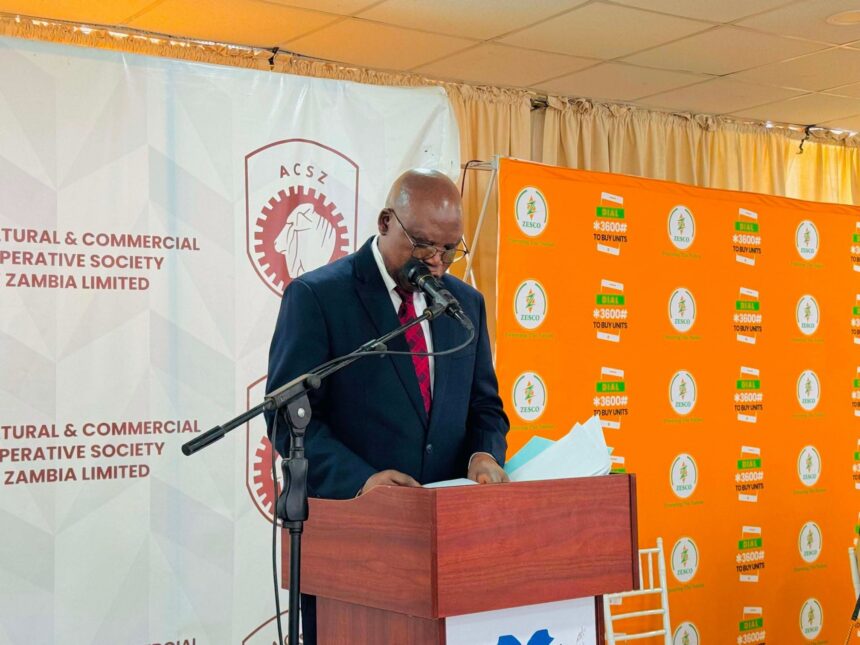
Speaking during the Judges’ Luncheon, Deputy Secretary to the Cabinet Siazongo Siakalenge described the Agriculture and Commercial Show as an important platform for showcasing Zambian enterprises and promoting innovation across different sectors of the economy. He noted that the event allows businesses to display their products and services while creating valuable partnerships that contribute to economic growth. According to Mr. Siakalenge, the exhibition has continued to evolve into more than just a traditional agricultural showcase. It has become a strategic platform where businesses can attract investors, explore new markets and strengthen commercial relationships. He said such engagements are essential for supporting Zambia’s long term economic transformation and industrial development.
Mr. Siakalenge commended the Agricultural and Commercial Society of Zambia for its continued leadership in organizing the annual event and maintaining its relevance in an increasingly competitive business environment. He also welcomed the Society’s decision to extend operating hours until 22:00 in line with the Government’s 24 hour economy agenda. The longer operating hours are expected to improve accessibility for exhibitors, visitors and potential investors while creating more business opportunities throughout the exhibition period. Government views this initiative as an important step toward encouraging greater commercial activity and supporting businesses that can benefit from extended trading hours. The move also reflects Zambia’s broader ambition to stimulate economic productivity beyond traditional working hours.
This year’s theme, “Fostering Trade and Investment,” was highlighted by Mr. Siakalenge as being closely aligned with the New Dawn Government’s development agenda. He explained that Zambia’s economic strategy focuses on creating an environment that encourages entrepreneurship, attracts investment and promotes industrial growth. Policy reforms, improved public private dialogue, strategic infrastructure investments and increased value addition remain among the Government’s highest priorities. These measures are intended to strengthen Zambia’s competitiveness while creating new employment opportunities across multiple sectors of the economy. By supporting investment and industrialisation, the Government aims to build a more resilient and diversified economy capable of sustaining long term growth.
Mr. Siakalenge emphasized that Government is actively working to position Zambia as a competitive destination for both local and foreign investors. Creating a predictable investment environment supported by transparent policies and efficient public services remains central to achieving this objective. He explained that attracting investment not only increases capital inflows but also promotes technology transfer, skills development and business expansion. New investments have the potential to generate employment opportunities while supporting local supply chains and increasing production capacity. Government believes that strengthening investor confidence will play an important role in accelerating national economic development.
Regional and international trade integration also featured prominently in Mr. Siakalenge’s address. He highlighted Zambia’s participation in the African Continental Free Trade Area, the Common Market for Eastern and Southern Africa, the Southern African Development Community and the World Trade Organisation as key platforms for expanding market access. These regional and global trade agreements provide Zambian businesses with opportunities to export products beyond national borders while strengthening international competitiveness. Increased access to larger markets encourages local industries to improve product quality, increase production and adopt international standards. Government sees these trade partnerships as essential tools for driving exports and supporting economic diversification.
Another important initiative discussed during the luncheon was the Proudly Zambian Campaign, which encourages the production, promotion and consumption of locally manufactured goods. Mr. Siakalenge explained that supporting local industries helps create jobs, strengthens domestic manufacturing and reduces dependence on imported products. The campaign also promotes national pride by encouraging consumers to choose products made by Zambian businesses whenever possible. Increased demand for locally produced goods creates additional opportunities for entrepreneurs while supporting industrial expansion across the country. Government believes that stronger local industries will contribute significantly to sustainable economic growth and increased national productivity.
The Deputy Secretary to the Cabinet also outlined additional measures being implemented to improve the country’s business environment. Investments in border infrastructure, trade facilitation and the digitalisation of Government services are helping reduce the cost of doing business while improving efficiency for investors and exporters. Modern digital systems simplify administrative processes, reduce delays and improve service delivery across Government institutions. Better transport infrastructure and more efficient border operations also support regional trade by facilitating the movement of goods and services. Together, these reforms are expected to strengthen Zambia’s position as a preferred investment and trade destination within the region.
Addressing the judges responsible for evaluating exhibitors, Mr. Siakalenge stressed that their role extends well beyond assessing the visual presentation of exhibition stands. He urged them to consider innovation, value addition, market readiness, sustainability, export potential and each exhibitor’s contribution to Zambia’s economic development. He emphasized that businesses demonstrating excellence through high quality products, innovative solutions, sound business practices and a clear commitment to expanding trade and attracting investment deserve fair recognition. Credible and transparent judging, he explained, encourages continuous improvement while motivating businesses to pursue higher standards of performance. Such recognition also supports the development of a stronger, more diversified and export oriented economy.
As the 2026 Agriculture and Commercial Show continues, the Government remains focused on using the event as a catalyst for economic transformation through stronger trade, increased investment and industrial growth. Mr. Siakalenge called on all stakeholders to renew their commitment to policies and initiatives that empower entrepreneurs, strengthen local industries and create decent employment opportunities. He emphasized that innovation, collaboration and value addition will remain essential drivers of Zambia’s future prosperity. With thousands of participants from across Zambia and beyond gathering at this year’s exhibition, the event provides an important platform for building lasting partnerships that can accelerate national development. The 2026 Agriculture and Commercial Show therefore stands as more than an exhibition, it represents Zambia’s ongoing commitment to creating a competitive, investment friendly and export driven economy that benefits businesses, communities and future generations.