






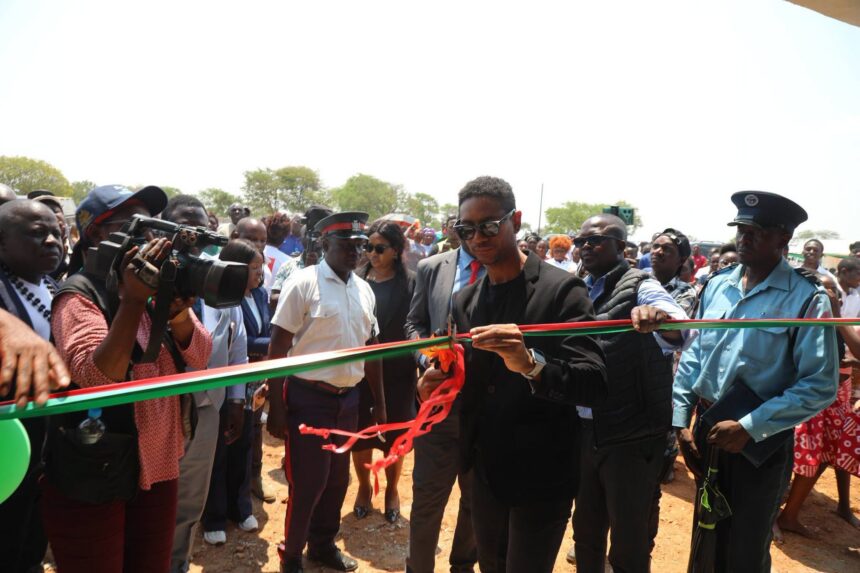
The Government of Zambia has commissioned the Kalomo Truck Park and the modern Tandabale Market Shelter, marking an important step towards improving local infrastructure, supporting small businesses and strengthening economic activity in Kalomo District. The two projects were implemented by Kalomo Town Council with financial support from the Zambia Devolution Support Programme (ZDSP), a government initiative supported by the World Bank. Through the 2023 ZDSP allocation, the council received approximately K2.7 million to deliver the two community infrastructure projects. The new facilities are intended to improve transport and logistics services while providing traders with a cleaner and more organised environment in which to conduct business. Their commissioning also highlights the role of decentralisation in enabling local authorities to identify community needs and invest in infrastructure that supports livelihoods and economic growth.
Speaking at the commissioning ceremony, Ministry of Local Government and Rural Development Permanent Secretary for Administration, Dr. Gabriel Pollen, said the projects reflected the Government’s commitment to bringing development closer to the people through decentralisation. He emphasised that providing local authorities with direct financial resources enables councils to identify, plan and implement projects that respond to the specific social and economic needs of their communities. This approach gives local councils a greater role in determining which investments can improve service delivery and support local development. Rather than relying entirely on decisions made at the national level, councils can use their understanding of local conditions to prioritise infrastructure that addresses practical challenges. The Kalomo Truck Park and Tandabale Market Shelter demonstrate how devolved funding can support projects designed to benefit residents, traders and businesses within a district.
The Zambia Devolution Support Programme plays an important role in supporting local infrastructure development and strengthening the capacity of local authorities. By directing resources towards eligible community projects, the programme helps councils address infrastructure gaps and improve facilities that residents and businesses use every day. The support provided to Kalomo Town Council enabled it to invest in two facilities serving different but connected parts of the local economy. The truck park addresses transport and logistics needs, while the market shelter supports trade and small-scale commercial activity. Together, these investments demonstrate how local infrastructure can help improve business conditions and create a more organised environment for economic activity.
Dr. Pollen described the ZDSP as a core part of the Government’s approach to strengthening local governance, improving public service delivery and promoting sustainable infrastructure across Zambia. Effective decentralisation depends on more than transferring responsibilities to local authorities because councils also need adequate funding, planning skills and systems for managing public resources. When these elements work together, local governments can respond more effectively to community priorities and direct investments towards pressing needs. Transparent procurement, proper financial management and regular maintenance are also important for ensuring that completed projects continue to provide value over time. The long-term impact of the Kalomo projects will therefore depend on how effectively the facilities are managed and maintained after commissioning.
The Kalomo Truck Park is expected to improve transport management in a district that benefits from its position along a major transit corridor. Commercial vehicles transporting agricultural produce, minerals and other goods need suitable places to stop, rest and manage their journeys. When heavy-duty trucks park indiscriminately along major roads, they can create traffic hazards, obstruct other road users and increase the risk of accidents. A dedicated truck park provides a more organised alternative by directing commercial vehicles towards a designated stopping area. This can help improve road safety while supporting more orderly movement through Kalomo.
The truck park also has the potential to support local businesses by creating a recognised stopping point for drivers and transport operators. Depending on the services available at the facility, truck movements may generate demand for food, vehicle maintenance, supplies and other commercial services. Local entrepreneurs could benefit from this activity if they can provide reliable services that meet the needs of transporters. A well-managed truck park may also help the local authority collect revenue through applicable fees and charges, creating resources that can support municipal services. These benefits will depend on effective management, adequate security, appropriate sanitation facilities and consistent use by commercial transport operators.
Road safety is another important consideration because Zambia relies on road transport to connect production areas, towns, border posts and commercial centres. Heavy vehicles require sufficient space to stop safely, particularly when drivers need rest during long journeys. Providing a designated parking area can help reduce pressure on roadside spaces and improve the organisation of truck movements. However, the wider safety benefits will also depend on driver compliance, road conditions, traffic management and the enforcement of relevant regulations. The Kalomo Truck Park provides infrastructure that can support these efforts while addressing a practical need associated with commercial transport.
The Tandabale Market Shelter is designed to improve trading conditions for marketeers and other small-scale businesses in Kalomo District. Markets provide important spaces where farmers, traders and consumers exchange agricultural produce, food products, household goods and other items. For many people, market trading offers a source of income and an accessible way to participate in the local economy. A modern market shelter can provide a more organised setting for these activities while helping traders protect their goods from direct sunlight and rainfall. By improving the physical trading environment, the facility can support more dignified working conditions and encourage orderly commercial activity.
Improved market infrastructure can also contribute to better public health when facilities include appropriate waste management, drainage, sanitation and access arrangements. Clean trading spaces can make it easier to maintain hygiene and manage the handling of food products. Properly organised stalls and walkways can improve movement for traders and customers while reducing congestion within the market area. These improvements require regular cleaning, maintenance and cooperation between market managers, traders and the local authority. The long-term value of the Tandabale Market Shelter will depend on whether these responsibilities are managed effectively.
The market can also strengthen connections between agricultural producers and consumers. Farmers and small-scale traders often depend on local markets to sell fresh produce and generate income from their activities. When markets provide suitable facilities, they can offer a more reliable setting for selling goods and attracting customers. Better trading conditions may also encourage more people to participate in local commerce, although actual income gains will depend on customer demand, product prices and operating costs. Supporting markets is therefore an important part of wider efforts to improve the performance of small businesses and strengthen local supply chains.
The two projects have complementary economic roles because transport infrastructure and trading facilities help goods move through the local economy. The truck park supports the movement of commercial vehicles, while the market shelter provides space for buying and selling goods. Better transport arrangements can help businesses move products more efficiently, and organised markets can create opportunities for producers and traders to reach customers. When these facilities operate effectively, they can support commercial activity across different parts of the district. Their combined contribution will depend on accessibility, management quality and the ability of local businesses to make productive use of the improved infrastructure.
The commissioning of the Kalomo Truck Park and Tandabale Market Shelter also highlights the importance of investing in district-level infrastructure beyond major urban centres. Rural and small-town economies depend on practical facilities that help farmers sell produce, traders serve customers and transport operators move goods. Infrastructure gaps can increase operating costs, restrict access to markets and limit opportunities for small businesses to grow. Investments in local facilities can help address these challenges while supporting economic participation within communities. The Kalomo projects show how targeted public spending can respond to specific needs identified at the local level.
The approximately K2.7 million allocated through the 2023 Zambia Devolution Support Programme represents public investment intended to deliver practical benefits for the district. Ensuring that this funding produces lasting results requires responsible management of the completed facilities and clear arrangements for their operation. Kalomo Town Council will have an important role in maintaining the infrastructure, managing applicable charges and addressing any operational problems that arise. The council can also monitor how traders and transport operators use the facilities and identify areas where improvements may be needed. Assessing usage, maintenance costs, safety conditions and local business activity can help establish whether the projects are achieving their intended objectives.
The projects also illustrate how cooperation between national government institutions and local authorities can support decentralised development. National programmes can provide financial resources and policy direction, while councils contribute knowledge of local conditions and oversee implementation within their jurisdictions. Development partners can support these efforts through programme financing and other forms of assistance. Effective coordination helps ensure that investments respond to community priorities and fit within wider development plans. The experience in Kalomo reinforces the importance of maintaining strong accountability and clear responsibilities throughout the planning, construction and management of local infrastructure.
For residents, traders and businesses, the value of these projects will ultimately be measured by their practical effects. Transport operators need safe and suitable places to stop, while marketeers need facilities that support daily trading and protect their goods. Residents can benefit when local businesses have better conditions in which to operate and when public spaces are cleaner and more organised. The local authority may also gain opportunities to strengthen revenue collection and improve the management of commercial activity. These benefits are not automatic, but effective operation and regular maintenance can help turn the initial investment into lasting improvements.
The commissioning of the Kalomo Truck Park and Tandabale Market Shelter marks a significant development in the district’s local infrastructure and economic activity. Supported by approximately K2.7 million under the Zambia Devolution Support Programme, the projects demonstrate how devolved funding can help local authorities respond to transport, trade and community needs. The truck park is intended to improve heavy-vehicle parking, support road safety and strengthen logistics activity, while the market shelter provides traders with a more organised and suitable trading environment. Their long-term success will depend on effective management, proper maintenance and the extent to which transport operators, traders and residents use the facilities. By linking infrastructure investment with local economic needs, Kalomo has taken a practical step towards supporting small businesses, improving public spaces and creating better conditions for sustainable district development.