







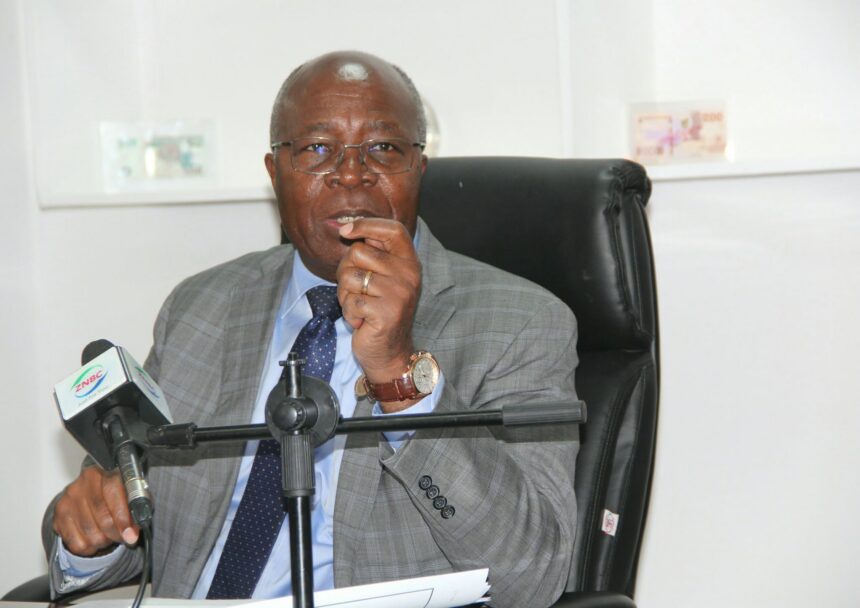
Zambia’s Government says protecting the economic stability achieved in recent years will remain a major priority as it prepares for the 2027 national budget. Minister of Finance and National Planning Situmbeko Musokotwane said Government wants to prevent a return to rapid inflation and rising living costs that can weaken household purchasing power. Speaking on ZNBC’s Sunday Interview programme, Musokotwane stressed that maintaining price stability remains essential even as Government responds to public demands for stronger economic relief. He explained that sustained increases in prices eventually push up the cost of living and make it harder for households to afford basic goods and services. The Government’s challenge now is to preserve macroeconomic stability while creating stronger opportunities for employment, investment and income growth.
Musokotwane said Zambia cannot afford to lose the progress made in stabilising the economy over the past five years. He explained that inflation, which measures the rate at which prices change, can gradually create significant pressure on households when it remains high for extended periods. Keeping inflation under control therefore remains important because it helps protect the purchasing power of wages and household incomes. However, the Minister acknowledged that stable economic indicators do not automatically translate into immediate relief for citizens who continue to face financial pressures. This is why the Government intends to make the 2027 budget more focused on economic growth and opportunities that can improve household incomes over time.
A major part of the Government’s planned response will involve accelerating job creation across the economy. Musokotwane identified the opening of new mines, greater participation in agriculture and the expansion of business opportunities as key areas that can support employment and economic activity. Mining remains an important part of Zambia’s economy, while agriculture has the potential to involve large numbers of citizens across different regions and value chains. Expanding business activity can also create opportunities for entrepreneurs, suppliers and service providers beyond the country’s traditional economic sectors. The Government’s approach therefore seeks to combine large-scale investment with broader participation so that economic growth can create opportunities for more people.
The Minister linked these ambitions directly to President Hakainde Hichilema’s Grow Zambia Agenda, which provides the broader framework for the administration’s economic priorities. He urged citizens to play an active role in increasing production and expanding Zambia’s ability to participate in international markets. His message was captured in the call to “produce, produce, produce and export, export and export.” The emphasis reflects the Government’s stated desire to increase domestic production while strengthening Zambia’s export capacity. Expanding production and exports could generate foreign exchange, support businesses and create additional demand for workers and locally produced goods.
Government also plans to adjust the role of the state to make it more supportive of private-sector expansion. Musokotwane said the national framework is being restructured so that Government responsibilities actively facilitate business growth rather than create unnecessary obstacles to investment. Public private partnerships will continue to form an important part of this approach, allowing Government and private investors to work together on projects that require significant capital and expertise. PPPs can provide a mechanism for expanding infrastructure and services while sharing responsibilities between the public and private sectors. The Government’s broader objective is to create conditions where private businesses can invest, expand their operations and contribute more substantially to economic growth.
Musokotwane pointed to several economic developments that he believes demonstrate how recent GDP growth is reaching ordinary citizens. He referred to increased infrastructure-related job creation, higher vehicle imports and the expansion of retail food chains as visible signs of greater economic activity. These indicators reflect activity across different parts of the economy, from construction and transport to retail and consumer markets. The Government sees such developments as evidence that economic growth is not limited to national statistics but is also reflected in activity experienced by businesses and households. At the same time, the extent to which economic growth improves living standards depends on factors such as employment, income growth, prices and access to opportunities.
The Minister also highlighted improvements in tax compliance and the expansion of the tax base as important developments for public institutions. A broader and more effective tax base can increase Government revenue without relying solely on a narrow group of taxpayers. Musokotwane said stronger tax performance is helping support institutional operations, including at local council level. Better revenue collection can provide public institutions with additional resources to carry out their responsibilities and maintain services. The Government’s focus on compliance therefore forms part of its wider effort to strengthen public finances while supporting the delivery of services and infrastructure.
Investor confidence will also remain important as Government seeks to attract and retain both domestic and international investment. Musokotwane assured investors that the administration intends to maintain a predictable and stable regulatory environment. Predictability can give businesses greater confidence when making long-term investment decisions because companies need clarity around the rules that govern their operations. The Minister also stressed the importance of ensuring that investment pledges are translated into actual projects on the ground. Turning commitments into operational businesses, mines, farms, factories and other investments can help generate employment, expand production and increase economic activity.
The 2027 national budget will therefore be expected to balance two closely connected priorities, protecting economic stability and creating conditions for faster growth. Keeping inflation under control can help protect household purchasing power, while stronger investment and job creation can provide opportunities for people to increase their incomes. The Government’s emphasis on mining, agriculture, exports, private-sector development and PPPs points to an approach centred on expanding productive economic activity. Improved tax compliance and a wider tax base are also intended to strengthen the public institutions needed to support development. How effectively these priorities are implemented will determine whether the Government can translate its economic plans into broader opportunities and sustained improvements in living conditions.
Musokotwane’s comments place economic stability at the foundation of Zambia’s plans for the next national budget while highlighting the need to move beyond stabilisation towards stronger and more inclusive economic activity. The Government says it wants to protect the gains made in controlling inflation while creating more jobs, opening new mines, expanding agricultural participation and encouraging businesses to invest. Its continued use of PPPs and efforts to maintain a predictable regulatory environment are intended to support private-sector participation in this growth strategy. The emphasis on producing more goods and services and increasing exports also reflects the administration’s focus on strengthening Zambia’s productive capacity. As preparations for the 2027 budget continue, the central task will be turning these stated priorities into practical measures that protect purchasing power, attract investment and create meaningful economic opportunities for citizens.