






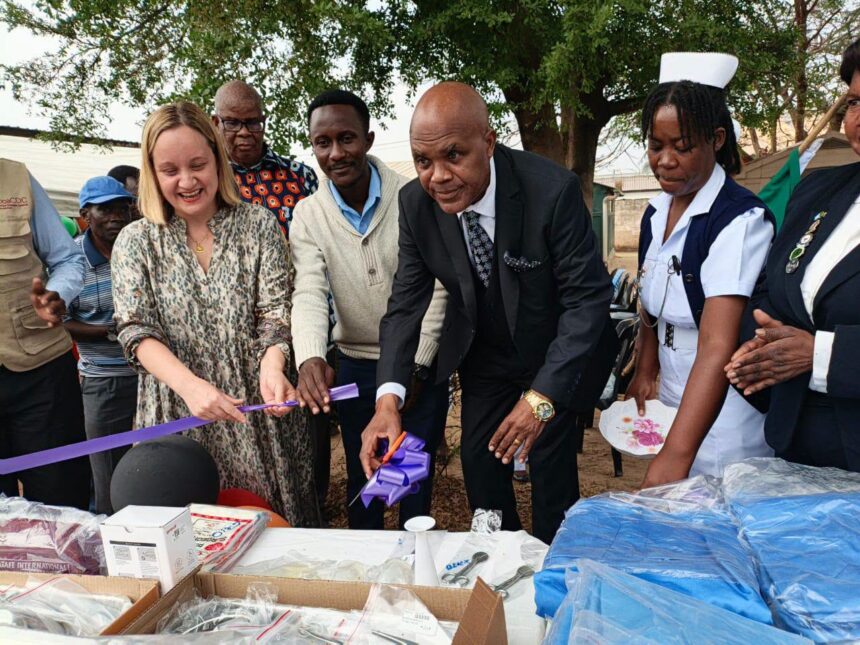
The Zambian Government has taken another step towards strengthening maternal and newborn healthcare by officially flagging off the transportation of medical equipment to health facilities implementing the midwifery models of care pilot programme. The initiative, led through the Ministry of Health, is aimed at giving midwives the tools they need to provide quality care throughout pregnancy, labour, childbirth and the postnatal period. The equipment is expected to support participating facilities as they work towards becoming centres of excellence for quality midwifery care. The intervention also forms part of broader efforts to improve maternal and newborn health outcomes across the country. By strengthening health facilities and supporting midwives, Government is seeking to ensure that women and newborns receive safe, respectful and compassionate care closer to their communities.
Speaking during the flag-off, Ministry of Health Permanent Secretary for Donor Coordination, Dr. George Sinyangwe, said the equipment would strengthen the capacity of midwives to provide comprehensive services to women and their newborns. The equipment will support antenatal care and help midwives effectively monitor and manage women during labour and childbirth. It will also assist health workers in providing essential postnatal services to mothers and newborns after delivery. According to Dr. Sinyangwe, having the necessary tools and resources in health facilities will create an environment where women can access quality midwifery services with greater confidence. The investment is therefore intended to address both the availability of equipment and the quality of care provided at participating facilities.
The midwifery models of care pilot programme places women at the centre of healthcare delivery and promotes normal births through respectful, evidence-based and culturally appropriate standards of care. The approach recognises the important role midwives play in supporting women through pregnancy, childbirth and the period following delivery. It also seeks to strengthen the ability of midwives to provide care within the full scope of their professional practice. Dr. Sinyangwe emphasised that the equipment would allow midwives to carry out their responsibilities with greater confidence, professionalism and pride. This is expected to contribute to better experiences for women and their newborns while strengthening the overall quality of maternal healthcare.
The Ministry views the investment in midwifery models of care as a high-impact intervention with benefits extending beyond the provision of medical equipment. Standardised clinical practices can help improve the consistency and quality of services offered to women across participating facilities. Strengthened referral systems can also help ensure that women and newborns who require additional or specialised care are referred appropriately and in good time. The initiative is further expected to support better coordination between different levels of the health system. Through these measures, the programme aims to create a stronger continuum of care from pregnancy through childbirth and the postnatal period.
Improving access to skilled midwifery services is also expected to support greater equity in maternal healthcare, particularly for communities that remain underserved. Expanding quality services closer to where people live can reduce some of the barriers that women face when seeking care. The programme also includes measures aimed at strengthening accountability and the use of health information to improve decision-making. These include improved data utilisation, maternal and perinatal death surveillance and response, as well as equity audits. Such mechanisms can help health authorities identify gaps in care, understand outcomes and use evidence to guide improvements in maternal and newborn health services.
Dr. Sinyangwe also stressed the importance of responsible management of the equipment once it reaches the intended health facilities. Midwives and facility managers have been urged to take responsibility for the proper use, care and maintenance of the equipment. This includes safeguarding the assets, keeping them in good working condition and ensuring that they are used only for their intended purposes. Proper maintenance will be important in ensuring that the equipment continues supporting healthcare workers over time rather than becoming unavailable because of avoidable damage or neglect. The call also places responsibility on health workers and managers to protect the investment and ensure that it directly benefits women and newborns.
The Ministry has encouraged midwives to embrace the programme with dedication and pride as they use the new resources to provide safe, respectful and compassionate care. The focus on respectful treatment is particularly important because maternal healthcare involves not only clinical interventions but also the dignity, comfort and experiences of women during one of the most significant periods of their lives. Health workers have been urged to maintain the highest standards of professional practice throughout the care process. Government expects this commitment to help ensure that every birth is managed safely, every mother is treated with dignity and every newborn receives the best possible start to life. The success of the programme will therefore depend on both the availability of equipment and the quality of care delivered by the health workers using it.
The Government also acknowledged the contribution of the United Nations Population Fund (UNFPA) towards the procurement of the equipment. The support reflects cooperation between Government and development partners in strengthening Zambia’s health system and improving access to essential maternal and child health services. UNFPA has been recognised for its role in helping translate Government policies into practical health services, particularly by supporting services that can reach people as close as possible to where they live, work, pray and attend school. This type of partnership can help strengthen the resources available to health facilities while supporting national priorities in maternal and newborn health. The Ministry has reaffirmed its intention to continue working with UNFPA and other partners to advance healthcare services for communities across Zambia.
The transportation of the equipment to participating health facilities marks an important stage in the implementation of the midwifery models of care pilot programme. Its impact will ultimately depend on how effectively the equipment is deployed, maintained and incorporated into daily clinical practice. The programme’s focus on quality midwifery care, stronger referral systems, improved data use and greater access to skilled services provides a broad framework for improving maternal and newborn healthcare. Government’s continued support for midwives also recognises the central role these health professionals play in protecting the lives of mothers and newborns. As the equipment reaches facilities across the programme, the initiative is expected to strengthen the delivery of safe, respectful and coordinated care and contribute to Zambia’s efforts to reduce maternal and neonatal mortality, morbidity and stillbirths.