




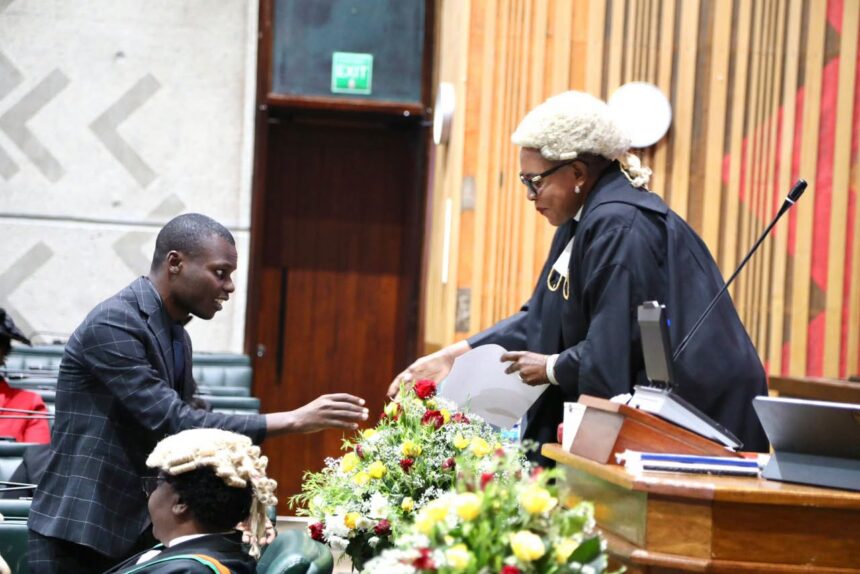
Zambia has reached a significant moment in the implementation of its new proportional representation system, with 40 Members of Parliament taking their oaths of office in the National Assembly. Speaker of the National Assembly Nelly Mutti described the swearing-in ceremony as one of the most emotional she had ever presided over. The ceremony formally brought women, youth and persons with disabilities into Parliament through the new system introduced under the Constitution of Zambia Amendment Act No. 13 of 2025. The 40 seats comprise 20 for women, 15 for youth and five for persons with disabilities. Their arrival marks an important stage in the implementation of constitutional reforms aimed at widening participation in Zambia’s national decision-making process.
The swearing-in marked the first major implementation of the constitutional changes that introduced a mixed-member proportional representation system for the National Assembly. The new arrangement provides designated seats for women, youth and persons with disabilities alongside constituency-based Members of Parliament and nominated members. The system was established through the Constitution of Zambia Amendment Act No. 13 of 2025, which created the 40 proportional representation positions. The reform provides 20 seats for women, 15 seats for youth and five seats for persons with disabilities. The newly sworn-in MPs will now participate in parliamentary proceedings and carry out the responsibilities associated with membership of the National Assembly.
For Speaker Mutti, the occasion carried significance beyond the formal administration of parliamentary oaths. After the 40 MPs had taken their oaths, she described the ceremony as one of the most emotional swearing-in ceremonies she had ever conducted. She thanked the new lawmakers and congratulated them on formally taking their places in Parliament. Her remarks reflected the importance attached to the occasion by the new MPs and the groups they represent. Speaker Mutti also said the swearing-in had been successfully conducted in accordance with the Constitution, while noting that the process would continue at an appropriate time for Members of Parliament to be nominated by President Hakainde Hichilema.
The representation of persons with disabilities was particularly significant for Lazarus Hakalebula, one of the MPs sworn in under that category. Hakalebula thanked President Hichilema for creating an opportunity for persons with disabilities to have representation in the National Assembly. He described the development as historic and highlighted the importance of having representation in the institution responsible for making the country’s laws. His entry into Parliament provides a dedicated voice within the new proportional representation structure for issues affecting persons with disabilities. The five seats reserved for persons with disabilities form part of the 40 positions created under the constitutional reforms.
Women also feature prominently in the new parliamentary arrangement, with 20 of the 40 proportional representation seats reserved for women. Caroline Katotobwe said the development had given women renewed hope that their voices would contribute to national decisions. The dedicated seats provide an additional route for women to enter Parliament through the proportional representation system. Their presence is expected to add further perspectives to parliamentary discussions on national development and issues affecting communities. The reform also provides women elected through the system with the opportunity to participate directly in debates, lawmaking and oversight within the National Assembly.
The youth component is another important part of the new system, with 15 seats reserved for young people. UPND Kitwe District youth spokesperson Chambala Mazimba said the implementation of proportional representation was beginning to demonstrate the opportunities created for youth, women and persons with disabilities to participate in governance. He urged the newly sworn-in MPs to put national interests first and use their positions to advance the interests of Zambians. Mazimba said the reforms should not be viewed simply as changes to the electoral system but as a mechanism for widening participation in national decision-making. The new youth MPs will now have an opportunity to contribute directly to parliamentary debates and discussions on issues affecting the country.
UPND spokesperson Cornelius Mweetwa also described the development as an indication of the importance of inclusion in governance. The arrival of the 40 MPs has generated attention because the proportional representation system specifically creates opportunities for groups that have historically sought greater participation in national decision-making. The new lawmakers enter Parliament with different backgrounds and experiences that could contribute to discussions on a broad range of national issues. Their participation will take place alongside MPs elected through constituencies and other members provided for under the Constitution. The expanded structure gives the National Assembly a new dimension as Zambia begins implementing the proportional representation provisions.
Among those sworn in were Susan Tembo, Francis Kope, Gertrude Imenda, Mwanto Kabaso, Jemimah Mwaba, Michelo Chizombe, Vincent Musilikani and Lloyd Nsonga. The group includes representatives from the different categories covered by the new proportional representation arrangement. Each MP will now take on the responsibilities associated with serving in the National Assembly and participating in the country’s legislative process. Their formal assumption of office follows the introduction of the constitutional provisions establishing the 40 dedicated seats. The swearing-in therefore represents a transition from the adoption of the reforms to their practical implementation inside Parliament.
Democratic Party president Judith Kabemba, who is among the 40 Members of Parliament elected through the new system, said the enactment of Act No. 13 of 2025 had opened opportunities for women, youth and persons with disabilities to participate in national governance. Kabemba described her election as an honour and an opportunity to serve Zambians beyond political affiliations. She said the 40 proportional representation seats should inspire more women to prepare themselves for leadership through education and active participation in public affairs. She also pledged to advocate for greater representation of women in leadership, including in public companies. Her stated priorities include policies aimed at addressing challenges affecting women and encouraging stronger participation by women in decision-making.
The constitutional reform formally provides for the 40 proportional representation seats as part of the National Assembly, alongside constituency-based seats and nominated members. The arrangement represents a change in how designated groups can gain representation in the country’s national legislature. It also creates a formal structure through which women, youth and persons with disabilities can enter Parliament under specific categories. The implementation of the system will now be closely connected to the day-to-day responsibilities of the newly sworn-in lawmakers. Their participation will include contributing to legislation, parliamentary debates and other responsibilities expected of Members of Parliament.
The emotional nature of the ceremony was also linked to the wider significance of opening Parliament to representatives from groups that have long called for greater participation in governance. For the new MPs, taking the oath marked the beginning of their formal responsibilities as lawmakers. For women, youth and persons with disabilities, their presence in the House provides an opportunity for issues affecting these groups to receive greater attention within the national legislative process. The new MPs have also been urged to approach their responsibilities with a focus on the interests of Zambians as a whole. Their ability to turn their positions into meaningful parliamentary participation will be an important part of the next stage of the reform.
The swearing-in of Zambia’s 40 proportional representation MPs has therefore marked a significant moment in the country’s parliamentary history. Speaker Nelly Mutti’s description of the ceremony as deeply emotional captured the significance of the occasion for the lawmakers and the groups they represent. The new system has created 20 seats for women, 15 for youth and five for persons with disabilities, giving these categories a defined place within the National Assembly. The MPs will now have the responsibility of using their positions to participate in lawmaking and national decision-making while serving the interests of Zambians. As the proportional representation system moves from constitutional reform to practical implementation, the performance and contribution of these 40 lawmakers will form an important part of Zambia’s evolving parliamentary landscape.