







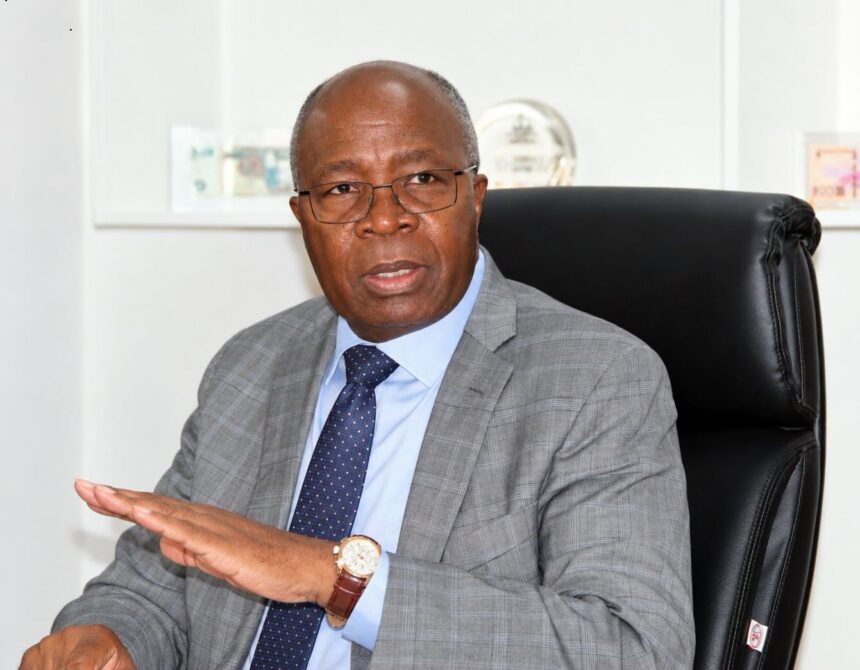
Finance and National Planning Minister Dr Situmbeko Musokotwane has outlined the Ministry’s strategic direction for the next five years, placing greater emphasis on investment, production, exports, job creation and higher incomes for Zambians. Speaking during a Strategic Visioning Media Briefing at the Ministry, Dr Musokotwane said the next phase of economic planning will build on the macroeconomic stability achieved over the past five years. He said the focus now needs to shift towards converting that stability into broader economic opportunities and tangible benefits for citizens. The strategy places production and investment at the centre of efforts to expand economic activity and create more opportunities for Zambians. The Minister’s message was summed up in a repeated call for increased production, captured in the phrase, “Production, production, production.”
Dr Musokotwane said the Government’s economic direction for the next five years will focus on strengthening productive sectors and creating conditions for sustainable economic growth. Agriculture, mining and energy were identified as key areas where increased production could support economic expansion and generate additional opportunities. Greater output in these sectors could also strengthen Zambia’s ability to participate in domestic, regional and international markets. The Minister also highlighted export-led growth as an important part of the strategy, with increased exports expected to support foreign exchange earnings and economic activity. The emphasis on production reflects a focus on expanding the country’s capacity to produce goods and services rather than relying primarily on consumption-driven economic activity.
Agriculture is expected to remain an important component of the Government’s economic strategy because of its potential to support food production, rural livelihoods and employment. Increasing agricultural production could create opportunities for farmers, processors, suppliers and businesses operating across the wider agricultural value chain. The sector can also contribute to export diversification if Zambia increases the production and processing of commodities that have demand in regional and international markets. Greater investment in agricultural infrastructure and productive capacity could support higher output and improve links between producers and markets. The Government’s focus on agriculture therefore forms part of a broader approach aimed at increasing production while creating opportunities for higher incomes.
Mining and energy also feature prominently in the strategic direction outlined by the Minister. Zambia’s mining industry remains an important source of economic activity and export earnings, while energy supply plays a significant role in the ability of businesses and industries to operate and expand. Increasing production in these sectors could support investment and strengthen the wider economy through links with suppliers, contractors and other businesses. The energy sector is particularly important because reliable and sufficient power supports manufacturing, mining, agriculture and other productive activities. By placing mining and energy alongside agriculture, the strategy recognises the importance of strengthening several major areas of the economy at the same time.
Infrastructure development and public-private partnerships will also form part of the Government’s approach over the next five years. Dr Musokotwane called for faster implementation of high-impact investments that can support economic activity and improve the environment for businesses. Infrastructure investment can affect the movement of goods, access to markets, business operating costs and the ability of industries to expand. Public-private partnerships can provide another mechanism for mobilising investment where projects require significant capital and long-term financing. The emphasis on faster implementation suggests that the Government wants investment projects to move more efficiently from planning and approval into actual construction and operation.
Job creation and higher incomes remain central to the strategic direction because economic growth is expected to translate into practical benefits for citizens. Increased production can create employment directly within major industries and indirectly through businesses that supply goods and services to those industries. Stronger exports can also support companies seeking to expand their operations and access larger markets. However, the impact on household incomes will depend on how widely economic opportunities are distributed and how effectively businesses convert investment and production growth into employment. The Government’s stated focus therefore places employment and income growth alongside broader economic indicators when considering the impact of its economic programme.
Dr Musokotwane also called for a stronger culture of productivity, accountability and measurable delivery across Government. This focus highlights the importance of ensuring that public institutions do more than establish plans and targets, but also track implementation and measure results. Clear performance measures can help Government assess whether investments and programmes are delivering the intended economic and social outcomes. Greater accountability can also support more effective use of public resources and improve the implementation of national priorities. The emphasis on measurable delivery is therefore closely connected to the Minister’s broader call for faster implementation and stronger economic performance.
The strategic direction outlined by Dr Musokotwane represents a focus on moving from macroeconomic stability towards increased production, investment and economic opportunities. Agriculture, mining, energy, infrastructure, exports and public-private partnerships are expected to play important roles in this approach. The Government also wants stronger productivity and accountability within the public sector to support implementation and ensure that economic plans produce measurable results. For Zambians, the stated objectives include more employment opportunities, higher incomes and broader participation in economic activity. As the next five years unfold, the implementation of these priorities will determine how effectively the Government can translate its strategic vision into increased production and tangible economic opportunities for citizens.