






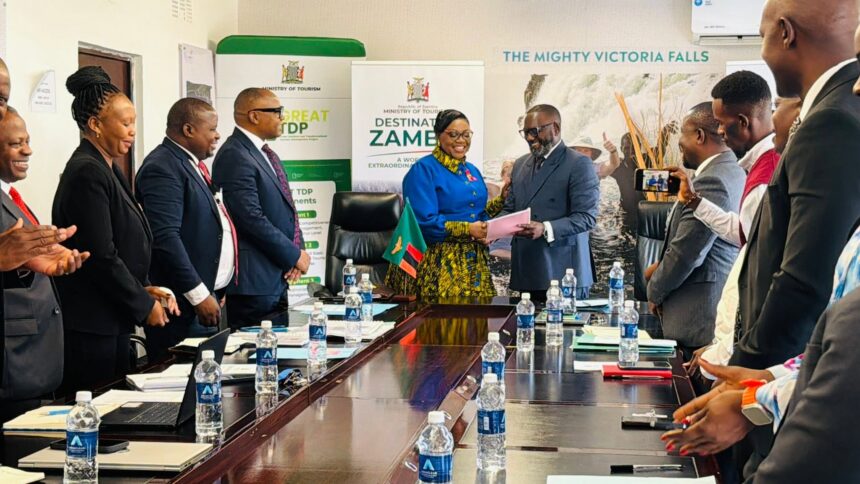
Zambia’s tourism sector is set for renewed growth following the formal handover of the tourism portfolio to newly appointed Minister of Tourism, Hon. Princess Kasune, MP. During the handover ceremony, Kasune reaffirmed the country’s ambition to attract five million international tourist arrivals by 2031 under the government’s Grow Zambia Agenda. She received the portfolio from her predecessor, Hon. Rodney Sikumba, who highlighted the progress made during his tenure and called for continued investment in the sector. The transition comes at an important time as Zambia seeks to strengthen its position as a leading tourism destination in Africa. With its natural attractions, wildlife, waterfalls, lakes and rich cultural heritage, the country has significant opportunities to attract more international visitors and generate economic benefits for local communities.
In her handover remarks, Minister Kasune expressed gratitude to President Hakainde Hichilema for entrusting her with the responsibility of leading the Ministry of Tourism. She acknowledged the importance of the portfolio and the role tourism can play in supporting Zambia’s economic development. Kasune also paid tribute to Sikumba for his contribution to the sector, recognising the work undertaken during his time as Minister. She particularly highlighted his role in helping Zambia secure the chairmanship of the United Nations Tourism Regional Commission for Africa for the 2025 to 2027 term. This achievement represents an important opportunity for Zambia to strengthen its influence in regional tourism discussions and promote cooperation among African countries.
Kasune also recognised the progress made in increasing international tourist arrivals during Sikumba’s tenure. She noted that international tourist arrivals rose from 554,290 in 2021 to 2.3 million in 2025, reflecting significant growth in the country’s tourism industry. In acknowledging his contribution, she said his efforts in tourism promotion and marketing had helped establish a strong foundation for further development. The increase in visitor numbers demonstrates the potential of Zambia’s tourism sector when supported by effective marketing, investment and collaboration. Kasune indicated that the government intends to build on these gains as it works towards the ambitious target of five million international tourist arrivals by 2031.
The five-million-tourist target forms part of the broader Grow Zambia Agenda, which seeks to unlock economic opportunities across different sectors and increase national prosperity. Tourism is an important part of this strategy because it can generate foreign exchange, create employment and stimulate investment in local communities. Increased international arrivals can benefit hotels, restaurants, tour operators, transport providers, craft businesses and other enterprises that depend on visitor spending. Tourism growth can also create opportunities for young people and women through employment and entrepreneurship. By expanding the sector, Zambia hopes to ensure that more communities benefit directly from the country’s natural and cultural resources.
In his handover remarks, former Tourism Minister Rodney Sikumba pledged his support to Kasune as she takes over the responsibility of leading the ministry. He emphasised the importance of maintaining continuity in tourism development and strengthening partnerships with the private sector, local communities and cooperating partners. Sikumba explained that government alone cannot achieve the country’s tourism ambitions without the active participation of businesses and other stakeholders. Private investors play an important role in developing accommodation facilities, tourism services and visitor experiences. Local communities are equally important because they help preserve cultural traditions and protect natural attractions while providing authentic experiences for visitors.
Sikumba also called for Zambia to develop a wider range of tourism experiences to attract different categories of international and domestic visitors. He pointed to the country’s national parks, waterfalls, lakes, heritage attractions and cultural traditions as valuable resources that could support tourism expansion. Zambia is home to internationally recognised natural attractions, including Victoria Falls, one of the country’s most prominent tourism landmarks. Its national parks also provide opportunities for wildlife viewing, safari experiences and nature-based tourism. Beyond wildlife and natural scenery, the country’s diverse cultural traditions offer opportunities to develop cultural tourism, community-based experiences and heritage-related activities.
The former minister further stressed the need to invest in tourism infrastructure and improve connectivity across the country. Reliable transport networks, quality accommodation, visitor facilities and accessible attractions are important factors that influence tourists when choosing a destination. Better road and air connectivity can make it easier for international visitors to travel between major tourism destinations and discover attractions beyond established tourism centres. Improved infrastructure can also encourage investors to consider areas with untapped tourism potential. For Zambia to compete effectively with other African destinations, it will need to make tourism experiences more accessible, convenient and attractive to visitors.
The development of national parks remains another important priority as Zambia seeks to increase international tourist arrivals. The country has several protected areas with significant wildlife and ecological value, providing opportunities for safari tourism and nature conservation. However, attracting more visitors must go hand in hand with protecting wildlife and maintaining the natural environments that make these destinations attractive. Sustainable tourism development requires responsible investment, effective conservation measures and the involvement of surrounding communities. Tourism businesses and visitors also have a role to play in protecting natural resources and respecting conservation regulations. Balancing tourism growth with environmental protection will be essential to ensuring that Zambia’s attractions remain valuable for future generations.
Cultural heritage also presents an important opportunity for expanding Zambia’s tourism industry. The country has a rich cultural identity reflected in its traditional ceremonies, music, dance, crafts, historical sites and diverse communities. Promoting these experiences can help visitors understand Zambia beyond its wildlife and natural attractions. Cultural tourism can also create income opportunities for local artists, traditional leaders, craft producers and community-based businesses. Greater investment in cultural tourism promotion could encourage visitors to explore different provinces and spend more time in the country. This would help distribute tourism benefits more widely rather than concentrating economic activity in a limited number of established destinations.
The increase in international tourist arrivals from 554,290 in 2021 to 2.3 million in 2025 provides an important foundation for the next phase of tourism development. However, reaching five million arrivals by 2031 will require sustained efforts to improve the overall visitor experience and strengthen Zambia’s international tourism profile. Effective marketing campaigns will be necessary to showcase the country’s attractions in key international markets. The Ministry will also need to work with tourism operators, airlines, accommodation providers and other stakeholders to address challenges affecting the sector. Improved service standards, accessible information and reliable tourism infrastructure can help encourage visitors to choose Zambia and recommend it to others.
As Princess Kasune assumes leadership of the Ministry of Tourism, attention will increasingly focus on translating the country’s growing visitor numbers into tangible economic benefits. Attracting more tourists is important, but ensuring that local businesses and communities benefit from tourism spending is equally significant. The sector has the potential to support job creation, stimulate investment and strengthen small and medium-sized enterprises across the country. Achieving these outcomes will require effective policies, stronger public-private partnerships and continued investment in tourism infrastructure. It will also require a clear commitment to protecting Zambia’s wildlife, natural attractions and cultural heritage.
Zambia’s ambition to attract five million international tourists by 2031 represents a significant opportunity to strengthen the country’s economy and expand its presence in the global tourism market. The handover from Rodney Sikumba to Princess Kasune provides an opportunity to build on the progress already achieved while addressing the challenges that remain. With stronger partnerships, improved connectivity, diversified tourism experiences and sustained promotion, Zambia can unlock more value from its natural and cultural resources. The priority will be to ensure that tourism growth creates meaningful employment and business opportunities while supporting conservation and community development. As the new Tourism Minister takes charge, the success of the 2031 target will depend on turning the country’s considerable tourism potential into sustainable results for Zambians.