







The Zambian Government has welcomed a planned investment of approximately US$600 million by Sinomine Kitumba Minerals Company Limited in the development of the Kitumba Copper Mine in Mumbwa District, Central Province. The investment is expected to strengthen Zambia’s mining industry, increase copper production and support the country’s broader economic transformation agenda. The project represents a significant development for the country’s ambition to expand copper production and exports under the Grow Zambia Agenda. With plans to establish modern processing facilities, develop renewable energy infrastructure and commission a refinery, the Kitumba Copper Mine is expected to contribute to Zambia’s efforts to increase value addition in the mining sector. Government has described the investment as an important step towards unlocking the country’s mineral resources, attracting responsible investors and creating more economic opportunities.
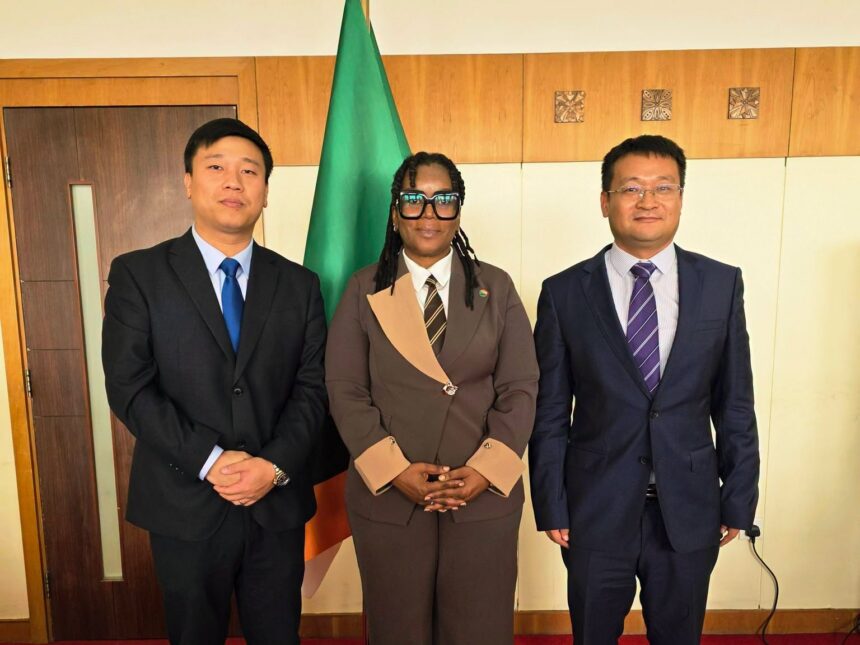
Minister of Trade and Exports, Hon. Dr. Caroline Kaunda Katotobwe, praised Sinomine Kitumba Minerals Company Limited for the progress made in developing the mining project. She made the remarks when she received a delegation from the company during a courtesy call at her office. The Minister congratulated the company on its planned investment, describing it as a major boost to Zambia’s economic transformation ambitions. She emphasised that investments of this scale are important for strengthening productive industries and expanding the country’s capacity to generate export revenue. Her remarks also reaffirmed Government’s commitment to supporting responsible investments that contribute to economic growth and national development.
The Kitumba Copper Mine is expected to have a processing capacity of 3.5 million tonnes per annum, with projected production of approximately 50,000 tonnes of cathode copper. This production capacity is expected to make the project a valuable contributor to Zambia’s growing copper industry. Copper remains one of the country’s most important export commodities and plays a central role in generating foreign exchange. Increasing production will therefore be important as Zambia works towards its target of producing and exporting 3 million metric tonnes of copper. The Kitumba project is expected to support this ambition by adding to the country’s mining capacity and strengthening its position in the international copper market.
The Government’s target of producing and exporting 3 million metric tonnes of copper reflects its intention to expand the mining sector and make greater use of Zambia’s mineral resources. Achieving this ambition will require significant investment in exploration, mine development, processing infrastructure and energy supply. It will also depend on maintaining a stable investment environment that allows mining companies to plan and expand their operations. Projects such as the Kitumba Copper Mine can contribute to these efforts by increasing production capacity and supporting the development of related industries. Higher copper output could also create opportunities for local suppliers, transport companies, engineering firms and other businesses that provide services to the mining sector.
Another important development highlighted by the Minister was the commissioning of the Kitumba concentration plant in September 2026. The concentration plant forms part of the project’s processing infrastructure and is an important stage in preparing copper-bearing material for further processing. Its development demonstrates progress in establishing the facilities required to support commercial mining operations. Processing infrastructure is particularly important because it allows mining companies to improve the quality and value of mineral products before they enter the next stages of production. The planned facilities at Kitumba are therefore expected to strengthen the project’s contribution to Zambia’s copper value chain.
The project has also made progress in energy infrastructure through the connection of a 50-megawatt solar power plant to the national electricity grid. This development is significant because mining operations require reliable and consistent electricity to support production and processing activities. Solar power can contribute to diversifying the energy sources available to the mining industry while supporting the country’s broader transition towards renewable energy. Connecting the plant to the national grid also creates the potential for its electricity to contribute to the wider power supply system, subject to the applicable arrangements. As Zambia continues to expand its mining sector, investments in energy infrastructure will remain essential to supporting industrial growth and reducing pressure on electricity supply.
The anticipated commissioning of the Kitumba refinery in the first quarter of 2027 is another major milestone in the project’s development. A refinery can support value addition by allowing copper to undergo further processing rather than leaving the country in less processed forms. This approach aligns with Government’s ambition to strengthen local beneficiation and increase the economic value derived from Zambia’s mineral resources. Developing domestic processing capacity can also create opportunities for specialised skills, technical employment and supporting industries. The planned refinery could therefore play an important role in strengthening the connection between copper mining, manufacturing and export development.
Minister Katotobwe reiterated that Government remains committed to promoting value addition and beneficiation across the country’s mining industry. This approach seeks to ensure that Zambia captures more economic benefits from its mineral resources through processing and related industrial activities. Copper beneficiation can support the development of local manufacturing capabilities and create opportunities for businesses that supply materials, equipment and technical services. It can also help strengthen the country’s industrial base by encouraging investment in facilities that process minerals into higher-value products. For Zambia, expanding beneficiation is an important part of reducing reliance on the export of raw materials and creating a more diversified economy.
The Minister also emphasised the importance of maintaining an enabling environment for responsible investment, production and exports. Investors in the mining industry require clear policies, efficient administrative processes and predictable operating conditions to make long-term financial commitments. Government engagement with companies is therefore important in addressing trade and export-related matters that may affect project implementation. Katotobwe assured the delegation that her Ministry remained ready to facilitate discussions and provide support on matters falling within its mandate. Such cooperation can help strengthen investor confidence while ensuring that mining investments contribute to national development priorities.
The planned US$600 million investment also has the potential to generate wider economic opportunities for Mumbwa District and surrounding communities. Mining projects can create direct employment during construction and operations while supporting indirect jobs through contractors, suppliers and service providers. Local businesses may benefit from opportunities to supply goods and services required by the mine. Infrastructure development and increased commercial activity can also contribute to economic activity in areas surrounding major mining operations. However, the long-term benefits will depend on responsible project implementation, meaningful local participation and effective environmental management.
Zambia’s copper industry remains central to the country’s economic development because of its contribution to exports, foreign exchange earnings and government revenue. The growing global demand for copper, particularly in electricity networks, renewable energy systems and electric vehicles, presents opportunities for major copper-producing countries. Copper is an important material in electrical wiring, power infrastructure and various technologies required for the global energy transition. Zambia can benefit from these market opportunities by increasing production while strengthening its capacity to process and export higher-value copper products. Investments such as the Kitumba Copper Mine could therefore support the country’s efforts to become a more competitive participant in the international copper industry.
The Kitumba project also highlights the growing importance of combining mining investment with energy development and industrial processing. Establishing a 50MW solar power plant, developing a concentration facility and planning a refinery demonstrates the different infrastructure requirements involved in building a modern mining operation. These investments are important because increased mineral production must be supported by adequate electricity and processing capacity. They also reflect the broader economic benefits that can emerge when mining companies invest beyond the extraction of mineral resources. For Zambia to achieve its long-term copper ambitions, similar investment in production, energy and beneficiation will remain important.
The Government’s positive response to Sinomine Kitumba Minerals Company’s planned investment signals continued interest in attracting large-scale mining projects that support economic transformation. With an estimated investment of US$600 million, projected annual cathode copper production of approximately 50,000 tonnes and planned refinery development, the Kitumba Copper Mine has the potential to become an important contributor to Zambia’s mining sector. The project’s progress also supports the national ambition of reaching 3 million metric tonnes of copper production and exports. As the country works towards this target, maintaining responsible investment conditions, strengthening energy infrastructure and promoting local value addition will be essential. Ultimately, the success of the Kitumba Copper Mine will be measured not only by the copper it produces but also by the jobs, business opportunities, export earnings and wider economic benefits it creates for Zambia.