







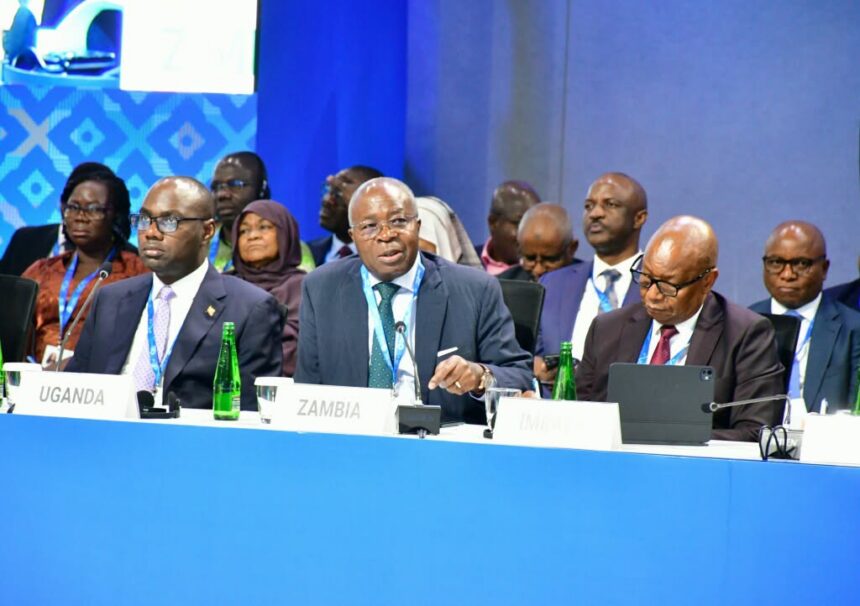
Zambia has urged the World Bank Group to maintain concessional financing for African countries while directing greater support towards productive investment, industrial development and private sector-led job creation. The country argues that development assistance should do more than meet immediate social and economic needs. It should also help African economies expand production, attract private capital, create employment and improve household incomes. Finance and National Planning Minister Dr. Situmbeko Musokotwane, MP, made the call during an engagement between World Bank Group President Dr. Ajay Banga and African governors at the 2026 International Monetary Fund and World Bank Group Annual Meetings in Bangkok. His remarks highlighted Zambia’s position that stronger international development support, combined with domestic reforms and effective institutions, can help accelerate Africa’s economic transformation.
Dr. Musokotwane stressed the importance of continued concessional financing at a time when African countries face economic pressures arising from conflicts, global market uncertainty and external shocks. Such challenges can place additional strain on public finances, limit governments’ ability to fund development priorities and make it more difficult to attract long-term investment. Concessional financing offers developing countries funding on more favourable terms than many commercial borrowing arrangements, helping them support essential public services and development projects. The minister highlighted the International Development Association, commonly known as IDA, as a vital source of support for countries that need affordable financing to advance their development goals. He called for continued international backing ahead of the IDA22 replenishment, emphasising the importance of maintaining resources for countries working to overcome poverty and strengthen their economies.
The Zambian minister also challenged the idea that contributions to IDA should be regarded simply as charitable assistance to developing countries. He argued that financing African development should instead be understood as an investment in economic transformation and shared global prosperity. Stronger African economies can expand markets for goods and services, increase demand for international trade and create more opportunities for businesses across the world. Greater investment in productive sectors can also help generate jobs, improve livelihoods and strengthen the ability of communities to withstand economic shocks. By supporting sustainable economic growth, international development financing can deliver benefits that extend beyond the countries receiving assistance.
Dr. Musokotwane pointed to Thailand and other Asian economies as examples of countries that transformed their economic prospects through sustained reforms, investment and stronger institutions. These economies faced development challenges several decades ago but made progress by improving their investment environments, expanding productive industries and strengthening the foundations for economic growth. Zambia believes that relevant lessons can be drawn from these experiences as African countries seek to increase productivity and create employment for growing populations. However, economic transformation requires more than simply increasing the amount of development financing available. Governments must also establish effective institutions, support competitive businesses and ensure that investment contributes to lasting improvements in production and household incomes.
The minister emphasised that social sector financing remains essential, particularly in areas that directly affect people’s quality of life. Investment in education, healthcare and other public services helps build the human capital needed for a productive economy. However, he called for greater attention to productive capacity, industrial development and the conditions required for private sector growth. This approach would support a stronger balance between meeting immediate social needs and building the industries that can sustain employment over time. For Zambia, expanding productive investment in sectors such as agriculture, mining, manufacturing, energy and transport could help increase domestic value addition and create opportunities for businesses and workers.
Achieving this shift will require changes in the way African governments approach development financing and engage with international institutions. Dr. Musokotwane said public institutions should move beyond a traditional focus on securing development assistance and strengthen their capacity to prepare viable projects, structure financing and facilitate investment. This means identifying projects with clear economic benefits, conducting sound feasibility assessments and developing financial arrangements that can attract suitable investors. Governments must also ensure that projects meet environmental, technical and financial requirements while addressing the needs of communities. Stronger project preparation can help reduce delays, improve the use of public resources and increase the likelihood that proposed investments will reach implementation.
Railway development illustrates the complexity of turning infrastructure proposals into bankable projects. Large railway investments require detailed technical studies, realistic cost estimates, reliable demand forecasts and clear plans for long-term operation and maintenance. They also require suitable financing arrangements and coordination among public institutions, private investors and other stakeholders. Without these elements, infrastructure proposals may struggle to secure financing or deliver their intended economic benefits. Zambia’s emphasis on project preparation reflects the need to develop institutional expertise that can translate national development priorities into projects capable of attracting investment. This capacity will be important as the country seeks to improve transport connections, support trade and strengthen links between production centres and markets.
World Bank Group President Dr. Ajay Banga outlined several measures aimed at mobilising private capital for development across Africa. These include creating predictable investment conditions, expanding access to local-currency financing, providing guarantees, using political risk insurance and exploring debt-for-development arrangements. Such instruments can help address risks that discourage investors from financing projects in developing economies. Local-currency financing can reduce exposure to exchange-rate movements, while guarantees and political risk insurance can provide protection against certain risks associated with long-term investments. These tools can complement public financing by helping projects attract private investors without requiring governments to fund every investment directly.
The World Bank Group reported mobilising approximately US$22 billion in private capital across Africa in fiscal year 2026, compared with about US$9 billion in fiscal year 2022. It has also set a target of issuing more than US$6 billion in guarantees annually across Africa by 2030. These figures highlight the growing role of private capital mobilisation in the institution’s approach to development financing. Guarantees can help reduce specific risks faced by lenders and investors, making projects more attractive where commercial financing might otherwise be difficult to secure. However, the effectiveness of these instruments will depend on the quality of individual projects, the terms of financing and the ability of participating institutions to manage their obligations. African governments will need to assess each arrangement carefully to ensure that it supports development without creating unsustainable financial risks.
Dr. Banga also discussed risk-sharing arrangements involving multilateral development banks, guarantee agencies and international reinsurers. By distributing certain risks among institutions with different capacities, these arrangements can help unlock investment in projects that might otherwise struggle to obtain financing. The approach is particularly relevant to infrastructure and productive sectors that require substantial upfront capital and generate returns over extended periods. Energy facilities, transport networks and industrial projects can support economic activity, but investors often need greater certainty about the conditions under which they will operate. Well-designed risk-sharing mechanisms can help address some of these concerns while maintaining appropriate safeguards for public finances.
Angola’s debt-for-development arrangement was cited as an example of how countries may seek to refinance existing obligations on better terms and redirect resulting savings towards priority sectors. Such arrangements can potentially create fiscal space for development spending when they reduce financing costs or improve the structure of existing debt. However, their benefits depend on the specific terms of the transaction, the scale of any savings and the obligations attached to the new financing. Countries must also assess how such arrangements affect debt sustainability and their relationships with existing creditors. For Zambia, debt-related financing decisions must remain consistent with creditor agreements, applicable commitments under its IMF-supported programme and the country’s debt sustainability objectives under the G20 Common Framework for Debt Treatment.
The financing instruments discussed during the meeting could offer Zambia opportunities to attract investment into energy, agriculture, mining, transport and manufacturing. These sectors play important roles in production, trade, infrastructure development and employment, making them central to the country’s economic transformation ambitions. Private investment could help businesses expand operations, improve technology and develop processing capacity that allows more economic value to remain within Zambia. In agriculture, investment could support production, storage, processing and access to markets, while manufacturing could create opportunities to produce goods locally. In mining, stronger investment in processing and related services could support value addition, while improvements in energy and transport infrastructure could benefit a wider range of industries.
Nevertheless, attracting private capital requires more than access to financing instruments. Investors also consider policy consistency, regulatory clarity, infrastructure reliability, market demand and the ability to transfer or convert funds where necessary. Governments must therefore work to create conditions that allow businesses to plan for the long term and compete fairly. Effective public institutions can support this process by improving project preparation, coordinating approvals and maintaining transparent investment rules. At the same time, public authorities must ensure that investment arrangements protect the national interest and do not expose the country to unnecessary financial risks. The goal is to mobilise private capital in ways that expand productive capacity, generate employment and support sustainable economic growth.
Skills development formed another important part of the discussion, with Dr. Banga citing the Lobito Corridor as an example of why training programmes must respond to emerging investment opportunities. Major infrastructure developments can generate demand for workers in construction, transport, logistics, maintenance and related services. They can also create opportunities for businesses that supply materials, equipment, food and other services to projects and surrounding communities. However, these opportunities may be difficult for local people to access if their skills do not match employers’ requirements. Training programmes must therefore anticipate future labour demand and prepare workers before major projects reach stages that require large numbers of skilled employees.
For Zambia, aligning technical and vocational education with investment opportunities associated with the Lobito Corridor could help young people and local businesses participate more fully in regional economic activity. Relevant skills could support employment in logistics, mineral value addition, construction, equipment maintenance and related services. Technical and vocational training institutions can help by working with employers to identify the skills needed for specific occupations and adapting their programmes accordingly. Businesses can also contribute through apprenticeships, internships and work-based learning that give trainees practical experience. Such cooperation can improve the connection between education and employment while helping local enterprises compete for contracts and participate in supply chains.
The emphasis on skills development also reflects the need to ensure that infrastructure investment delivers benefits beyond the construction phase. Transport corridors can improve the movement of goods and strengthen connections between producers, markets and regional trading partners. However, local communities benefit most when improved connectivity is accompanied by productive businesses, qualified workers and opportunities to participate in related economic activities. Without appropriate training and access to markets, some communities may struggle to take advantage of new investment. Zambia’s approach therefore points to the importance of combining infrastructure development with human capital investment, enterprise support and planning that responds to local economic needs.
The discussions at the 2026 IMF and World Bank Group Annual Meetings reflect priorities under Zambia’s Grow Zambia Agenda, which focuses on preserving macroeconomic stability, increasing production, mobilising private investment and turning economic growth into jobs and higher household incomes. These objectives are closely linked because stable economic conditions can support investment, while productive businesses can expand employment and generate income. Stronger production can also improve the country’s capacity to participate in regional and international markets. However, lasting progress will depend on effective policies, capable institutions and careful decisions about public borrowing and investment incentives. Development financing must support these objectives without undermining the country’s long-term fiscal position.
The meeting identified several potential areas for deeper cooperation between Zambia and the World Bank Group, including private capital mobilisation, infrastructure financing, productive investment and skills development. These discussions should not be interpreted as confirmation of new financing commitments to Zambia. Any future support would depend on project preparation, financing arrangements, institutional processes and the relevant approvals. The immediate significance of the engagement lies in the shared focus on making development finance more effective at generating investment and employment. For Zambia, the next challenge is to translate these priorities into viable projects that can attract financing and deliver measurable economic benefits.
Zambia’s call for sustained concessional financing and stronger private sector-led job creation highlights the need for a development model that combines affordable funding with productive investment. Continued support through IDA remains important, particularly as developing countries face external economic shocks and competing demands on public resources. At the same time, better project preparation, stronger institutions, effective risk-sharing arrangements and skills development can help African countries attract investment and expand domestic production. For Zambia, the opportunity lies in connecting these tools to national priorities in agriculture, mining, energy, transport and manufacturing while protecting debt sustainability. The central objective is to ensure that development assistance becomes a stronger catalyst for economic transformation, creating jobs, raising household incomes and building a more productive and resilient economy.