



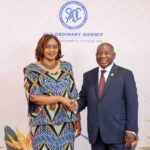




The Electoral Commission of Zambia (ECZ) has declared Hakainde Hichilema president-elect of the Republic of Zambia after he secured 2,965,326 votes in the election. The announcement by ECZ Chairperson Mwangala Zaloumis marks a significant moment in Zambia’s political process and formally confirms Hichilema’s victory at the polls. The result reflects the decision of millions of Zambian voters who participated in the election to choose the country’s next leader. With the official declaration, attention now shifts from the electoral campaign to the transition and the responsibilities that come with leading the nation. Hichilema’s victory also sets the stage for the next phase of Zambia’s political and national development.
The declaration by the Electoral Commission of Zambia represents the formal conclusion of the vote-counting and verification process that followed polling. ECZ Chairperson Mwangala Zaloumis announced the result after the commission completed the necessary electoral procedures. Hichilema’s total of 2,965,326 votes placed him in a position to be declared president-elect. The announcement provides an official outcome to an election that attracted significant attention from voters, political parties and observers. It also gives clarity to the political direction that Zambia will take under Hichilema’s leadership.
The number of votes secured by Hichilema highlights the scale of support behind his candidacy. Receiving 2,965,326 votes represents the collective decision of a substantial section of the electorate and gives the incoming president a clear mandate to begin implementing his agenda. The election result also carries expectations from citizens who want government to address issues affecting their livelihoods and communities. Voters will now look towards the incoming administration for progress on economic development, employment, infrastructure, public services and other national priorities. The electoral victory therefore represents not only a political achievement but also the beginning of a period of increased public expectations.
The ECZ plays a central role in ensuring that Zambia’s elections are conducted and managed through an established electoral framework. The commission’s declaration of the president-elect provides the official confirmation needed to move the country from the voting stage towards the next constitutional and administrative processes. The announcement by Chairperson Mwangala Zaloumis therefore carries considerable significance for Zambia’s democratic institutions. It demonstrates the role of the electoral authority in communicating the final outcome of the national vote. The declaration also allows political stakeholders and citizens to focus on the next stage of the country’s political transition.
Hichilema’s election victory comes with the responsibility of responding to the concerns and expectations of citizens across Zambia. The campaign period gives political candidates an opportunity to present their ideas and plans, but the period after an election requires those promises to be translated into practical policies and programmes. As president-elect, Hichilema will face expectations from supporters as well as citizens who backed other candidates. His administration will need to demonstrate that national leadership extends to all communities and political constituencies. The ability to build cooperation across political divisions will be an important part of maintaining national unity.
The election outcome also reinforces the importance of Zambia’s democratic process and the role of voters in determining political leadership. Citizens exercised their right to participate in the electoral process and ultimately helped determine who would lead the country. The ECZ’s announcement provides a formal conclusion to that process and establishes the result on which the next stage of governance will be based. Political parties and their supporters will now have to respond to the outcome through the appropriate democratic and constitutional channels. The peaceful acceptance and management of electoral results remain important to strengthening confidence in Zambia’s democratic institutions.
For Hichilema, being declared president-elect marks the beginning of a new phase that will require careful attention to the priorities raised during the election campaign. The 2,965,326 votes provide a significant foundation for his leadership, but they also represent a responsibility to deliver on the expectations of those who supported him. At the same time, citizens who voted for competing candidates will expect the incoming administration to consider their concerns and interests. Effective governance will therefore require a national approach that recognises the diversity of Zambia’s electorate. The president-elect will have to balance political expectations with the broader needs of the country as he prepares to assume office.
The declaration by ECZ Chairperson Mwangala Zaloumis is therefore more than an announcement of an election result. It represents a key milestone in Zambia’s democratic journey and formally identifies Hakainde Hichilema as the country’s president-elect after he polled 2,965,326 votes. The result now provides a clear political mandate and opens the way for the next steps in the transition of national leadership. As the country moves beyond the election, attention will increasingly focus on how the incoming administration responds to the challenges facing Zambians. The outcome ultimately places Hichilema at the centre of Zambia’s next political chapter, with citizens watching closely as he prepares to turn the mandate received at the ballot box into governance and national development.