



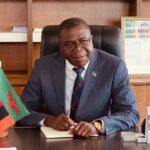




Chipangali West Member of Parliament Vincent Mwale has explained his decision to contest the parliamentary election as an independent candidate, saying his primary objective was to represent the interests of his constituents without being constrained by a political party agenda. Mwale said his choice was based on the desire to serve the people directly and exercise independent judgment in Parliament. He believes an independent position will allow him to scrutinise government decisions and hold those in power accountable based on the interests of citizens. His remarks come as newly elected Lima MP Kelvin Kaunda calls for political parties in Zambia to coexist despite their differences. The two positions highlight the wider debate about political competition, parliamentary oversight and the responsibility of elected representatives to put citizens at the centre of their work.
Speaking during the Phoenix FM Breakfast Show on Monday, Mwale said he deliberately chose to contest as an independent because he wanted to remain genuinely independent once elected to Parliament. He explained that his intention was to stand with the people of Chipangali West and ensure their concerns remained central to his work as a legislator. According to Mwale, operating outside a political party structure gives him greater freedom to assess government policies and decisions without having to follow instructions based on party interests. He said he was prepared to provide checks and balances while representing the people who elected him. His comments underline his view that parliamentary representation should be guided primarily by the needs of constituents.
Mwale’s position also raises important questions about the role of independent MPs in Zambia’s Parliament. Members who sit outside political party structures can potentially take positions based on individual assessments of legislation, government programmes and constituency needs. At the same time, independent representatives face the challenge of maintaining influence in a Parliament where political parties play a major role in shaping debates and decisions. Mwale’s stated intention to hold government accountable suggests that he sees parliamentary oversight as one of the key responsibilities attached to his independent mandate. His approach could place particular emphasis on questioning policies, examining government performance and raising issues affecting people in Chipangali West.
The Chipangali West MP made it clear that his decision was not simply about contesting an election without a party ticket. He described independence as something he wanted to carry into Parliament so that he could make decisions without being bound by a political party’s agenda. This distinction is important because elected representatives often have to balance party positions with the concerns of voters in their constituencies. Mwale appears to believe that an independent MP can respond more directly to local concerns when political considerations do not determine every parliamentary position. His comments indicate that he intends to use his position to advocate for his constituents while also scrutinising the government when necessary.
Meanwhile, newly elected Lima MP Kelvin Kaunda has urged political parties to coexist and recognise that political competition should ultimately be about serving the Zambian people. Kaunda’s remarks offer a different but complementary perspective on the relationship between political parties and public service. Rather than allowing political differences to become a source of permanent division, he believes competing parties should be able to operate alongside each other while remaining focused on citizens. His position highlights the importance of constructive political engagement in a democratic system. Political parties may compete for electoral support, but elected leaders still share a responsibility to contribute to the development and stability of the country.
Kaunda’s call for coexistence comes at a time when political competition remains an important feature of Zambia’s democratic system. Elections give citizens the opportunity to choose representatives and compare different political programmes and ideas. Once the elections are over, however, elected leaders must deal with practical issues affecting communities regardless of political affiliation. This requires cooperation between political parties, government institutions and individual representatives. Kaunda’s argument that politics is a competition to serve the Zambian people therefore places public interest above political rivalry and calls for a more constructive approach to political differences.
The views expressed by Mwale and Kaunda highlight two different approaches to political representation while sharing an emphasis on service to citizens. Mwale believes independence from a political party will give him the freedom to represent his constituents and hold government accountable without being influenced by a party agenda. Kaunda, meanwhile, believes political parties can coexist and compete while maintaining a common commitment to serving the public. Both positions recognise that elected office carries responsibilities that extend beyond winning an election. Their comments therefore contribute to a broader discussion about how Zambia’s politicians can balance political competition, accountability and cooperation.
For constituents in Chipangali West, Mwale’s commitment to independent representation will now be measured by how effectively he raises their concerns and scrutinises government decisions. His decision to contest as an independent candidate gave voters the opportunity to support a representative who presented himself as free from party control. The responsibility now rests on him to demonstrate that independence through his conduct in Parliament and his engagement with the constituency. This could include raising local development concerns, questioning government policies and supporting measures that benefit residents. His success as an independent MP will ultimately depend on whether citizens see a clear connection between his parliamentary work and the interests he pledged to represent.
Kaunda’s message similarly places responsibility on elected leaders to move beyond electoral competition once voters have made their choice. His call for coexistence suggests that political parties should be able to disagree while still cooperating where the national interest requires it. Such an approach can help create space for meaningful debate without turning political differences into obstacles to development. It also reinforces the idea that competition in a democracy should produce better representation and stronger public service rather than permanent conflict. As the new Parliament settles into its work, the ability of MPs from different political backgrounds to engage constructively will be closely watched by the Zambian public.
The statements by Vincent Mwale and Kelvin Kaunda ultimately point to the same fundamental issue, the responsibility of elected leaders to serve the people who placed their trust in them. Mwale has chosen an independent path with a stated commitment to accountability and constituency representation, while Kaunda has called on political parties to coexist and treat politics as a competition to serve Zambia. Their views demonstrate that political representation can take different forms while still being centred on public interest. The coming parliamentary period will provide an opportunity for both MPs to demonstrate their positions through their actions, decisions and engagement with citizens. For Zambians, the most important measure will be whether political differences translate into effective representation, accountability and tangible progress in their communities.