




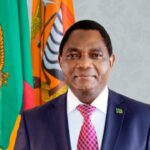


President Hakainde Hichilema has reaffirmed his commitment to serving the people of Zambia following a hard-fought election, describing the trust placed in his leadership as a profound responsibility. In a message to citizens, Hichilema expressed gratitude for the opportunity to once again hold the country’s highest office and pledged to remain focused on serving Zambians. His message placed strong emphasis on peace, democracy, unity and national development. He also acknowledged that the election produced different political preferences among citizens, stressing that his government would continue working for every Zambian regardless of how they voted. The president’s remarks signal a renewed focus on development and cooperation as Zambia moves beyond the campaign period.
Hichilema highlighted Zambia’s democratic traditions, describing the country as a nation of peace, law and order where political differences are settled through the ballot box. His statement placed democracy at the centre of the election process and presented the outcome as a reflection of the will of the people. He stressed that political disagreements should not divide the nation or lead to conflict. Instead, citizens should continue using democratic institutions and elections to express their choices. This emphasis on peaceful political participation comes as Hichilema calls on Zambians to look beyond the election and focus on the country’s shared future.
The president also reflected on the extensive campaign journey that took him and his team across all 116 districts of Zambia. He recalled visiting cities, compounds, villages and farms, giving him an opportunity to engage directly with people in different parts of the country. According to Hichilema, those engagements provided a first-hand understanding of the challenges facing ordinary citizens. The experiences gained during the campaign have strengthened his resolve to work with communities to address those challenges. His message suggests that the concerns raised by citizens during the campaign will remain important as his administration returns its attention to governance and development.
A key part of Hichilema’s message was his acknowledgement of Zambians who supported opposition parties and preferred different political ideas. Rather than viewing those voters as being outside his government’s responsibility, he said they had been heard and that his administration would continue working for them. The president stressed that every Zambian should benefit from the country’s development regardless of their political preference. This commitment reinforces the importance of inclusive governance in a country where citizens hold different political views. Hichilema’s appeal for unity also reflects his intention to move beyond electoral competition and concentrate on issues that affect Zambians across political lines.
The president placed particular emphasis on the children he encountered during the campaign, saying those memories would remain with him as he returned to his responsibilities in government. His reference to Zambia’s children presented development as an investment in the country’s future generations. Hichilema said his administration was committed to building a better Zambia for those children to inherit. That commitment links current government priorities with the long-term wellbeing and opportunities of future generations. It also places responsibility on leaders to ensure that development reaches communities across the country rather than remaining concentrated in particular areas.
Hichilema further told citizens that their concerns had been heard and that his administration understood the need to work harder to deliver meaningful development. He stressed that development must benefit every single Zambian and reach every corner of the country. This broad focus reflects the challenges involved in governing a nation with diverse communities, economic activities and development needs. His message called for greater effort, cooperation and determination as the country enters the next phase after the election. The president presented development not simply as a government responsibility but as a shared national objective that requires cooperation between citizens and their leaders.
Unity featured prominently throughout Hichilema’s message as he called for national cooperation and a shared sense of purpose. He said his administration would devote its energies to development and progress while remaining strengthened by unity and cooperation. The emphasis is significant because elections can create strong political divisions between supporters of competing parties and candidates. By calling on citizens to come together after the campaign, Hichilema sought to shift national attention away from political competition and towards common goals. His message therefore focused on the idea that Zambia’s progress depends on citizens working together despite differences in political opinion.
The president concluded by acknowledging that the people had spoken after a competitive campaign and said the country must now turn its attention towards building greater peace and prosperity. His message positioned the election as a moment for Zambia to renew its commitment to democratic values while concentrating on the practical work of national development. The phrase “One Zambia, One Nation, One people” reinforced his appeal for unity and national solidarity. Hichilema’s statement ultimately presents the next chapter of his leadership as one centred on service, development, cooperation and inclusion. His pledge to work for every Zambian, including those who supported his opponents, provides a clear message that the responsibilities of government extend beyond electoral divisions.
Hakainde Hichilema’s message carries a strong call for Zambia to move forward together after a demanding election period. His acknowledgement of voters with different political preferences, his reflections on visiting communities across all 116 districts and his focus on children underline the broad responsibilities he associates with public office. The president has placed development, peace, democracy and unity at the centre of his renewed commitment to national service. The challenge now is to translate those commitments into meaningful progress that citizens can experience in their communities and daily lives. As Zambia moves beyond the election, Hichilema’s message is ultimately a pledge to serve the entire nation and pursue a future built around peace, prosperity and shared national purpose.