







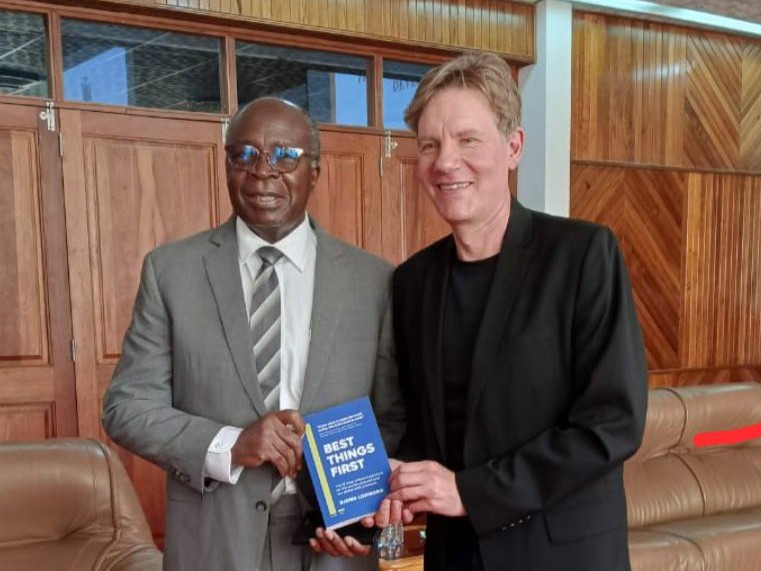
Dr Situmbeko Musokotwane, Zambia’s Minister of Finance and National Planning, recently met with Prof. Bjorn Lomborg, author of Best Things First, a data-driven book that challenges policymakers to rethink resource allocation in developing and low-income countries.
Prof. Lomborg, known for The Skeptical Environmentalist and Cool It, has shaped global discussions on climate policy, development priorities, and evidence-based decision-making. Best Things First builds on this work by providing practical guidance for governments working to raise living standards with limited budgets.
The book highlights the importance of resource prioritisation, arguing that countries with constrained fiscal space must focus on interventions that deliver the greatest social and economic returns. Governments cannot fund every initiative at once and must adopt disciplined, data-driven planning.
Prof. Lomborg stresses that evidence must guide national policy. Cost-benefit analysis should drive decisions rather than intuition or political impulse. For countries managing debt or rebuilding fiscal credibility, this approach supports sustainable development.
Best Things First also identifies high-impact, low-cost solutions that are often overlooked. Effective interventions in health, education, trade facilitation, and digital transformation can deliver exceptional returns if implemented efficiently.
Dr Musokotwane noted that the book speaks directly to the realities of low-income and developing economies, including Zambia’s focus on fiscal discipline, smarter investments, debt sustainability, and building a resilient, competitive economy. Holding the book alongside Prof. Lomborg symbolised a shared commitment to ensuring every public kwacha works harder, reaches further, and delivers more for citizens.
The insights from Best Things First offer a roadmap for policymakers, economists, and analysts seeking to maximise national impact with constrained resources, making it a valuable resource for Zambia and other developing nations.