







The Zambia Statistics Agency (ZamStats) has emphasized that the ongoing Gross Domestic Product (GDP) rebasing exercise will significantly improve how Zambia’s economy is measured and understood. The agency says the process will deliver a more accurate reflection of economic activity, strengthen evidence-based policymaking, improve macroeconomic analysis and enhance investor confidence. The update comes as Zambia continues modernizing its statistical systems to keep pace with structural changes in the economy. Officials say the rebasing exercise is not just a technical adjustment but a key national development tool. It is expected to influence planning, budgeting and policy decisions across both public and private sectors.
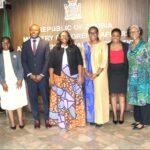
Speaking during a GDP rebasing information and communication forum held on the sidelines of the 60th Zambia International Trade Fair in Ndola, Statistician General Sheila Mudenda explained the importance of Gross Domestic Product as a core measure of national performance. She said GDP plays a central role in national budgeting, fiscal and monetary policy formulation, debt sustainability analysis and investment promotion. It also supports poverty reduction strategies, development planning and monitoring progress toward national and global development goals. Mudenda noted that many economic decisions depend on GDP data, which makes accuracy and relevance essential. She stressed that outdated benchmarks can distort how the economy is interpreted and managed.
Mudenda revealed that Zambia’s current GDP estimates are based on a 2010 base year. While this was appropriate at the time, she said the structure of the economy has changed significantly over the past fifteen years. She highlighted major growth in sectors such as mining, construction, financial services, information and communication technology and the digital economy. She also pointed to increased private sector participation across multiple industries. According to her, these changes mean the economy now operates in a way that is not fully captured by the current statistical base year.
She explained that ZamStats selected 2023 as the new base year for the rebasing exercise. The year was chosen because it reflects a relatively stable economic environment and provides strong benchmark data for national accounts compilation. Mudenda said the new base year will improve the accuracy and relevance of economic statistics. It will also enhance international comparability, which is important for global reporting and investment decisions. She added that a modern base year ensures that economic indicators reflect current realities rather than outdated structures.
A key component of the rebasing exercise is the 2025 Economic Establishment Census, which ran from May to October 2025. The nationwide exercise covered both formal and informal businesses across all provinces and districts. It collected data from sectors such as manufacturing, mining, agriculture, trade, transport, ICT, financial services, tourism and construction. The goal was to build a complete picture of economic activity in Zambia. Mudenda said the census is essential for updating the country’s Statistical Business Register and improving national accounts.
She said the Economic Establishment Census was designed to achieve several objectives. These include identifying emerging sectors, improving GDP measurement quality and strengthening evidence-based policymaking. It also provides updated information on the structure and distribution of businesses across the country. Mudenda noted that understanding both formal and informal activity is critical for accurate economic analysis. She added that the census helps reveal where growth is happening and how different sectors contribute to national output.
Preliminary results from the census have already shown major changes in Zambia’s business landscape. Mudenda disclosed that the number of economic establishments increased from about 66,000 in the 2010 benchmark to approximately 485,000 in the 2025 census. She explained that this reflects improved coverage and a more detailed understanding of economic activity. However, she cautioned that an increase in business establishments does not automatically mean economic growth. Instead, it shows better data collection and a clearer view of how the economy is structured.
Mudenda said the census provides the foundation needed to ensure GDP estimates reflect the current economy. She described it as one of the most comprehensive efforts to map Zambia’s productive sectors in recent years. It also supports the development of updated supply and use tables used in national accounts. These tools help balance economic data and improve accuracy in measurement. She said the results will allow policymakers to make more informed decisions based on current evidence.
She also outlined progress made in the rebasing exercise so far. This includes the establishment of technical governance structures and the review of statistical methodologies. The process has also involved the 2024 Household Budget Survey, updates to the business register and integration of administrative data from key institutions. Capacity building has been carried out across the national statistical system. She said these steps are critical for ensuring that the final GDP figures meet international standards.
Mudenda explained that the remaining stages of the process include final data validation and reconciliation of sector estimates. Other steps involve balancing supply and use tables, quality assurance reviews and peer evaluations by technical experts. The agency will also complete methodological documentation and conduct stakeholder briefings before publishing the revised GDP series. She said each stage is designed to ensure transparency and statistical accuracy. The process follows global best practices for national accounts compilation.
She emphasized that GDP rebasing does not create new wealth or economic activity. Instead, it improves measurement by using updated data and improved methods. She said any changes in GDP figures should be understood as statistical refinement rather than actual economic expansion. This clarification is important for public understanding and policy interpretation. It ensures that changes in numbers are not misread as sudden economic gains or losses.
Mudenda said the successful completion of the exercise will bring several benefits. These include stronger macroeconomic analysis, improved policy design and better monitoring of development programmes. It will also support investor confidence by providing clearer and more reliable data. She added that debt sustainability analysis will become more accurate with updated figures. Overall, the rebasing exercise is expected to strengthen economic planning and decision-making across sectors.
At the same forum, Ministry of Finance and National Planning Director for Human Resource and Administration Nalituba Mwale said the exercise is a key step in modernizing Zambia’s economic data systems. She noted that the economy has changed significantly over the past decade, particularly in ICT, tourism, mining, financial services and renewable energy. Mwale said these changes must be reflected in national statistics to ensure accurate representation. She added that updated data will benefit policymakers, investors, development partners and citizens. She described the rebasing process as essential for understanding Zambia’s evolving economy.
The forum brought together government officials, the Bank of Zambia, private sector representatives, academics, development partners and members of the public. Participants discussed the importance of accurate economic data in shaping national development. The Ministry of Finance and ZamStats reaffirmed their commitment to strengthening the statistical system. They said reliable data remains central to sustainable development and inclusive economic growth.