






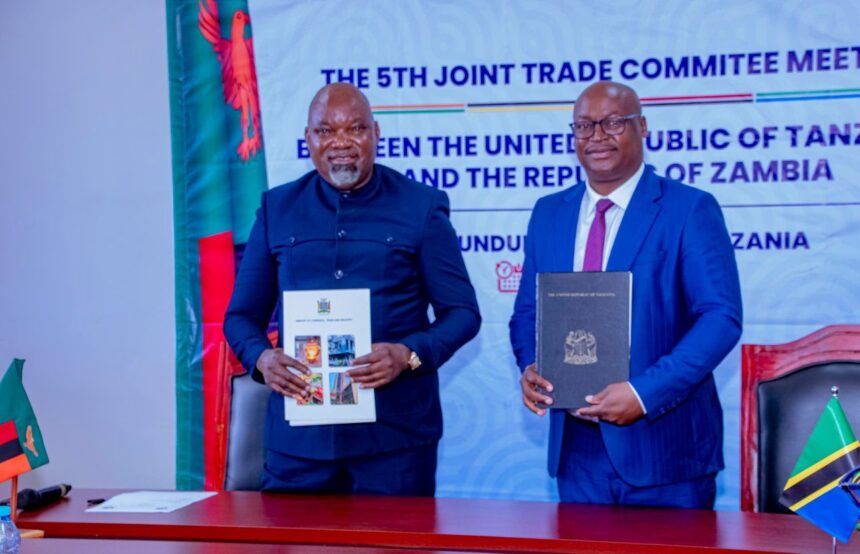
Zambia and the United Republic of Tanzania have taken another major step toward strengthening regional economic cooperation following the successful convening of the 5th Joint Trade Committee (JTC) Meeting held from 4th to 7th May 2026 at the Tunduma One Stop Border Post in Tanzania. The high-level engagement brought together officials from both countries to review progress made on earlier commitments, tackle emerging trade-related challenges, and identify practical solutions aimed at improving bilateral trade and economic growth. The meeting reflected the growing commitment by both governments to deepen regional integration and create a more efficient trade environment for businesses, transporters, and communities that depend on cross-border commerce. Officials used the platform to evaluate existing systems, discuss policy improvements, and strengthen cooperation on issues affecting the movement of goods and services between the two neighboring countries. The gathering also highlighted the importance of collaboration in building stronger regional economies within Southern and Eastern Africa.
The Joint Trade Committee meeting was guided by a shared vision of promoting sustainable economic development through enhanced trade facilitation and improved border operations. Delegations from both Zambia and Tanzania reaffirmed the historical ties and strong bilateral relations that have existed between the two countries for decades. The representatives acknowledged the continued support and leadership provided by their respective Heads of State in advancing regional integration and improving trade cooperation. This political commitment has continued to play a significant role in driving economic partnerships and infrastructure development between the two nations. Both sides emphasized that improved trade relations are essential for boosting industrial growth, increasing employment opportunities, and improving livelihoods for citizens in both countries.
A major focus of the discussions centered on improving efficiency at the Nakonde-Tunduma One Stop Border Post, which remains one of the most important trade gateways in the region. The border post serves as a key corridor for the transportation of goods between Zambia, Tanzania, and several other neighboring countries. Deliberations explored ways to streamline border procedures, reduce delays, and improve logistics operations to ensure faster movement of cargo and passengers. Officials also discussed the need to strengthen coordination among border agencies to improve service delivery and eliminate unnecessary administrative bottlenecks. The meeting recognized that efficient border management is critical for reducing trade costs and increasing competitiveness in regional markets.
The promotion of trade and investment opportunities also formed a central part of the discussions during the Joint Trade Committee meeting. Both countries expressed the need to encourage value addition in key sectors and create more opportunities for local industries to benefit from bilateral trade arrangements. Delegates emphasized the importance of increasing private sector participation in cross-border trade and investment activities. There was broad agreement that stronger cooperation between governments and businesses would help unlock economic opportunities and stimulate industrial growth along the trade corridor. The meeting further highlighted the role of small-scale traders and transporters in supporting local economies and promoting inclusive economic development.
One of the most significant outcomes of the meeting was the resolution of several long-standing Non-Tariff Barriers (NTBs) that have negatively affected trade flows between Zambia and Tanzania. These barriers have historically contributed to increased costs, transport delays, and operational inefficiencies for businesses using the corridor. During the discussions, both countries agreed on several measures aimed at addressing these challenges and improving the overall trading environment. Key agreements included enhancing fuel testing standards, streamlining cargo documentation processes, removing specific fees affecting transporters, and improving border operations. These decisions are expected to reduce unnecessary delays and simplify trade procedures for businesses operating across the border.
The removal of certain charges and restrictions imposed on transporters is expected to significantly lower the cost of doing business between Zambia and Tanzania. Transport operators have often faced operational difficulties caused by multiple fees, regulatory inconsistencies, and time-consuming procedures at border points. By eliminating some of these constraints, both governments aim to improve the competitiveness of cross-border trade and support the smooth movement of goods along the regional corridor. Improved logistics and transport efficiency are also expected to benefit manufacturers, exporters, importers, and consumers who rely on affordable and reliable trade systems. Regulatory and administrative reforms introduced through the Joint Trade Committee are likely to contribute to stronger commercial activity and economic growth in the region.
Both parties reaffirmed their commitment to resolving outstanding Non-Tariff Barriers and ensuring the effective implementation of agreed measures within specified timelines. Delegates stressed the importance of accountability and continuous engagement in monitoring progress on the implementation of resolutions reached during the meeting. Government institutions from both countries were encouraged to strengthen coordination and maintain regular communication to address emerging trade concerns quickly and effectively. The meeting also emphasized the need for policy consistency and transparent regulatory systems that support regional trade integration. This approach is expected to build greater confidence among investors, traders, and transporters operating along the Zambia-Tanzania trade route.
The discussions also underscored the importance of stronger collaboration among government agencies, the private sector, and cross-border traders in achieving sustainable economic growth. Officials recognized that regional integration efforts can only succeed when all stakeholders actively participate in trade facilitation initiatives. The private sector was identified as a key driver of economic expansion and innovation, particularly in sectors linked to manufacturing, logistics, agriculture, and transportation. Both governments encouraged businesses and traders to take advantage of the improving trade environment and emerging opportunities created through bilateral cooperation. Increased participation by local businesses is expected to contribute to job creation, higher production levels, and stronger regional value chains.
The Government of Zambia expressed satisfaction with the outcomes of the 5th Joint Trade Committee meeting and reaffirmed its commitment to working closely with the United Republic of Tanzania to deepen bilateral relations. Officials stated that the agreements reached during the meeting would contribute to improved trade performance, better regional connectivity, and enhanced economic opportunities for citizens in both countries. The government also called upon transporters, traders, and private sector stakeholders to fully utilize the improved business environment resulting from the discussions and resolutions reached at the meeting. Authorities believe that these reforms will support economic inclusion and create more opportunities for businesses operating within the region.
The successful conclusion of the 5th Joint Trade Committee meeting represents another important milestone in the ongoing partnership between Zambia and Tanzania. The agreements reached demonstrate the willingness of both countries to address trade barriers through dialogue, cooperation, and practical policy reforms. As both governments continue implementing measures aimed at enhancing trade facilitation and strengthening regional connectivity, businesses and communities are expected to benefit from faster trade processes, lower operational costs, and increased commercial opportunities. The meeting also reinforced the broader goal of advancing regional integration within Africa by promoting efficient transport systems, stronger economic cooperation, and inclusive development. Zambia and Tanzania now move forward with renewed commitment to building a stronger and more competitive regional trade corridor that supports long-term economic growth and improved livelihoods for their people.