


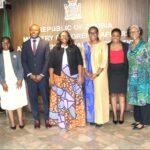

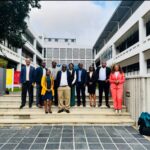



The Government of the Republic of Zambia advanced its economic cooperation with the People’s Republic of China through a high-level Post-Budget and Economic Outlook Dialogue convened with the Chinese Chamber of Commerce and Industry at the Mulungushi International Conference Centre. The engagement followed closely after the successful State Visit by Premier Li Qiang, whose discussions with President Hakainde Hichilema reaffirmed China’s support for Zambia’s debt-resolution process, opened new avenues for industrial cooperation, and strengthened confidence in Zambia’s long-term development trajectory.
The dialogue served as a natural extension of these bilateral commitments, translating political momentum into concrete private-sector and project implementation opportunities. Minister of Finance and National Planning, Dr. Situmbeko Musokotwane, emphasized that the Post-Budget Dialogue aligns Zambia’s diplomatic engagements, fiscal priorities, and investment ambitions outlined in the 2026 National Budget. He noted the country is transitioning from macroeconomic stabilization to structural transformation, with national priorities in manufacturing, energy security, infrastructure modernization, digital expansion, and regional trade aligned with Chinese enterprise capacities.
Energy remains both Zambia’s key constraint and future investment frontier. Installed power generation increased from 3,318MW in 2021 to 3,886MW in 2025, with 1,500MW of solar and 300MW of thermal power planned in 2026. The K500 million Electricity Fund has been established to mobilize private-sector participation and catalyze public–private partnerships, reflecting priorities discussed during Premier Li’s visit, including renewable investments, transmission upgrades, and energy diversification.
Dr. Musokotwane also encouraged Chinese firms to invest in Zambia’s manufacturing sector, leveraging regional corridors such as Lobito and TAZARA to deepen industrial value chains and promote value addition in mining, agriculture, automotive components, and industrial services. He highlighted that fiscal stability and revitalized regional corridors position Zambia as a competitive manufacturing and processing hub for southern Africa, demonstrating the alignment of diplomatic commitments and fiscal policy as part of a long-term national strategy.
Chinese Chamber President Li Tie praised Zambia’s predictable, transparent, and reform-oriented investment climate. He highlighted the positive macroeconomic signals from the 2026 National Budget, including the restructuring of 94 percent of Zambia’s external debt, projected GDP growth above 6.4 percent, targeted inflation of 6 to 8 percent, a fiscal deficit of 2.1 percent, and a domestic resource contribution of approximately 82 percent. He identified significant opportunities across renewable energy, digital infrastructure, healthcare, education, agro-processing, and public–private partnerships.
The dialogue revealed key priorities for the next phase of Zambia–China cooperation, including investments in energy generation, grid modernization, solar and storage solutions, and industrial development in automotive components, copper fabrication, textiles, and agro-processing. Other areas include digital infrastructure expansion, rural connectivity, fintech solutions, agriculture and food processing for domestic and regional markets, and transport and logistics through revitalized corridors. Public–private partnerships in power generation, highways, logistics hubs, and community infrastructure were also emphasized.
In closing, Dr. Musokotwane reaffirmed that sustained economic transformation requires cross-sector collaboration and inclusive engagement of government, private sector, civil society, and international partners. He urged local businesses and entrepreneurs to pursue partnerships with international firms, including Chinese enterprises, to facilitate technology transfer, skills development, and regional competitiveness. With a stable policy environment, a forward-looking Budget, and significant investment opportunities, Zambia is positioned to generate inclusive, globally competitive growth, calling on all stakeholders to invest, collaborate, and build a prosperous future for the nation.