


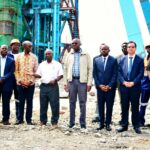

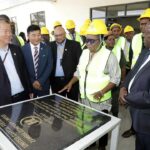


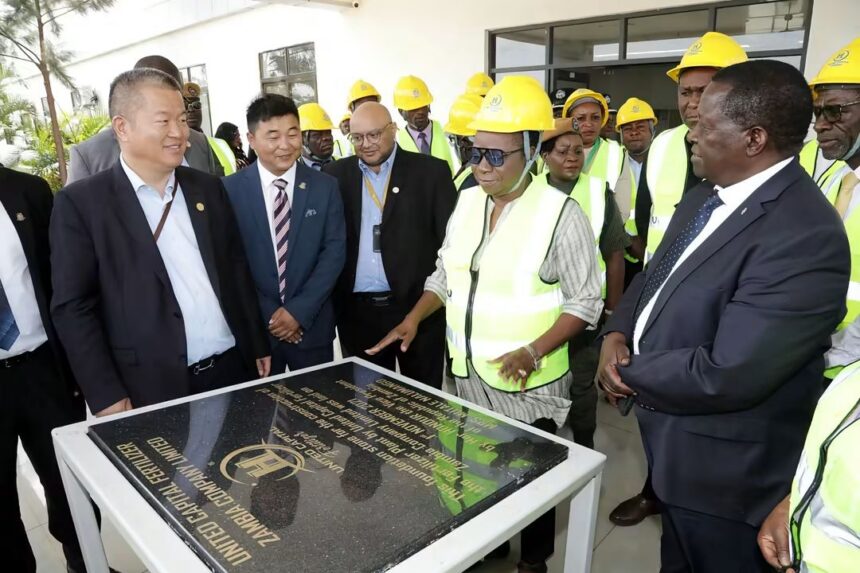
Zambia is strengthening its ambition to become a major producer and exporter of fertilizer following significant industrial development at United Capital Fertilizers. Five years after the foundation stone for the fertilizer manufacturing facility was laid, the country is witnessing remarkable progress in industrial investment and local manufacturing capacity. The development represents an important milestone in the government’s Grow Zambia Agenda, which seeks to promote economic growth, strengthen domestic production and reduce dependence on imported goods. Vice President Dr W.K. Mutale Nalumango has described the investment as a significant contribution to Zambia’s industrialisation ambitions. The project also reflects the growing role of private sector investment in creating jobs, expanding manufacturing and supporting the country’s long-term economic development.
The development of United Capital Fertilizers is particularly important to Zambia’s agricultural sector, where fertilizer remains a key input for crop production and food security. Increasing local fertilizer manufacturing capacity could help reduce the country’s dependence on imported agricultural inputs while strengthening the domestic supply chain. Greater local production also offers opportunities to improve the availability of fertilizer for farmers and support the government’s efforts to increase agricultural productivity. Zambia’s ambition to become self-sufficient in fertilizer production is therefore closely connected to its broader economic and agricultural development goals. By strengthening domestic manufacturing, the country aims to retain more economic value locally while positioning itself to supply fertilizer to neighbouring markets.
Vice President Nalumango highlighted the importance of the progress made since the foundation stone for United Capital Fertilizers was laid five years ago. Returning to witness the industrial transformation demonstrates the scale of the investment and the government’s continued interest in projects that contribute to national development. The facility represents more than an investment in fertilizer production because it forms part of a wider strategy to strengthen Zambia’s industrial base. Developing local manufacturing industries can create opportunities for suppliers, transport companies, distributors and other businesses that support production. These economic connections can help stimulate activity beyond the factory itself and contribute to broader economic growth.
A major part of the announcement is Wonderful Group’s ambitious US$5 billion investment growth plan. According to the Vice President, the investment is expected to support industrialisation, expand manufacturing capacity and strengthen Zambia’s energy sector. The plan will also involve the development of the Wonderful Group Industrial Park, which is expected to create more than 25,000 direct jobs. This projected employment opportunity represents a significant potential contribution to Zambia’s labour market, particularly for people seeking opportunities in manufacturing, engineering, construction and related industries. The scale of the proposed investment also demonstrates the potential role of large private sector projects in supporting the country’s economic transformation.
The proposed Wonderful Group Industrial Park is expected to play an important role in expanding Zambia’s industrial capacity. Industrial parks can provide a platform for different manufacturing and supporting businesses to operate within an organised investment environment. Such developments can encourage business partnerships, improve access to infrastructure and support the growth of local industries. If successfully implemented, the planned industrial park could attract additional investment and create opportunities for small and medium-sized enterprises to participate in industrial supply chains. It could also strengthen the contribution of manufacturing to Zambia’s economy by encouraging more local processing and value addition.
The expected creation of more than 25,000 direct jobs is another important aspect of the Wonderful Group investment plan. Employment opportunities in manufacturing and industrial development can provide workers with technical skills, professional experience and sustainable sources of income. Young people could benefit from opportunities in production, engineering, logistics, administration and other specialised fields associated with industrial operations. Local businesses may also benefit from increased demand for goods and services as industrial activities expand. However, the full employment impact will depend on the implementation of the investment plan and the development of the proposed industrial projects.
The Vice President also emphasised the government’s recognition of the private sector as a critical partner in driving economic growth. Government investment alone cannot meet every development need, making private capital essential for expanding productive industries and creating employment. Businesses bring financial resources, technical expertise, management experience and market connections that can support national development priorities. By encouraging investment in manufacturing, agriculture, energy and other productive sectors, Zambia can strengthen its ability to generate wealth and improve economic opportunities. The partnership between government and businesses is therefore central to achieving the country’s industrialisation objectives.
Creating an enabling environment for investment remains an important responsibility of government. Investors require a stable and predictable business environment, reliable infrastructure, access to energy and policies that support long-term business operations. The government has reiterated its commitment to encouraging investments that add value to natural resources, empower local businesses and contribute to national prosperity. Such an approach can help Zambia move beyond exporting raw materials towards producing finished and value-added goods. It can also strengthen local industries and create opportunities for Zambian companies to participate in regional and international markets.
The ambition to position Zambia as a net exporter of fertilizer is particularly significant for the country’s regional trade prospects. Increased domestic production could create opportunities to supply agricultural markets in neighbouring countries, depending on production capacity, pricing, quality and transport infrastructure. Becoming a competitive fertilizer exporter would also support Zambia’s efforts to strengthen its position as a regional manufacturing and agricultural supply hub. However, achieving this ambition will require sustained investment, efficient production systems and reliable distribution networks. Continued collaboration between government and the private sector will be important in turning this objective into a lasting economic achievement.
The progress at United Capital Fertilizers and the proposed US$5 billion Wonderful Group investment plan reflect Zambia’s broader ambition to build a stronger and more diversified economy. The focus on fertilizer production, manufacturing, energy development and employment creation aligns with the objectives of the Grow Zambia Agenda. Vice President Dr W.K. Mutale Nalumango’s remarks underline the government’s intention to work with investors who are prepared to support productive economic activities. While the successful delivery of the wider investment plan will depend on implementation, its projected scale presents significant opportunities for industrial development. Zambia’s long-term economic transformation will depend on turning such investment commitments into operational industries, sustainable jobs and increased local production.