





Zambia is strengthening collaboration across Government to accelerate tourism development and achieve its ambitious target of attracting five million international tourist arrivals by 2031 under the Grow Zambia Agenda. Minister of Tourism Honourable Princess Kasune has called for continued cooperation with the Ministry of Justice, emphasising that the growth of the tourism industry requires support from different government institutions. She believes Zambia has the potential to achieve its tourism target ahead of schedule if all sectors work together to promote the country’s attractions and create a favourable environment for visitors. Her remarks highlight the importance of effective legislation, cultural promotion, visitor safety and investment protection in developing a competitive tourism industry. The government’s renewed focus also reflects the growing recognition of tourism as an important contributor to economic growth, employment creation and national development.
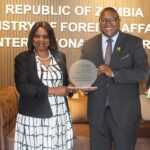
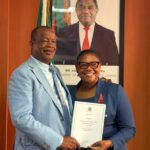
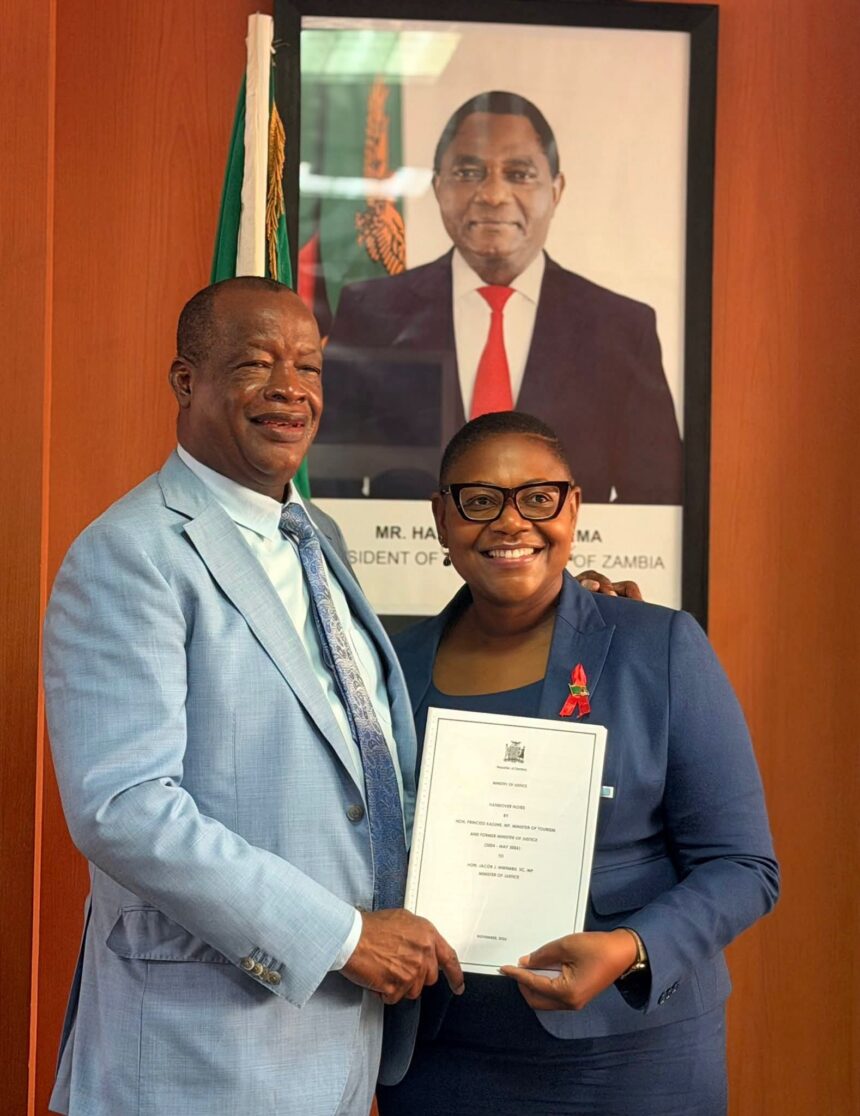
Honourable Kasune made the remarks during the formal handover of the Justice portfolio to her successor, Honourable Jack Mwiimbu. The occasion provided an opportunity to highlight the relationship between the justice system and the tourism sector. Although tourism is primarily associated with travel, hospitality and destination marketing, its success also depends on effective laws and institutions. Tourists need confidence that their safety, rights and interests will be protected when visiting a country. Investors also require a predictable legal environment before committing resources to hotels, lodges, transport services and other tourism-related businesses.
The target of five million international tourist arrivals by 2031 represents an important ambition for Zambia’s tourism industry. Achieving this goal will require coordinated efforts to increase the country’s visibility in international markets and improve the overall visitor experience. Zambia has several tourism attractions, including wildlife destinations, natural landscapes, cultural heritage sites and historical locations. These attractions provide opportunities to develop different tourism experiences that appeal to international and domestic visitors. With effective promotion and continued investment, the country can strengthen its position as an attractive destination in the African tourism market.
Kasune also encouraged Honourable Mwiimbu and officials from the Ministry of Justice to participate in the Take a Holiday-Yamu Loko campaign. The initiative encourages Zambians to explore destinations within their own country rather than limiting their holidays to international travel. Domestic tourism is important because it helps create demand for local hotels, lodges, restaurants, transport operators and tour businesses. It also allows citizens to appreciate the country’s natural beauty, cultural traditions and historical attractions. Greater participation by Zambians can help strengthen the tourism economy while supporting businesses and communities that depend on visitors.
The Take a Holiday-Yamu Loko campaign also presents an opportunity to build a stronger culture of domestic travel. When citizens visit different parts of Zambia, they contribute to local economic activity and help promote destinations through their personal experiences. Domestic visitors can support small businesses, purchase locally produced goods and create demand for tourism services throughout the year. This can help businesses reduce their dependence on international tourist arrivals alone. Encouraging more Zambians to travel locally can therefore strengthen the resilience and sustainability of the tourism sector.
Another important issue raised by Kasune was the need to give greater prominence to Zambia’s cultural heritage and local stories when promoting tourism destinations. Tourism marketing often focuses on natural attractions and wildlife, but culture also plays an important role in attracting visitors. Zambia’s traditional ceremonies, historical sites, cultural practices, traditional foods and community experiences provide opportunities for distinctive tourism products. Promoting these experiences can help visitors understand the country’s identity and appreciate the diversity of its communities. It can also create opportunities for traditional leaders, artists, cultural practitioners and local entrepreneurs to benefit from tourism.
The emphasis on cultural heritage is particularly important for developing tourism products that go beyond traditional sightseeing. Visitors increasingly seek experiences that allow them to interact with local communities and learn about their history and traditions. Zambia can use its cultural resources to create stronger destination identities and encourage tourists to explore different provinces. Such an approach could also help distribute tourism benefits beyond established destinations. By integrating local stories into tourism promotion, the country can strengthen its appeal while supporting the preservation of cultural heritage.
Receiving the handover notes, Honourable Jack Mwiimbu pledged to work with the Ministry of Tourism on legislation that supports the sector’s growth. His commitment highlights the importance of the Ministry of Justice in creating a legal framework that encourages responsible tourism development. Effective laws can help regulate tourism businesses, protect consumers and provide clear guidelines for investors and operators. They can also support the conservation of natural and cultural resources while ensuring that tourism activities benefit local communities. Cooperation between the two ministries will therefore be important in addressing legal and policy issues that affect the industry.
Mwiimbu also stressed that the rule of law, visitor safety and confidence in investment protection are essential to attracting tourists and investors. Safety is one of the factors visitors consider when choosing a travel destination. Tourists need confidence that they can move around safely, access reliable services and receive assistance when necessary. Similarly, investors need assurance that their businesses will operate within a stable legal environment where contracts and property rights receive appropriate protection. Strengthening these conditions can improve Zambia’s reputation as a destination for both leisure travel and tourism investment.
The connection between tourism and justice demonstrates why the achievement of the five million international arrivals target cannot depend on destination marketing alone. Zambia must also invest in infrastructure, improve tourism services, strengthen environmental protection and maintain a supportive business environment. Government ministries, local authorities, traditional leaders and private sector players all have important roles to play. Cooperation can help address challenges that affect tourism development while creating opportunities for new products and investment. A coordinated approach will also make it easier to connect national tourism policies with the needs of local communities and businesses.
Tourism has the potential to support employment and economic opportunities across several sectors of the Zambian economy. Increased visitor numbers can create demand for accommodation, food services, transport, tour operations, entertainment and locally made products. This creates opportunities for small and medium-sized enterprises, particularly those operating in communities close to tourism attractions. Young people can also benefit from employment and entrepreneurship opportunities in hospitality, tour guiding and other tourism-related services. Strengthening domestic and international tourism can therefore contribute to wider economic participation and improved livelihoods.
The collaboration between the Ministry of Tourism and the Ministry of Justice sends an important message about the government’s approach to developing the sector under the Grow Zambia Agenda. Kasune’s call for continued cooperation and Mwiimbu’s commitment to supportive legislation highlight the need to combine tourism promotion with strong legal and institutional foundations. The Take a Holiday-Yamu Loko campaign provides an opportunity to encourage citizens to discover their country, while greater promotion of cultural heritage can help Zambia develop a distinctive tourism identity. Achieving five million international tourist arrivals by 2031 will require sustained commitment, investment and cooperation across Government and the private sector. With the right policies and a shared national effort, Zambia can strengthen its tourism industry and unlock more opportunities for economic growth and employment.