




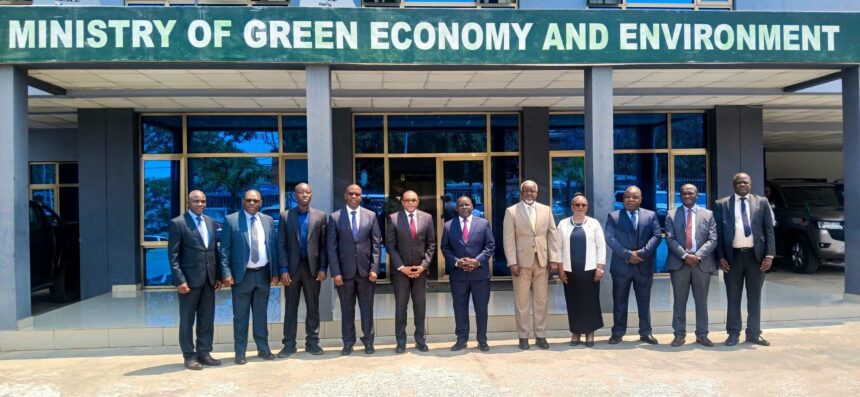
Zambia is seeking stronger collaboration with the United Nations Development Programme (UNDP) as Government works to expand green investments, improve access to climate finance and turn its green growth ambitions into practical benefits for communities. Minister of Green Economy and Environment Dr Gilbert Siame said stronger cooperation with development partners will be important in building projects that can attract international financing while supporting sustainable economic growth. He made the remarks in Lusaka when UNDP Resident Representative Dr James Wakiaga paid a courtesy call on him. The discussions focused on creating a more coordinated approach to green growth, investment, climate resilience and economic development. The proposed approach places energy, agriculture, water security, skills development, innovation and technology at the centre of Zambia’s green growth agenda.
Dr Siame said the Ministry wants to establish a practical platform that connects the Green Growth Strategy, the country’s climate agenda and the Government’s Grow Zambia Agenda. Bringing these priorities together could help improve coordination between national development objectives and investments in the green economy. The Minister highlighted areas such as renewable energy, agriculture and water security as important parts of the country’s development efforts. He also pointed to skills development, innovation and technology as areas where increased investment could create opportunities for communities and young people. The focus is on ensuring that Zambia’s green growth policies translate into projects and programmes that deliver measurable economic and social benefits.
A key issue raised during the meeting was Zambia’s capacity to develop and package projects that can attract international climate finance. Dr Siame said the country needs to strengthen its ability to turn development priorities into investment-ready projects that meet the requirements of international financiers. This includes making better use of opportunities in renewable energy and the circular economy while developing practical skills that can support new green industries. Expanding these areas could contribute to job creation while supporting efforts to diversify the economy. Stronger project preparation could also help Zambia compete for a larger share of available climate-related financing.
The Minister also stressed the importance of preparing for climate-related risks that could affect communities and economic activity. He specifically highlighted anticipated El Niño conditions and called for available financing and interventions to be mobilised and implemented without delay. Climate-related events can place additional pressure on sectors such as agriculture, water and energy, making preparedness an important part of development planning. Strengthening resilience requires coordination between Government, development partners, communities and other stakeholders. Dr Siame’s call therefore places climate preparedness alongside investment and economic development as an important part of Zambia’s green growth agenda.
Dr Wakiaga said UNDP considers green growth an important driver of sustainable economic growth, job creation, investment, energy security and economic diversification. He said the organisation is ready to support the Ministry in developing a Grow Zambia Green Growth and Investment Portfolio. The proposed portfolio would provide a platform for bringing together Government institutions, private-sector players, financial institutions and development partners around transformational projects. Such coordination could help reduce fragmentation and make it easier for stakeholders to identify projects that require investment, technical support or financing. The approach also seeks to connect Zambia’s green growth priorities with opportunities that can deliver economic benefits at a larger scale.
Wakiaga said the approach should move Zambia beyond small and isolated projects towards interventions capable of delivering impact at scale. Larger, coordinated programmes can potentially address multiple development priorities while creating stronger opportunities for investment and partnerships. This approach could be particularly relevant in sectors such as renewable energy, agriculture, water security and green skills, where investment needs extend across communities and regions. Bringing different institutions and financing partners together could also help reduce duplication and improve the use of available resources. The proposed investment portfolio is therefore intended to provide a more structured way of identifying and advancing projects aligned with Zambia’s development priorities.
UNDP and the Ministry are expected to work together over the next 30 to 90 days to develop a practical framework for the proposed approach. Dr Wakiaga said the framework should cover policy, investment, financing, technology, skills and institutional coordination. Bringing these areas into one framework could help clarify the responsibilities of different stakeholders while identifying the resources needed to move projects from planning to implementation. It could also provide a basis for stronger engagement with financial institutions and development partners. The proposed timeline signals an intention to move from discussions towards a more concrete structure for implementing Zambia’s green growth and investment priorities.
Climate resilience will remain an important part of the proposed cooperation between Zambia and UNDP. Dr Wakiaga reaffirmed the agency’s readiness to support the country in strengthening preparedness for anticipated El Niño conditions. This support is expected to complement wider efforts to improve the country’s ability to respond to climate-related risks. Effective preparation can help communities, businesses and public institutions reduce disruptions and protect livelihoods when climate conditions become challenging. Linking climate resilience with green investment could also help Zambia pursue development that addresses immediate risks while supporting longer-term economic transformation.
The engagement between the Ministry of Green Economy and Environment and UNDP highlights the growing focus on connecting environmental priorities with investment, jobs and economic development in Zambia. The proposed Grow Zambia Green Growth and Investment Portfolio could provide a platform for aligning Government institutions, businesses, financial institutions and development partners around projects with the potential to operate at scale. At the same time, stronger project development capacity will be important if Zambia is to secure more international climate finance and turn available opportunities into bankable investments. The emphasis on renewable energy, circular economy opportunities, skills development, technology, water security and climate resilience gives the green growth agenda a broad development focus. As the Ministry and UNDP work towards a practical framework over the coming months, the success of the initiative will depend on how effectively these priorities are converted into funded projects that create jobs, strengthen resilience and deliver tangible benefits for communities across Zambia.