






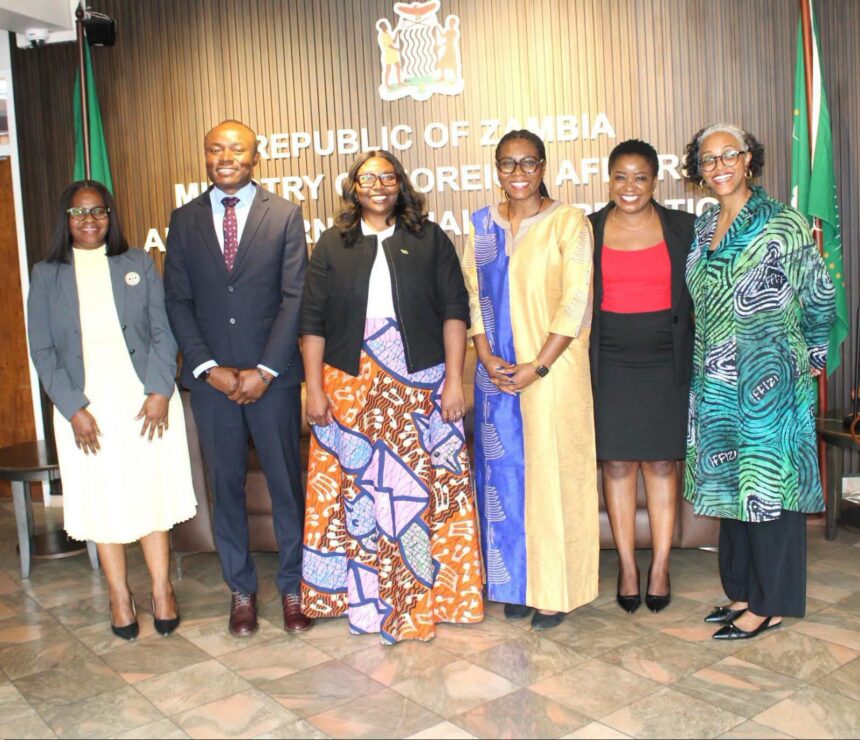
The Government of the Republic of Zambia and the United Nations Development Programme have reaffirmed their commitment to strengthening strategic cooperation in support of Zambia’s national development priorities and the Grow Zambia Agenda. The renewed commitment follows a meeting between Permanent Secretary Ms. Etambuyu Anamela Gundersen and a UNDP delegation. Discussions focused on how development cooperation can better support Zambia’s priorities and translate national plans into measurable results. The meeting also highlighted the importance of strong institutions and effective coordination in delivering development programmes. Both sides recognised that sustained cooperation will be important as Zambia works towards broader socioeconomic transformation.
A central issue discussed during the meeting was the importance of effective leadership, institutional coordination, accountability and implementation. These factors were recognised as essential to ensuring that Zambia’s development ambitions produce tangible outcomes for citizens. Strong leadership can help provide direction while effective coordination can ensure that government institutions and development partners work towards shared objectives. Accountability is also important in ensuring that resources and programmes are managed effectively and remain focused on their intended goals. The emphasis on implementation reflects the need for development plans to move beyond policy commitments and deliver practical results.
The meeting also stressed that development cooperation should remain closely aligned with Zambia’s national development agenda. This agenda is articulated by President Hakainde Hichilema and identifies key areas where support and investment can contribute to the country’s development priorities. Aligning cooperation with national priorities can help ensure that development assistance responds to the needs identified by the Zambian Government. It can also strengthen coordination between government institutions and international development partners. The approach places national priorities at the centre of cooperation while creating a framework for partners to support Zambia’s own development objectives.
Health was identified as one of the key priority areas discussed during the engagement. Improving health outcomes remains important to the wellbeing of citizens and the country’s wider development progress. Development cooperation in this area can support government systems and institutions while strengthening their ability to deliver essential services. The discussions also highlighted the importance of measuring progress through tangible outcomes rather than relying only on broad development commitments. This focus on measurable results can help provide a clearer picture of how interventions are contributing to improvements in the lives of Zambians.
Foreign affairs was also highlighted among the areas of priority for continued cooperation. Strong international engagement can support Zambia’s broader development objectives by strengthening relationships and creating opportunities for collaboration. Development partnerships can also contribute to the country’s ability to participate effectively in regional and international initiatives. The inclusion of foreign affairs in the discussions reflects the broader nature of Zambia’s development agenda, which extends beyond domestic economic and social programmes. Cooperation in this area can complement efforts to advance Zambia’s interests while strengthening its engagement with international partners.
The green economy was another important area highlighted during the meeting. Zambia’s focus on the green economy reflects the need to pursue economic development while considering environmental sustainability and the long-term use of natural resources. Development cooperation can support institutions and programmes that promote sustainable economic activity and create opportunities linked to the green economy. The discussions also connected this priority with comprehensive economic transformation, showing the importance of considering economic growth alongside wider development objectives. Strengthening capacity in these areas can help Zambia pursue development that delivers economic opportunities while addressing environmental considerations.
Both sides also emphasised the need for development progress to be demonstrated through measurable macroeconomic and microeconomic indicators. These indicators can provide information about broader economic conditions as well as changes affecting businesses, households and individual citizens. Tracking measurable outcomes can help government and development partners assess whether programmes are producing the intended results. It can also identify areas where implementation may need to be adjusted or strengthened. The emphasis on evidence and measurable progress therefore forms an important part of the partnership between Zambia and UNDP.
UNDP reaffirmed its commitment to supporting Zambia’s priority development needs by strengthening existing government systems, institutions and capacities. Rather than creating separate structures, the partnership will continue to place national ownership at the centre of development cooperation and implementation. Strengthening existing systems can help government institutions build sustainable capacity and improve their ability to manage development programmes over time. Institutional capacity is particularly important when countries seek to implement complex economic and social reforms. The approach also recognises the role of Zambian institutions in leading and sustaining the country’s development efforts.
National ownership was identified as a key principle in the continued partnership. This means that development cooperation remains closely connected to Zambia’s own priorities, institutions and implementation systems. When government systems and national institutions remain central to development programmes, the benefits of cooperation can contribute to longer-term institutional capacity. It can also support greater coordination between different actors working towards common development goals. The continued focus on national ownership provides a framework for UNDP support to complement rather than operate separately from Zambia’s development agenda.
The meeting concluded with an agreement to sustain strategic dialogue and deepen coordination and collaboration between the Government of Zambia and UNDP. Both sides recognised the importance of maintaining regular engagement as they work towards shared development objectives. Stronger coordination can help ensure that development initiatives remain focused, resources are used effectively and implementation challenges are addressed. The partnership is also expected to support efforts to accelerate Zambia’s socioeconomic transformation. This continued dialogue provides a platform for assessing progress and identifying further areas where cooperation can contribute to national development.
The renewed commitment between Zambia and UNDP places measurable development outcomes, institutional capacity and national priorities at the centre of their cooperation. The focus on health, foreign affairs, the green economy and comprehensive economic transformation reflects the broad range of issues connected to Zambia’s development agenda. Strengthening government systems and ensuring effective implementation will remain important as the country seeks to translate its priorities into tangible improvements for citizens. The agreement to deepen strategic coordination also creates a basis for continued cooperation between the two sides. Through sustained dialogue, stronger institutions and a focus on measurable results, the partnership aims to support Zambia’s development priorities and contribute to meaningful outcomes for the Zambian people.