






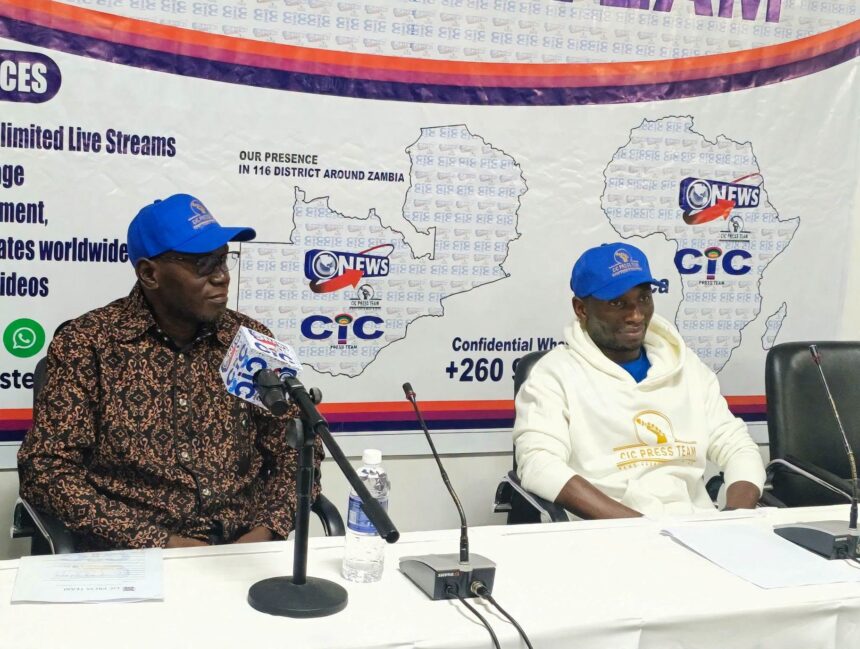
Government has reaffirmed its unwavering commitment to supporting media institutions that uphold professionalism, accuracy and factual reporting in the execution of their duties. The commitment was highlighted by Information and Media Permanent Secretary Thabo Kawana in Lusaka during the national dispatch of Centre for Information and Communication (CIC) teams to cover the forthcoming by-elections. The dispatch comes at a time when the media plays an increasingly important role in helping citizens access reliable information about electoral processes and national affairs. Government says credible journalism remains essential to democratic participation, good governance and national development. Kawana also stressed that journalists covering the elections must remain impartial, objective and focused on providing verified information to the public.
Kawana noted that Government recognises the growing capacity of private media institutions to improve citizens’ access to information. Private media houses have an important role in creating opportunities for public discussion and helping citizens understand issues that affect their communities and the country. Their contribution can also strengthen democratic participation by giving citizens access to information needed to assess political developments and make informed decisions. The Government’s recognition of this role reflects the broader importance of a diverse media environment in a democratic society. Kawana’s remarks also signalled that media institutions that demonstrate professionalism and responsibility can make a meaningful contribution to good governance.
The Permanent Secretary emphasised that journalists have a responsibility to uphold high ethical standards when carrying out their duties. He urged journalists to demonstrate patriotism and a strong sense of responsibility while ensuring that citizens receive accurate, balanced and development-oriented information. Ethical journalism requires reporters to verify information before publishing or broadcasting it and to distinguish confirmed facts from claims that remain unverified. This responsibility becomes particularly important during elections, when inaccurate reporting can influence public understanding of candidates, political developments and electoral events. By maintaining professional standards, journalists can help citizens make decisions based on reliable information rather than rumours or misleading claims.
Kawana also highlighted the growing challenge posed by propaganda and false information on social media platforms. Zambia, like many other countries, operates in an information environment where social media allows claims to spread rapidly, regardless of whether those claims have been properly verified. The speed of online communication can make it difficult for citizens to distinguish factual reporting from misinformation, disinformation or politically motivated content. Professional journalism therefore has an important role in checking claims, providing context and correcting inaccurate information. The ability of credible media organisations to verify information before presenting it to the public can help protect the integrity of the national information space.
Professional media remains a critical defence against misinformation and disinformation, according to the Government. Journalists can help address false claims by investigating information, checking facts and presenting evidence-based reports to audiences. This role becomes even more significant during an election period because political competition can generate large volumes of claims, counterclaims and unverified information. Accurate reporting can give citizens a clearer understanding of what is happening and reduce the risk of confusion caused by false or misleading content. At the same time, professional journalism can support national development by keeping the public informed about policies, programmes and issues affecting society.
Kawana encouraged media institutions across Zambia to emulate the standards set by CIC. He called for information channelled to the public to be verified, truthful and factual, reinforcing the importance of accuracy as a foundation of responsible journalism. Verification can involve checking information against credible evidence, confirming details with relevant sources and avoiding publication of claims that cannot be established. Truthful reporting also requires journalists to avoid deliberately misleading presentations of events, even when a particular version of a story may attract greater public attention. These standards are especially important for media organisations covering elections because their reporting can shape public understanding of the democratic process.
The Government also wants the media to contribute to national unity and development through accurate and relevant reporting. Kawana emphasised that media institutions should deny space to content that promotes disunity, division and hate. This does not remove the media’s responsibility to report difficult or controversial issues, but it highlights the need for responsible coverage that does not deliberately inflame tensions or promote harmful division. Journalists can report political disagreements while maintaining professional language, presenting relevant facts and giving audiences enough context to understand competing positions. Responsible election coverage can therefore support public debate without becoming a source of unnecessary conflict.
The Government believes that a united and well-informed citizenry is essential to accelerating national development and achieving the aspirations of the Eighth National Development Plan. Access to reliable information allows citizens to better understand national priorities and participate in public affairs. It also gives communities a stronger basis for engaging with Government institutions, political leaders and other organisations on matters affecting their lives. A well-informed population can evaluate information more carefully and participate more effectively in democratic processes. The media therefore has a role that extends beyond reporting individual events because credible journalism can contribute to informed public participation and national development.
Government, through the Ministry of Information and Media, has stated that it will continue supporting and encouraging media institutions that uphold professionalism and contribute to national development. The support is also intended for institutions that promote national values and principles through responsible journalism. This position places emphasis on the quality and public value of media work, particularly the ability of news organisations to provide accurate and useful information. The growing participation of private media houses in national assignments also reflects their expanding institutional capacity. For the media sector, maintaining public trust will remain closely connected to accuracy, independence in reporting, professional conduct and responsible treatment of information.
The dispatch of CIC teams to cover the forthcoming by-elections was presented as evidence of growing public confidence in the capacity of private media houses to undertake national assignments. According to Kawana, the development demonstrates that private media institutions can contribute meaningfully to Zambia’s democratic process. Election coverage requires journalists to work under pressure while gathering information from different locations and reporting developments quickly. The ability to perform these duties effectively depends on newsroom systems, experienced personnel, verification processes and a clear commitment to professional standards. The deployment of CIC teams therefore represents not only an operational assignment but also an opportunity for the media organisation to demonstrate its capacity to deliver credible election reporting.
Kawana said the Ministry of Information and Media has closely followed the growth of CIC from its early days and expressed pride in its transformation into what he described as a credible, reliable and respected media platform. The recognition reflects the importance of institutional development within Zambia’s private media sector. A media organisation’s credibility depends on the consistency of its reporting, its treatment of facts and its ability to maintain professional standards over time. As private media institutions take on more national responsibilities, their performance can influence public confidence in the wider media industry. CIC’s deployment to cover the by-elections provides an opportunity to demonstrate the value of accurate and responsible reporting on an important democratic assignment.
Kawana reminded the journalists deployed for election coverage that their primary role is to serve as a mirror of society rather than participants in the electoral contest. This distinction is central to professional election journalism because reporters must observe and explain events without becoming advocates for candidates or political interests. Journalists are expected to gather information, verify it and present it fairly so that audiences can form their own judgments. Maintaining impartiality can be challenging during highly contested elections, particularly when political actors make competing claims and allegations. However, objective reporting remains important if the media is to retain public trust and perform its role as an information provider during the electoral process.
The Permanent Secretary urged the CIC teams to remain impartial and objective throughout their coverage of the by-elections. He also called on them to provide verified and truthful information that keeps the nation informed and enables citizens to make informed decisions. This approach places accuracy ahead of speed when the two come into conflict, particularly where unverified information could have significant consequences. It also requires journalists to provide sufficient context so that audiences can understand electoral developments rather than simply receiving isolated claims or statements. Responsible election coverage can help citizens follow the democratic process with greater clarity and confidence.
The Government’s message comes at an important time for Zambia’s media sector, where traditional news organisations operate alongside rapidly expanding social media platforms. Citizens now have access to information from a wide range of sources, but that wider access also increases the need for reliable journalism that can separate confirmed information from speculation and false claims. Professional media institutions can help meet this need by applying established journalistic standards to political, electoral and national development stories. The forthcoming by-elections will provide another test of the ability of news organisations to maintain accuracy and impartiality while reporting events as they unfold. The quality of that coverage will depend on journalists’ commitment to verification, fairness and public responsibility.
Government’s reaffirmation of support for professional media highlights the important relationship between credible journalism, democratic participation and national development. Kawana’s remarks place particular emphasis on accuracy, ethical conduct, impartiality and responsible reporting as journalists prepare to cover the forthcoming by-elections. The dispatch of CIC teams also demonstrates the growing role of private media institutions in undertaking national assignments and informing the public. As misinformation and disinformation continue to challenge the information environment, professional journalism has an important responsibility to provide citizens with facts they can trust. By remaining impartial, verifying information and reporting responsibly, media institutions can strengthen public confidence, support informed democratic participation and contribute to Zambia’s national development.