







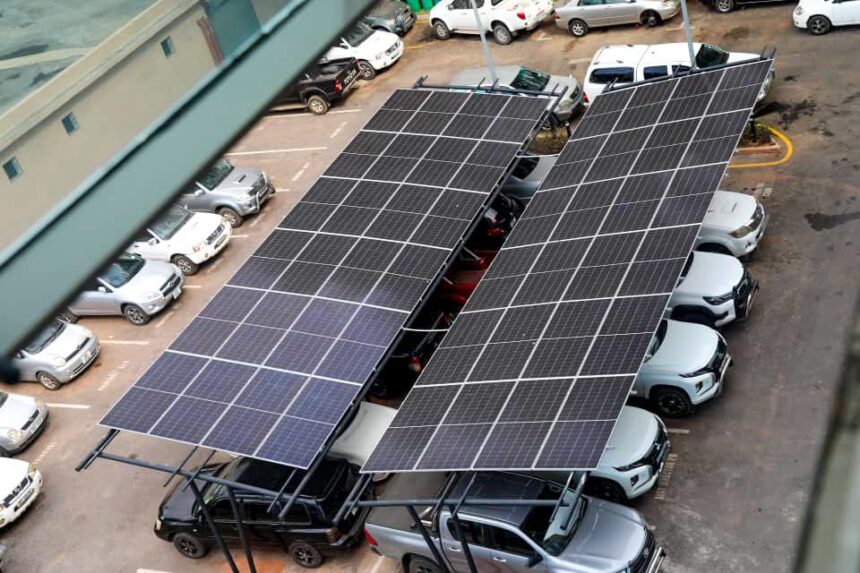
The Ministry of Local Government and Rural Development (MLGRD) has taken a major step toward sustainable energy adoption following the official launch of a modern 150KVA Solar Power System at its headquarters in Lusaka. The project marks a significant milestone in the government’s broader effort to modernise public institutions and improve service delivery through clean and reliable energy solutions. It also reflects Zambia’s growing focus on renewable energy as a practical response to ongoing energy challenges and environmental concerns. The installation is expected to enhance operational efficiency at the Ministry while reducing dependence on the national electricity grid. Government officials have described the development as a forward-looking investment that aligns with national development priorities. The initiative also demonstrates how public institutions can lead by example in adopting environmentally responsible technologies.
Speaking during the commissioning ceremony, Minister of Local Government and Rural Development Hon. Gift Sialubalo, MP, emphasized that the project is aligned with the Presidential directive issued by President Hakainde Hichilema, which encourages public institutions to embrace renewable energy solutions. The Minister stated that the directive is aimed at promoting energy security, reducing operational costs, and supporting sustainable development across government departments. He noted that the installation of the solar system at the Ministry headquarters is a practical demonstration of this policy in action. Hon. Sialubalo also highlighted that while recent interventions have helped stabilize the country’s power supply situation, energy conservation remains essential. He encouraged institutions and citizens to continue using electricity responsibly while also exploring alternative energy sources. According to him, the shift toward renewable energy is not only a necessity but also a long-term strategy for national resilience.
The Minister further explained that the adoption of solar energy systems within government institutions represents a critical step toward reducing pressure on the national grid. He pointed out that increasing demand for electricity requires innovative solutions that support both economic activity and environmental protection. Hon. Sialubalo emphasized that renewable energy technologies such as solar power offer reliable backup solutions that ensure continuity of services even during power interruptions. He stated that the Ministry’s decision to invest in solar infrastructure demonstrates its commitment to efficiency and sustainability. The Minister also noted that such initiatives contribute to reducing carbon emissions, thereby supporting global efforts to combat climate change. He encouraged other government institutions to follow suit and invest in clean energy systems that enhance productivity and reduce costs over time.
During the same event, VEW Investments Director Mohammed Bhaiyat highlighted the importance of renewable energy in strengthening operational efficiency within public institutions. He explained that the 150KVA solar power system was specifically designed to provide reliable backup power while reducing dependence on conventional electricity sources. According to him, the system ensures uninterrupted operations at the Ministry, particularly during periods of power instability. He also noted that investments in solar technology are becoming increasingly important as organizations seek sustainable and cost-effective energy solutions. Bhaiyat emphasized that renewable energy projects such as this one are not only beneficial for individual institutions but also contribute to national energy security. He further stated that the success of the installation demonstrates the viability of solar energy as a long-term solution for both public and private sector institutions.
Hon. Sialubalo also commended the Ministry of Infrastructure, Housing and Urban Development for its technical oversight and project management throughout the implementation process. He acknowledged the Ministry’s role in ensuring that the project met required standards and was completed efficiently. The Minister stated that effective collaboration between government departments is essential for the successful execution of infrastructure projects. He noted that technical expertise and coordination played a key role in the timely delivery of the solar installation. According to him, such partnerships strengthen institutional capacity and ensure that public resources are utilized effectively. He also expressed appreciation for the professional support provided during the planning and execution phases of the project.
The launch of the solar power system is being viewed as part of a broader effort by the Ministry of Local Government and Rural Development to modernize public service delivery. The adoption of renewable energy solutions is expected to improve efficiency within the Ministry by ensuring a stable and uninterrupted power supply. This is particularly important for maintaining administrative operations, supporting digital systems, and enhancing communication infrastructure. The project also aligns with national goals aimed at promoting green growth and environmental sustainability. Government officials have stressed that transitioning to renewable energy is essential for reducing operational costs and improving long-term service delivery. The initiative also reflects a growing recognition of the role that clean energy plays in supporting economic development.
The installation of the 150KVA solar power system further demonstrates the government’s commitment to safeguarding the environment through sustainable practices. By reducing reliance on fossil fuels and conventional electricity sources, the project contributes to lowering greenhouse gas emissions. This aligns with global efforts to promote climate-friendly development strategies. The Ministry has indicated that similar initiatives may be expanded to other government facilities in the future as part of a broader sustainability agenda. Officials believe that integrating renewable energy into public infrastructure will help create a more resilient and environmentally responsible public sector. The project also serves as a model for other institutions seeking to adopt clean energy solutions.
As Zambia continues to explore innovative approaches to energy management, the launch of the solar power system at MLGRD headquarters stands as a clear example of progress in action. It reflects a commitment to modernizing government operations while addressing energy challenges in a sustainable manner. The initiative also highlights the importance of collaboration between government ministries, private sector partners, and technical experts in delivering impactful development projects. With continued investment in renewable energy, Zambia aims to strengthen its energy security, reduce environmental impact, and improve public service efficiency. The successful commissioning of the solar system marks another important step toward building a more sustainable and energy-efficient public sector that supports national development goals.