





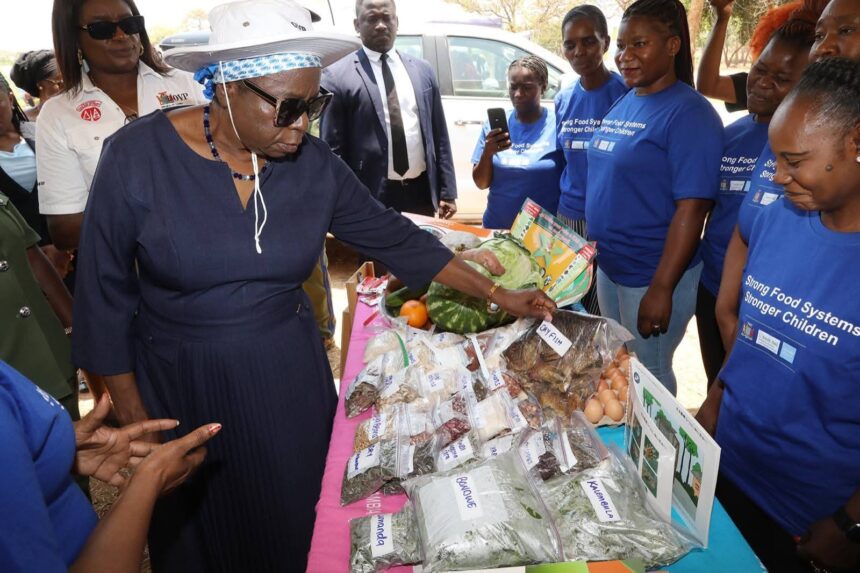
Zambia joined the rest of the world in commemorating the 2025 World Food Day at the Natural Resources Development College (NRDC) under the theme ‘Hand in Hand for Better Foods and a Better Future’. The event, officiated by Vice President Dr. W.K. Mutale Nalumango, served as a reminder of the shared responsibility to ensure access to safe, nutritious, and sufficient food for all while honouring those working to combat hunger.
This year’s commemoration marked 80 years since the founding of the Food and Agriculture Organisation (FAO) and 60 years of its impactful presence in Zambia. The milestone called for reflection, celebration, and renewed commitment to advancing food security.
Government selected NRDC as the host venue in recognition of its foundational role in agricultural education and innovation since 1964. The event also coincided with Zambia’s independence anniversary, symbolising progress and resilience in the country’s agricultural journey.
Vice President Nalumango highlighted NRDC’s impact on Zambia’s agriculture and agribusiness through academic programs, practical training, job creation, and research. She emphasised that the institution is well-positioned to support the Presidential Delivery Unit’s 10.1.1 strategy, which targets 10 million tonnes of maize, one million tonnes of wheat, and one million tonnes of soybeans by 2027.
She added that these initiatives would strengthen Zambia’s job creation strategy, enhance food security, and improve public health outcomes while building resilience against climate and health shocks. She also encouraged citizens to take advantage of empowerment programs under the ministries of Small and Medium Enterprise Development and Youth, Sport, and Arts.
The Vice President reaffirmed President Hakainde Hichilema’s administration’s commitment to fulfilling Dr. Kenneth Kaunda’s vision of a food-secure and prosperous Zambia.
UN Resident Coordinator Beatrice Mutali echoed the need for collective action to transform agri-food systems into efficient, inclusive, resilient, and sustainable models. She highlighted ongoing UN-supported initiatives, including the FAO’s Hand-in-Hand program, the World Food Programme’s interventions, and the UNDP-led SCALA project, all aimed at improving food security, reducing malnutrition, and promoting sustainable practices. Mutali underscored the importance of partnerships across government, civil society, the private sector, and individuals to achieve these goals.
Minister of Community Development and Social Services, Doreen Mwamba, outlined government efforts to promote agricultural mechanisation, improve nutrition, and strengthen resilience against natural and economic shocks. She stressed the importance of climate-smart agriculture practices such as precision farming, agroforestry, crop rotation, and irrigation to optimize resource use and reduce carbon emissions. Mwamba called for stronger collaboration between government, civil society, and the private sector to address food security challenges.
Secretary to the Cabinet and Chairperson of the Committee of Permanent Secretaries on Food and Nutrition, Patrick K. Kangwa, represented by Ms. Lilian M. Kapusana, emphasized the need to confront challenges such as climate change, poverty, conflict, and inequality. He called for a comprehensive approach that prioritizes sustainability, equity, and social justice. Kangwa also encouraged multi-sector partnerships to drive progress toward a food-secure future.
The event was made possible through the collaboration of the Office of the Vice President, Ministry of Agriculture, UN family in Zambia, National Food and Nutrition Commission, Food and Agriculture Organisation of the United Nations, World Vision, German Cooperation, GIZ, and Saro, among others.
The 2025 World Food Day commemoration reaffirmed Zambia’s commitment to ending hunger and building resilient food systems that ensure better nutrition and sustainable development for all.