





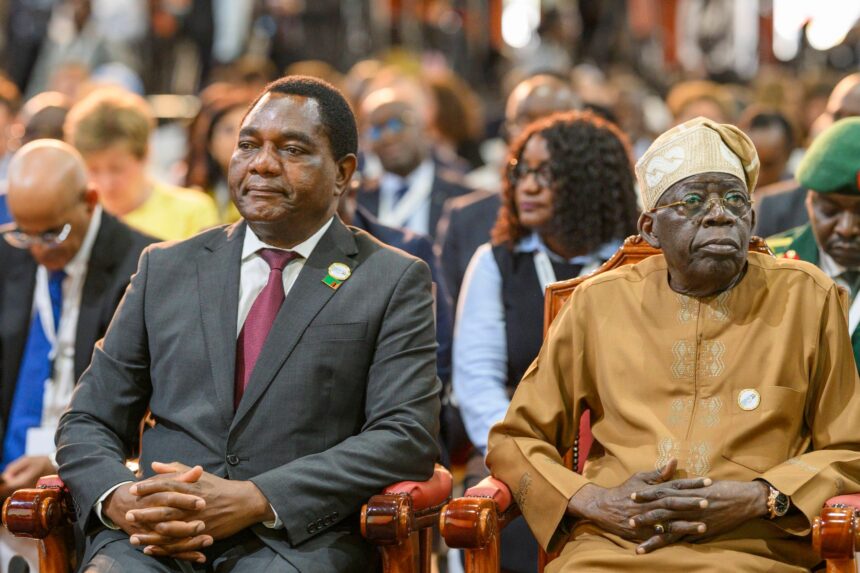
The opening of the Africa Forward Summit in Nairobi, Kenya has placed Africa’s economic future and global relationships at the center of international discussion. Leaders, policymakers, and development stakeholders gathered to reflect on how the continent can redefine its role in a changing global order. The summit focuses on reshaping Africa’s engagement with partners such as France and the broader international community. It also emphasizes the need to move away from traditional aid dependency and toward more balanced and mutually beneficial partnerships. This message has resonated strongly across discussions, especially as African nations continue to seek sustainable paths for long-term growth.
Among the key voices at the summit was Hakainde Hichilema, President of the Republic of Zambia, who highlighted the importance of Africa taking ownership of its development agenda. He stressed that the continent must shift from reliance on external assistance to building systems that allow for self-sufficiency and economic independence. His remarks reflected a growing sentiment among African leaders that the continent has the resources and capacity to drive its own transformation. He emphasized that Africa’s future lies in harnessing locally generated wealth to fund development priorities. This includes strengthening industries, expanding trade within the continent, and ensuring that economic value remains within African economies.
A major focus of the discussions was infrastructure development, which remains one of Africa’s most pressing needs. Roads, rail networks, and logistical corridors were highlighted as critical drivers of regional integration and economic growth. Leaders at the summit pointed out that efficient infrastructure not only improves trade but also connects rural and urban areas, enabling more inclusive development. The emphasis was placed on financing these projects through domestic resources and innovative funding models. This approach aims to reduce reliance on external debt while increasing ownership of key national assets.
The summit also explored how Africa can better leverage its natural resources and growing industries to support development. With a young and rapidly expanding population, the continent has a unique opportunity to build a strong economic foundation if resources are managed effectively. Participants discussed the importance of industrialization, value addition, and intra-African trade as tools for unlocking long-term prosperity. There was a clear call for African countries to strengthen cooperation and reduce barriers that hinder economic integration. By doing so, the continent can create stronger regional markets and improve resilience against global economic shocks.
Another key theme was the need to redefine Africa’s partnerships with the rest of the world. Instead of relationships based primarily on aid, the summit encouraged agreements rooted in investment, technology transfer, and shared growth. Leaders argued that Africa should engage global partners from a position of strength, not dependency. This requires building strong institutions, improving governance, and ensuring that economic policies support sustainable development. The discussions also highlighted the importance of transparency and accountability in managing public resources to build investor confidence and public trust.
Education, innovation, and skills development were also central to the summit’s agenda. Participants emphasized that Africa’s youth must be equipped with the tools needed to participate in modern economies. Investment in science, technology, engineering, and entrepreneurship was seen as essential for driving innovation across sectors. By empowering young people, African countries can unlock new industries and create jobs that support long-term economic stability. The summit reinforced the idea that human capital development is just as important as physical infrastructure in achieving sustainable progress.
The Africa Forward Summit in Nairobi has set a strong tone for ongoing conversations about the continent’s future direction. The message of self-reliance, economic transformation, and strategic global partnerships reflects a broader shift in how African leaders are thinking about development. President Hakainde Hichilema’s remarks underscored a shared belief that Africa must take full responsibility for its destiny. As discussions continue, the focus remains on turning ideas into actionable policies that deliver real change for citizens across the continent. The summit reinforces a powerful conclusion that Africa’s development will be driven primarily by Africa itself, through unity, innovation, and strategic use of its own resources.