






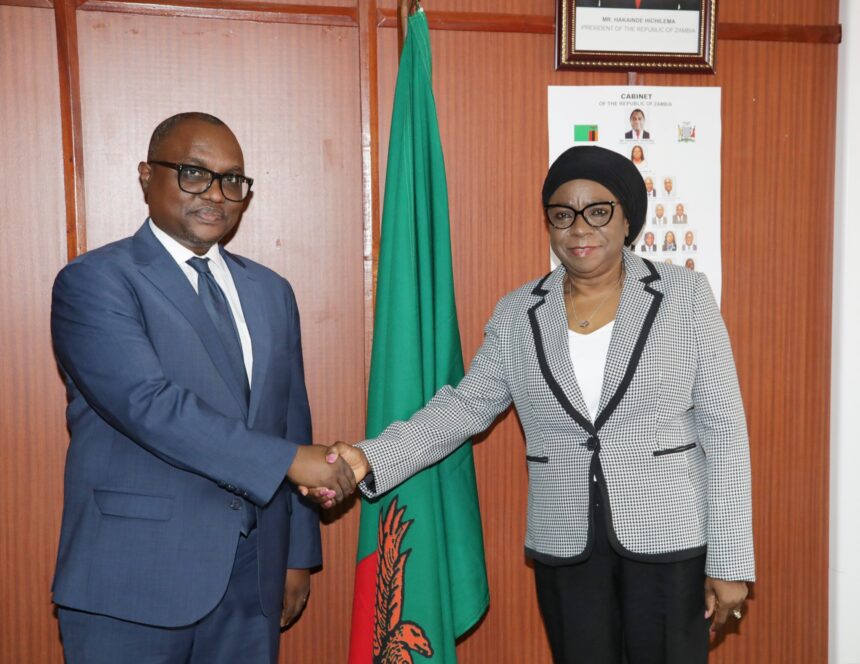
Yesterday afternoon, Zambia’s Vice President, Dr. W.K. Mutale-Nalumango, met with a delegation from the United Nations Assistant Secretary-General’s office, led by Mr. Jean Chrysostome Ngabitsinze, Director General of African Risk Capacity. The discussion focused on Africa’s readiness to face climate-related disasters, particularly in light of increasing weather unpredictability. Dr. Mutale-Nalumango highlighted the urgent need for coordinated systems, robust early-warning mechanisms, and political will to manage emerging risks. He stressed that preparation cannot be postponed, as the recent floods have demonstrated the destructive impact of climate events across the continent. Africa’s leaders are being called upon to shift from reactive responses to proactive risk management strategies that prevent disasters before they occur.
Dr. Mutale-Nalumango emphasized that climate-related disasters are no longer rare; they are becoming the new normal. Floods, droughts, and other extreme weather events have caused severe economic and social disruption, highlighting gaps in current preparedness systems. African nations must strengthen coordination across governments, regional organizations, and international partners to ensure timely and effective action. Investments in technology, data collection, and early-warning systems are critical to identifying risks and mobilizing resources quickly. The Vice President argued that political commitment must match technical capacity to ensure that preparedness is embedded into national policies and operational frameworks.
The discussion drew lessons from historical examples, particularly the biblical story of Joseph in Egypt, who averted famine through planning, foresight, and decisive action. Dr. Mutale-Nalumango used this analogy to underline the importance of foresight in managing climate risks. Africa has the capacity to anticipate disasters, mobilize resources, and implement preventive measures if leaders act with clarity and unity. Countries must prioritize risk assessment, disaster simulations, and community engagement to ensure that early interventions are effective. This approach requires a paradigm shift from reactive emergency responses to strategic, long-term risk management.
Dr. Mutale-Nalumango stressed that Africa cannot afford complacency, as delays in preparation will exacerbate losses from climate events. Collaboration between governments, regional bodies, and organizations like the United Nations is essential to build resilient systems. Communities must be empowered with knowledge, resources, and support to respond quickly to emerging threats. Financial instruments, insurance mechanisms, and contingency planning can mitigate the economic impacts of disasters and provide stability for affected populations. By acting now, African nations can transform climate vulnerability into resilience and create models that safeguard both lives and livelihoods.
The Vice President concluded that Africa’s path forward requires unity, foresight, and urgency. Governments must invest in early-warning systems, coordinated disaster response, and proactive risk management strategies. Preparedness must become a permanent feature of governance rather than a temporary reaction to crises. With clear leadership, technical capability, and strategic planning, the continent can navigate climate turbulence successfully. Dr. Mutale-Nalumango’s call to action emphasizes that Africa has the knowledge and tools to prevent disasters, but success depends on immediate and sustained collective action.