







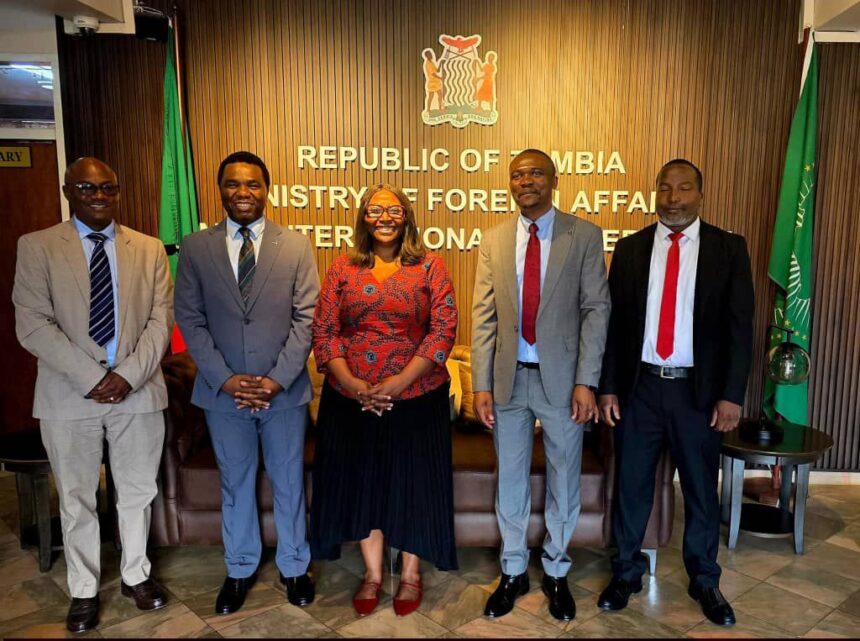
A delegation from the Zambia High Commission in Dar es Salaam has intensified efforts to promote trade and logistics services through a targeted marketing initiative in Zambia. The visit, which included senior officials and business leaders, focused on positioning Zambia Cargo and Logistics Limited as a key player in regional trade facilitation. The delegation accompanied the Chief Executive Officer of Zambia Cargo and Logistics Limited as part of a broader campaign to engage stakeholders and strengthen market presence. This initiative reflects Zambia’s strategy to improve efficiency in the movement of goods while boosting economic growth. It also highlights the importance of state backed enterprises in driving trade and investment across borders.
According to Anthony Bwalya, the mission aimed to directly engage the private sector and the general public. The focus was on showcasing Zamcargo’s capabilities in managing clearing and forwarding services for both imports and exports. By interacting with businesses and logistics stakeholders, the delegation sought to build trust and expand the company’s client base. This approach is essential in a competitive logistics environment where efficiency and reliability determine success. The campaign also served as an opportunity to communicate the company’s value proposition in simplifying cross border trade processes. These engagements are expected to strengthen confidence in Zamcargo’s services.
Zamcargo, which is owned by the Zambian Government through the Industrial Development Corporation, has undergone significant transformation in recent years. The company has repositioned itself to meet modern logistics demands and improve service delivery standards. With strong government backing, it is now targeting a leading role in handling clearing and forwarding requirements for both public and private sector clients. This repositioning includes upgrading operational systems and building stronger institutional partnerships. The goal is to create a logistics solution that is efficient, reliable and aligned with international standards. These efforts are part of a wider national strategy to strengthen trade infrastructure.
The Zambia High Commission emphasized the importance of collaboration between government institutions and the private sector in driving economic development. Strong partnerships are critical for improving trade flows, reducing delays and increasing competitiveness. Zamcargo’s operations in Tanzania provide a strategic advantage, allowing the company to leverage relationships in both Tanzania and Zambia. These connections enable smoother coordination across borders and improve service delivery for clients. By capitalizing on these institutional links, Zamcargo aims to offer faster, safer and more efficient logistics solutions. This cross border presence positions the company as a bridge between key regional markets.
Mr. Bwalya further noted that Zamcargo is well placed to contribute to economic growth by enhancing the efficiency of the import and export value chain. Efficient logistics systems reduce costs for businesses and improve access to international markets. This directly supports local industries, including manufacturing and agriculture, which depend on reliable supply chains. The company’s focus on safety and trust also addresses concerns often associated with cargo handling and transportation. By improving these areas, Zamcargo strengthens its role as a dependable logistics partner. This contributes to broader efforts aimed at boosting Zambia’s economic performance.
The delegation concluded the mission with assurances of continued support for Zamcargo’s growth initiatives. Stakeholders were encouraged to engage with the company and take advantage of its expanding services. The Zambia High Commission reaffirmed its commitment to facilitating partnerships that drive trade and investment. As Zamcargo continues to expand its operations and refine its service delivery, it is expected to play a larger role in regional logistics. The initiative demonstrates how coordinated efforts between government and business can unlock economic opportunities. It also reinforces the importance of strategic positioning in building a competitive and sustainable logistics sector.