







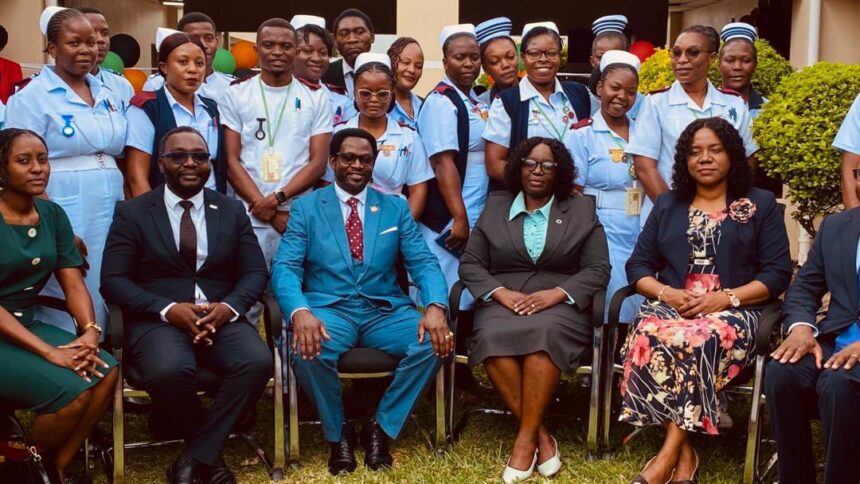
The Minister of Health, Dr. Alex Katakwe, officiated the handover of essential labour and delivery equipment to selected health facilities in Lusaka, marking a key milestone in improving maternal and newborn health services in Zambia. The ceremony, held at the Lusaka College of Nursing and Midwifery, saw Seed Global Health donate equipment valued at over K1.2 million, benefiting Matero, Chawama, and Kanyama Level One Hospitals. The donated items include delivery beds, autoclave machines, delivery sets, and trolleys, all critical for enhancing the quality, safety, and efficiency of maternal healthcare services. Modern training manikins were also provided to support practical learning for student midwives and continuous professional development for practising health workers. Dr. Katakwe emphasized that the donation represents more than just equipment, highlighting Government’s commitment to improving maternal and newborn health outcomes across the country.
During the event, Dr. Katakwe noted that the initiative aligns with the vision of the President of the Republic of Zambia, Hakainde Hichilema, to reduce maternal and infant mortality. He stated that ensuring women can safely give birth requires investments in both equipment and the training environment for healthcare professionals. Strengthening midwifery education, he explained, directly contributes to better service delivery in health facilities. The donation of modern tools and manikins enables hands-on learning, allowing student midwives to gain practical skills essential for real-life clinical situations. Dr. Katakwe underscored that this partnership demonstrates the impact of collaboration between Government, training institutions, and development partners.
In addition to the equipment handover, the partnership has supported the training of 100 midwife preceptors across seven training facilities under the Lusaka Colleges of Nursing and Midwifery. These preceptors provide mentorship and supervision to students, ensuring high-quality clinical training and practical skill development. Dr. Katakwe commended Seed Global Health and the Lusaka Colleges of Nursing and Midwifery for their continued investment in Zambia’s health workforce and the improvement of clinical training environments. He emphasized that well-trained midwives are crucial for reducing complications during labour and delivery and improving overall maternal and newborn outcomes. The Minister urged health facilities to maintain and properly utilise the equipment to ensure long-term benefits for both patient care and training.
Addressing student midwives, Dr. Katakwe encouraged them to take full advantage of the enhanced training resources, reminding them that their skills can directly save lives. He stressed that the combination of modern equipment, effective mentorship, and rigorous training creates a competent workforce capable of meeting Zambia’s healthcare needs. The handover ceremony also reinforced the importance of partnerships in building resilient health systems, showing that coordinated efforts between Government, training institutions, and cooperating partners can achieve meaningful progress. By investing in both infrastructure and human resources, Zambia is taking tangible steps toward safer childbirth, improved clinical competence, and stronger healthcare delivery systems.
The donation and training initiative highlight the Government’s proactive approach to strengthening maternal and newborn health services. Through partnerships with organizations like Seed Global Health, Zambia is ensuring that health facilities are equipped and health workers are trained to provide safe, efficient, and high-quality care. Dr. Katakwe’s call to properly utilise and maintain the equipment emphasizes sustainability and long-term impact. The focus on practical training and mentorship ensures that student midwives are well-prepared for clinical responsibilities. This initiative demonstrates a commitment to reducing maternal and infant mortality, building a competent health workforce, and fostering a healthcare system that can effectively respond to the needs of mothers and newborns.