






Zambia has taken a decisive step forward in its economic development with the groundbreaking of the Min’gomba Mine in Chililabombwe. This event marks more than the start of a mining project, it reflects growing investor confidence in the country’s stable and predictable business environment. The project sends a clear message to global markets that Zambia is open for investment and ready to support large scale ventures. It also highlights the government’s focus on creating conditions that attract long term capital and expertise. With this milestone, the country positions itself as a competitive player in the global mining sector.
The Min’gomba Mine project stands as a strong example of international collaboration, particularly through partnerships with the United States and Japan. Investors from these nations continue to play a key role in advancing Zambia’s mining industry through capital injection and technical expertise. The involvement of KoBold Metals alongside ZCCM Investments Holdings demonstrates a blend of global innovation and local participation. This partnership structure helps balance foreign investment with national interests, ensuring that benefits extend to the Zambian economy. It also strengthens diplomatic and economic ties that can support future projects across other sectors.
At its core, the Min’gomba Mine is expected to deliver measurable economic benefits through job creation and industrial growth. The construction and operational phases will require a wide range of skills, which can create employment opportunities for local communities. Beyond direct jobs, the project will support supply chains, including transport, manufacturing, and service industries. Small and medium enterprises stand to benefit as demand increases for goods and services linked to mining operations. This ripple effect can boost income levels and improve living standards in surrounding areas.
The project also places a strong emphasis on value addition, which is a critical factor in maximizing the benefits of natural resources. Instead of exporting raw materials, Zambia aims to process and refine minerals locally, which increases revenue and creates more jobs. This approach aligns with broader economic strategies focused on industrialization and diversification. By strengthening local processing capabilities, the country can reduce dependency on external markets for finished products. This shift has the potential to build a more resilient and self sustaining economy over time.
Beyond its economic impact, the Min’gomba Mine represents a broader vision for community development and renewal. Mining towns like Chililabombwe have experienced cycles of growth and decline, often linked to global commodity prices. This new investment brings renewed hope for stability and long term progress in the region. Infrastructure development, including roads and utilities, is likely to follow, which can improve access to services for residents. Social investments in education, healthcare, and local businesses can further strengthen community resilience.
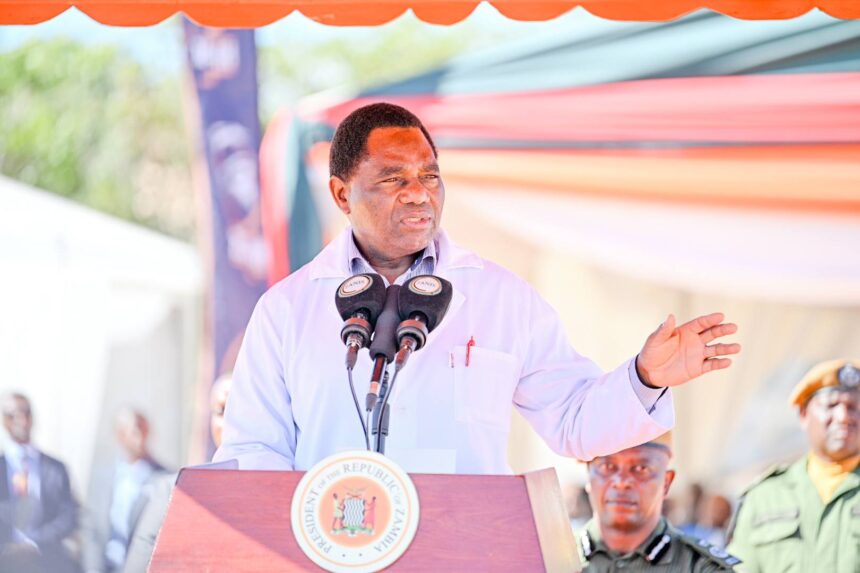
President Hakainde Hichilema’s message around the project emphasizes shared prosperity and future focused development. The statement reflects a commitment to building not just a mine, but an ecosystem that supports businesses and future generations. This perspective aligns economic growth with social progress, ensuring that development benefits are widely distributed. It also reinforces the importance of maintaining a stable policy environment that encourages ongoing investment. Consistency in governance remains a key factor in sustaining investor confidence.
The groundbreaking of the Min’gomba Mine signals a turning point in Zambia’s economic journey, driven by strategic partnerships and a clear development agenda. It shows how targeted investments in key sectors can unlock wider opportunities across the economy. With continued focus on value addition, job creation, and community development, the project has the potential to deliver long term benefits. Zambia is positioning itself as a reliable destination for global investment while prioritizing national growth. This milestone sets the stage for a future where economic ambition translates into real progress for businesses, communities, and generations to come.