







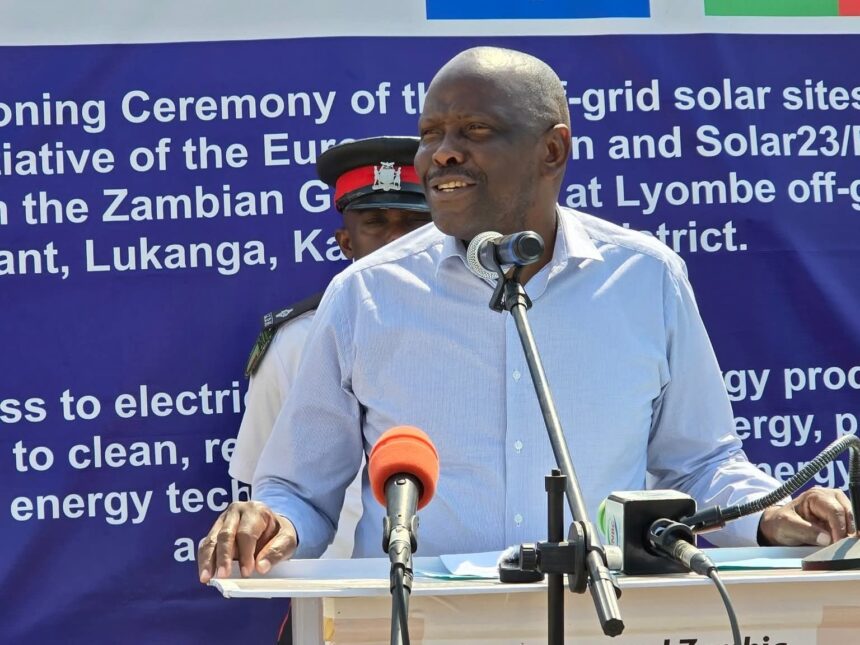
Government, through the Rural Electrification Authority (REA), has commissioned four solar mini-grid plants in Kapiri-Mposhi District. The new facilities will supply clean and reliable power to 2,600 households, schools, health centres, and small businesses.
The commissioning of the plants marks a major step in expanding access to electricity in rural Zambia. For many residents, this will be the first time they can access stable power for lighting, refrigeration, and operating equipment. The move is expected to improve healthcare delivery, boost education outcomes, and support the growth of local enterprises.
The Kapiri-Mposhi project is part of Zambia’s broader plan to install 1,000 solar mini-grids across the country. So far, 55 mini-grids have been developed by both the public and private sectors. These projects are aimed at closing the energy gap in rural areas where grid extension remains expensive and difficult to implement.
By targeting schools and health facilities, the initiative ensures critical services operate more efficiently. For example, rural clinics will be able to store vaccines properly, while schools will provide better learning environments through lighting and digital learning tools. Small businesses will also benefit from reduced costs associated with diesel generators, enabling them to grow and create jobs.
The government views renewable energy as a key driver of rural development and poverty reduction. With solar power proving sustainable and cost-effective, the REA’s work is expected to play a central role in transforming communities, improving livelihoods, and driving inclusive economic growth.
The four plants in Kapiri-Mposhi add to Zambia’s growing renewable energy footprint and highlight the country’s commitment to increasing energy access for all.