






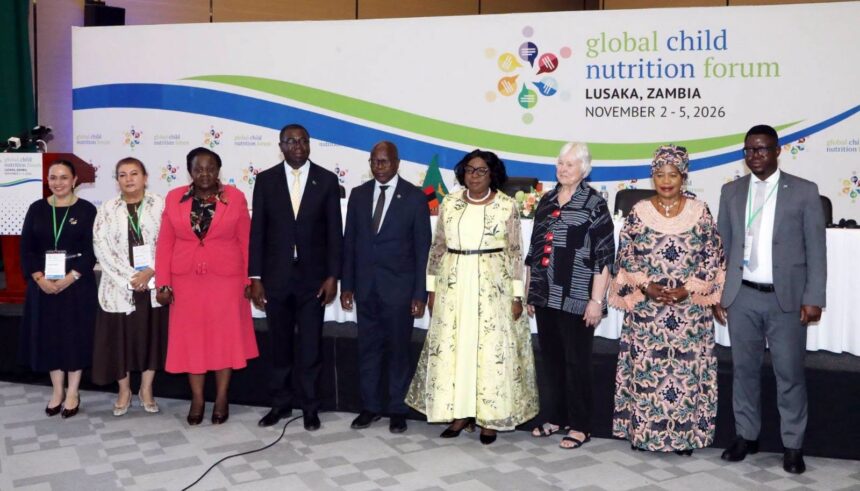
Zambia’s Vice President, Mrs Mutale Nalumango, has called for stronger global partnerships, increased investment in research and innovation and sustainable financing to improve school meal programmes and address child malnutrition. She made the call during the official opening of the 2026 Global Child Nutrition Forum in Lusaka, where she represented President Hakainde Hichilema. Speaking under the theme “From Vision to Action: Achieving Ambitious School Meal Programme Objectives,” Mrs Nalumango urged countries to turn their commitments into practical interventions that guarantee learners access to nutritious meals. She described school feeding as an important investment in education, public health, agriculture and national development. Her remarks highlighted the need for governments and international partners to work together to ensure that children receive the nutrition they need to learn, grow and contribute to society.
The Vice President emphasised that school meal programmes play an important role in improving educational outcomes by supporting learners’ concentration, attendance and participation in classroom activities. Children who have access to nutritious meals are better positioned to engage in their studies and participate in school activities. Hunger and poor nutrition can affect a child’s ability to concentrate, retain information and perform well academically. School feeding therefore provides more than immediate food assistance because it can also support long-term educational development. By ensuring that learners receive meals during the school day, governments can address one of the challenges that may prevent children from achieving their full academic potential. Mrs Nalumango stressed that investing in school nutrition should be viewed as part of a wider strategy for improving human development and economic growth.
She also reaffirmed the Zambian Government’s commitment to improving education and nutrition through policies and programmes that support children’s wellbeing. The Vice President noted that the introduction of the Free Education Policy has increased school enrolment across the country. While increased enrolment represents progress towards improving access to education, it also creates a greater need for interventions that support learners beyond classroom instruction. Schools must have the capacity to provide an environment where children can learn effectively and remain healthy. Nutrition is an important part of this responsibility because learners who experience hunger may struggle to benefit fully from educational opportunities. Strengthening school feeding programmes is therefore essential to ensuring that the benefits of increased access to education translate into improved learning outcomes.
One of the major achievements highlighted by Mrs Nalumango was Zambia’s Home-Grown School Meals Programme, which currently benefits more than 5.6 million learners across all 116 districts. The programme provides meals to children while creating opportunities for local farmers to supply food to participating schools. This approach connects education and nutrition with agricultural development and community economic activity. By purchasing food from local producers, the programme can help create reliable markets for agricultural products and support small-scale farmers. It also allows communities to participate directly in initiatives designed to improve children’s welfare. The programme demonstrates how school feeding can deliver benefits beyond the classroom by supporting local food production and strengthening rural economies.
The Home-Grown School Meals Programme is particularly important because it links the nutritional needs of learners with the productive capacity of local communities. Farmers who supply schools can benefit from market opportunities that support their agricultural activities and household incomes. Schools also gain access to locally produced food, which can help strengthen connections between education institutions and surrounding communities. This model encourages governments to view school feeding as part of a broader development strategy rather than simply a programme for distributing meals. However, its effectiveness depends on reliable food supplies, appropriate storage facilities and efficient distribution systems. Continued investment and coordination are therefore necessary to ensure that the programme remains effective as demand increases.
Mrs Nalumango also highlighted the importance of partnerships in expanding and sustaining school meal programmes. She called for stronger cooperation among government institutions, cooperating partners, civil society organisations, academic institutions and the private sector. Each of these stakeholders can contribute different forms of support, including funding, technical knowledge, research, food production and programme implementation. Governments provide policy direction and coordination, while development partners can support financing and technical assistance. Universities and research institutions can help identify effective approaches to nutrition and food delivery. Private sector participation can also strengthen agricultural supply chains, food processing and logistics. Working together can help countries develop school feeding systems that are more efficient, affordable and sustainable.
The Vice President acknowledged that Zambia and other countries continue to face challenges that affect the delivery of nutritious school meals. Climate-related shocks remain a concern because droughts, floods and changing weather patterns can disrupt agricultural production and food supplies. Such disruptions may increase food prices and make it more difficult for school feeding programmes to obtain sufficient quantities of nutritious food. Inadequate school infrastructure can also limit the ability of institutions to prepare and serve meals safely. Some schools face challenges related to access to clean cooking technologies, which can affect meal preparation and increase pressure on available resources. Persistent malnutrition remains another concern, demonstrating the need for school meals that provide appropriate nutritional value rather than simply addressing hunger.
Climate change presents a particular challenge for countries that depend heavily on agriculture to supply food for school feeding programmes. Unpredictable rainfall and extreme weather events can affect crop yields, livestock production and the availability of essential food products. When agricultural output declines, local communities may experience reduced incomes and higher food costs. These conditions can place additional pressure on government budgets and school meal delivery systems. Mrs Nalumango’s call for increased investment in climate resilience reflects the need to strengthen food production systems against environmental risks. Supporting resilient agricultural practices, improving food storage and strengthening supply chains can help reduce disruptions and protect the long-term sustainability of school feeding initiatives.
The Vice President also called for greater investment in research and innovation to improve the effectiveness of school meal programmes. Research can help governments understand the nutritional needs of different age groups and identify affordable food combinations that provide essential nutrients. It can also support the development of better systems for food procurement, storage, preparation and distribution. Innovation is particularly important in addressing challenges associated with limited infrastructure and access to clean cooking technologies. New approaches can help schools prepare meals more efficiently while reducing costs and environmental pressures. By supporting research institutions and encouraging practical innovation, governments can improve the quality and reliability of school feeding programmes.
Sustainable financing was another major issue highlighted during the 2026 Global Child Nutrition Forum. Mrs Nalumango emphasised that school meal programmes require dependable financial support if they are to reach more learners and maintain consistent service delivery. Programmes that depend heavily on temporary funding arrangements may struggle to plan effectively or respond to rising demand. Governments therefore need to develop financing strategies that recognise school feeding as a long-term national investment. International development partners and private sector organisations can complement domestic funding through appropriate partnerships. A reliable financing framework can help ensure that learners continue receiving nutritious meals even when countries face economic or environmental difficulties.
The importance of school nutrition extends beyond improving classroom performance. Children require adequate nutrition for physical growth, brain development and general health. Poor nutrition during childhood can affect development and increase vulnerability to health problems. School meal programmes can help address some nutritional gaps by providing regular access to food during the school day. However, the nutritional quality of meals remains essential because not all foods provide the same health benefits. Programmes must consider dietary diversity and the availability of essential nutrients when planning meals. Strengthening nutrition standards and improving food quality can therefore increase the benefits that learners receive from school feeding initiatives.
The 2026 Global Child Nutrition Forum in Lusaka also provided an opportunity for countries and development partners to exchange experiences on improving school meal programmes. Mrs Nalumango urged delegates to use the gathering to share best practices, showcase successful interventions and establish partnerships that can accelerate progress in child nutrition. Countries face different economic, agricultural and infrastructure challenges, but many share the goal of ensuring that children have access to nutritious food while attending school. Learning from successful programmes can help governments identify practical solutions that can be adapted to their own circumstances. The forum also offers an opportunity to discuss innovative financing models and approaches to strengthening local food systems. Such cooperation can support more effective school feeding policies at national, regional and international levels.
Zambia’s decision to host the Global Child Nutrition Forum reflects the importance the country places on school feeding as part of its broader development agenda. The Home-Grown School Meals Programme provides a significant example of how public investment in child nutrition can also support agriculture and local economic participation. With more than 5.6 million learners benefiting across all 116 districts, the programme represents a major national intervention. Maintaining and improving its effectiveness will require continued government commitment, adequate funding and strong partnerships. Addressing infrastructure gaps, climate-related risks and malnutrition will also remain important priorities. The country’s experience offers an opportunity to contribute to international discussions about how school meals can support education and sustainable development.
Mrs Nalumango’s message at the forum placed children at the centre of discussions about education, nutrition and economic progress. Her call for stronger global partnerships reflects the understanding that no single government or institution can address all the challenges affecting school feeding. Improving access to nutritious meals requires coordinated action across education, agriculture, health and environmental sectors. It also requires sustained investment in local food production, research, infrastructure and efficient delivery systems. Zambia’s Home-Grown School Meals Programme demonstrates the potential of connecting school nutrition with community development. By translating international commitments into practical action, countries can improve the wellbeing of learners and strengthen the foundations for future development.
The 2026 Global Child Nutrition Forum has provided an important platform for advancing discussions on sustainable school feeding and better nutrition for children. Zambia’s Vice President has challenged governments and partners to move beyond commitments and invest in solutions that produce lasting results. Her remarks highlighted the role of nutritious school meals in improving attendance, concentration and educational performance while supporting local farmers and community economies. The continued expansion of Zambia’s Home-Grown School Meals Programme shows the scale of the country’s commitment, while also highlighting the need for reliable financing and stronger implementation systems. Protecting children’s health and supporting their education must remain central to national development priorities. Stronger partnerships, research, innovation and sustainable investment can help ensure that every learner has a better opportunity to grow, learn and succeed.