






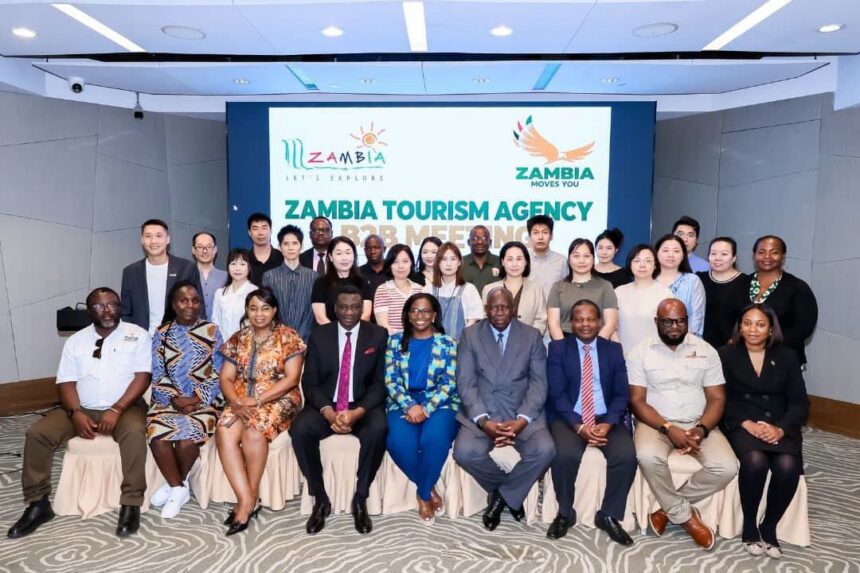
The Zambia Tourism Agency (ZTA) has reaffirmed its commitment to strengthening tourism cooperation between Zambia and China following a Business-to-Business (B2B) meeting held in Guangzhou. The meeting brought together Zambian and Chinese tourism operators to explore commercial opportunities, develop joint tourism packages and position Zambia as a preferred destination for Chinese travellers. The engagement forms part of Zambia’s broader efforts to expand its international tourism markets, increase visitor arrivals and generate more economic opportunities through tourism. By building stronger relationships with travel trade partners in China, Zambia aims to improve its visibility among potential visitors and encourage more Chinese travellers to experience the country’s natural attractions, wildlife and cultural heritage. The initiative also supports the country’s ambition to reach five million tourist arrivals by 2031 under the Grow Zambia Agenda.
The Guangzhou B2B meeting provided a platform for tourism businesses from both countries to discuss ways of strengthening trade relations and developing practical partnerships. Participants explored opportunities to connect tourism operators, share market knowledge and identify strategies for attracting more visitors from China to Zambia. Business-to-business engagements are important in the tourism industry because travel agents, tour operators and destination marketing organisations often work together to design travel experiences and promote destinations to specific markets. These partnerships can help businesses understand travellers’ preferences, develop suitable itineraries and improve the way tourism products are presented to international customers. For Zambia, stronger commercial connections with Chinese travel companies could create new opportunities to market the country and expand its presence in one of the world’s major outbound travel markets.
The meeting was officially opened by Consul General Dr. Daniel Mumba Shimunza, who welcomed participants and thanked them for attending the engagement. He highlighted the importance of bringing business communities together to build relationships, encourage collaboration and identify opportunities for promoting Zambia in China. He noted that such meetings provide a valuable platform for tourism stakeholders to discuss shared interests and develop partnerships that can support increased travel between the two countries. His remarks also underscored the role of diplomatic missions in facilitating commercial engagement and helping businesses connect across international markets. By supporting cooperation between Zambian and Chinese tourism operators, the meeting sought to strengthen the business relationships needed to turn destination marketing efforts into actual bookings and visitor arrivals.
Dr. Shimunza also encouraged stakeholders to look beyond Zambia’s most famous attraction, Victoria Falls, when promoting the country to Chinese travellers. While the waterfall remains a major tourism draw, Zambia offers a wider range of experiences that can appeal to visitors with different interests and travel budgets. The country’s wildlife, national parks and cultural heritage provide opportunities for nature-based tourism, wildlife viewing and cultural experiences. Zambia can also promote Meetings, Incentives, Conferences and Exhibitions tourism, commonly known as MICE tourism, to attract business travellers, conference delegates and organisations seeking destinations for professional events. Presenting this broader tourism offering could help extend visitor stays, encourage repeat visits and spread tourism spending across more destinations and businesses.
Speaking at the close of the meeting, ZTA Acting Chief Executive Officer Abigail Shansonga commended the participating tour operators for their active involvement and constructive discussions. She emphasised that the relationships established during the engagement needed to produce tangible commercial results. This would require tourism businesses to develop competitive packages suited to the Chinese market, share market intelligence and collaborate on joint marketing initiatives. Such measures can help operators understand what potential visitors want, how they plan their trips and which experiences are most likely to influence their destination choices. Shansonga’s remarks highlighted the importance of moving beyond discussions to practical business arrangements that can increase awareness of Zambia and support measurable growth in tourism.
Developing tourism packages tailored to Chinese travellers will be an important part of this process. Travel preferences vary among visitors, so tourism operators need to understand the interests, budgets and expectations of the customers they want to attract. Some travellers may be interested in wildlife safaris and natural landscapes, while others may prefer cultural experiences, organised tours or business-related travel. Tour operators can respond by combining attractions, accommodation, transport and guided activities into convenient packages that make planning a trip to Zambia easier. Sharing accurate market information between Zambian and Chinese businesses can also help tourism providers identify demand, improve their products and design marketing campaigns that reach suitable audiences.
Shansonga further stressed the need to diversify Zambia’s tourism offering by promoting both leisure travel and MICE tourism. Leisure tourism can support demand for accommodation, transport, restaurants, tour guides and attractions, while business events can bring delegates, exhibitors and professional visitors into the country. MICE tourism can also generate spending beyond conference venues through hotel bookings, local transport, dining and organised excursions. Promoting Zambia as a destination for both leisure and business travel could help tourism businesses reach different customer groups and reduce their dependence on a narrow range of tourism products. However, success will depend on the availability of suitable facilities, reliable transport, quality services and effective coordination among the organisations responsible for delivering these experiences.
The ZTA also recognises the importance of cooperation between government institutions, tourism agencies, travel trade partners and private-sector operators. Each group has a role to play in improving Zambia’s competitiveness as an international destination. Government institutions can support tourism development through policy, infrastructure and an enabling business environment, while tourism agencies can coordinate destination marketing and industry engagement. Private-sector operators provide the accommodation, transport, tours and other services that shape the visitor experience. Stronger cooperation can help ensure that promotional campaigns match the services available on the ground and that international partnerships create business opportunities for Zambian companies.
The initiative aligns with the Grow Zambia Agenda, which identifies tourism as an important contributor to economic growth, investment, diversification and employment. Zambia’s target of attracting five million arrivals by 2031 reflects its ambition to expand the sector’s contribution to the national economy. Reaching that target will require sustained international marketing, stronger relationships with key source markets and improvements in tourism products and services. It will also depend on the ability of local businesses to attract investment, meet visitor expectations and offer experiences that encourage travellers to stay longer and spend more. The Guangzhou meeting represents one step towards these goals by creating opportunities for Zambian tourism businesses to establish commercial relationships with partners in China.
Attracting more Chinese visitors could provide opportunities for tourism operators, hotels, transport providers, restaurants, local guides and communities connected to tourism activities. Increased visitor spending can support small businesses and create demand for locally supplied goods and services. However, the benefits will depend on how effectively tourism spending reaches Zambian businesses and workers. Expanding international visitor numbers should therefore go hand in hand with efforts to improve service quality, develop local skills and encourage private-sector investment. A coordinated approach can help ensure that tourism growth contributes to employment and business development while supporting the long-term value of Zambia’s natural and cultural attractions.
The Guangzhou B2B meeting highlights Zambia’s commitment to building stronger tourism partnerships with China and expanding its international visitor markets. Through joint marketing, market intelligence sharing and the development of competitive tourism packages, the Zambia Tourism Agency aims to turn commercial discussions into practical opportunities for growth. Promoting attractions beyond Victoria Falls, including wildlife, cultural heritage and MICE tourism, could help Zambia appeal to a broader range of Chinese travellers. Continued cooperation between government institutions and private-sector operators will be essential to improving the country’s international profile and strengthening the visitor experience. As Zambia works towards its target of five million arrivals by 2031, partnerships established through engagements such as this meeting could play an important role in attracting more visitors, increasing tourism revenue and creating lasting economic opportunities for Zambians.