







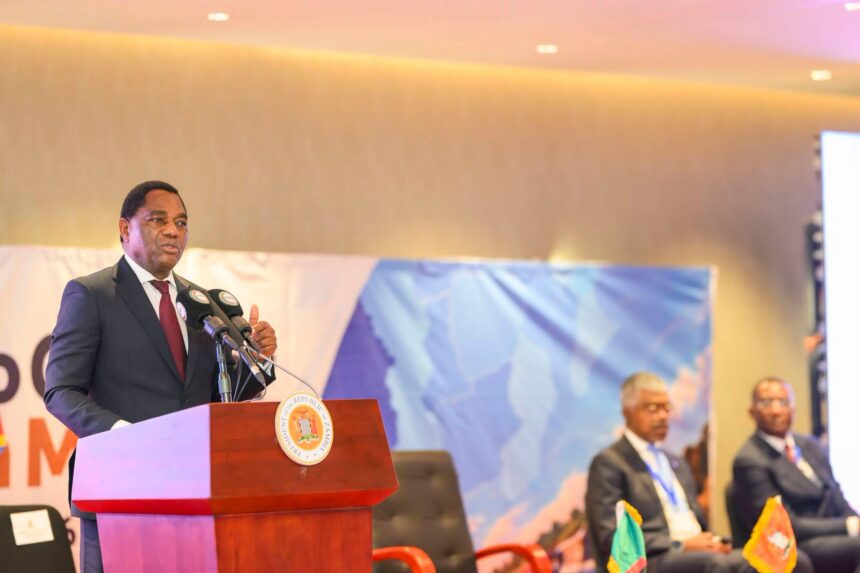
Zambia has officially opened the Second Lobito Corridor Coordination Meeting in Lusaka, bringing together representatives from Angola, the Democratic Republic of Congo and regional partners to strengthen cooperation around the Lobito Corridor. The meeting took place at the Intercontinental Hotel in Lusaka and reflects a shared commitment to turning regional agreements into practical economic outcomes. Zambia, Angola and the Democratic Republic of Congo are working together to improve connectivity and reduce the cost of transporting goods across the region. These efforts are closely linked to wider ambitions for increased investment, stronger regional trade and job creation. For Zambia, the meeting also supports the country’s goal of ensuring that major regional partnerships deliver tangible benefits for its people.
The Lobito Corridor is an important regional connectivity initiative linking countries and markets through improved transport infrastructure and trade routes. Better connectivity can help businesses move goods more efficiently while reducing transport costs that can affect the price and competitiveness of products. For landlocked Zambia, improving regional transport connections can play an important role in supporting access to markets and strengthening trade opportunities. Cooperation with Angola and the Democratic Republic of Congo creates a framework for addressing shared transport and economic priorities. The coordination meeting provides an opportunity for the participating countries and their partners to focus on practical steps that can turn these commitments into measurable results.
A central objective of the Second Lobito Corridor Coordination Meeting is to move from commitments toward investment. Investment in connectivity can support the development of infrastructure that makes the movement of people, raw materials and finished goods more efficient. Stronger transport links can also create conditions for businesses to expand their operations and participate more actively in regional markets. Lower transport costs can improve the ability of producers and traders to compete while making cross-border commerce more attractive. The focus on investment therefore connects infrastructure development with broader economic opportunities for Zambia and its regional partners.
Regional trade is another major priority behind the cooperation between Zambia, Angola and the Democratic Republic of Congo. Efficient transport networks can help businesses access customers and suppliers beyond their domestic markets. Improved connectivity can also support closer economic relationships between neighboring countries by making cross-border trade more practical. For Zambia, stronger regional trade can create additional opportunities for local businesses to participate in supply chains and reach wider markets. The success of these efforts will depend on sustained cooperation and the ability of the participating countries to translate agreed commitments into concrete action.
Job creation forms another important part of the shared goal outlined at the Lusaka meeting. Infrastructure investment and increased economic activity can support employment directly and indirectly across different parts of the economy. Businesses can benefit when transport systems become more reliable and affordable, creating better conditions for production, trade and investment. Stronger regional economic links can also increase opportunities for enterprises that depend on cross-border markets. By connecting the goals of infrastructure, investment, trade and employment, the Lobito Corridor partnership seeks to contribute to broader economic development.
Zambia’s participation in the coordination meeting also reflects the government’s commitment to ensuring that regional partnerships produce tangible benefits for citizens. President Hakainde Hichilema has emphasized the importance of using such partnerships to advance the Grow Zambia Agenda. This approach places economic outcomes at the center of Zambia’s engagement in regional cooperation. Improved connectivity and lower transport costs can support this objective by creating better conditions for trade and investment. The emphasis on practical benefits also highlights the importance of implementing commitments rather than allowing regional agreements to remain solely at the policy level.
The presence of Angola, the Democratic Republic of Congo and other partners at the Second Lobito Corridor Coordination Meeting demonstrates the regional nature of the initiative. The participating countries share an interest in improving connectivity and creating stronger economic links. Cooperation across borders requires coordination because transport corridors operate across multiple jurisdictions and depend on connected systems. Continued dialogue can help the partners identify priorities and coordinate efforts that support the wider objectives of the corridor. The Lusaka meeting therefore represents part of an ongoing process aimed at strengthening cooperation and delivering economic value from regional connectivity.
For Zambia, the Lobito Corridor discussion is closely connected to the country’s ambitions for investment, trade and economic growth. Improved transport infrastructure can help address some of the challenges associated with moving goods over long distances. More efficient connections can also make regional markets more accessible to Zambian producers and businesses. At the same time, the broader benefits of the corridor will depend on effective implementation, continued cooperation and investment. The focus on tangible results is therefore critical to ensuring that the partnership contributes meaningfully to Zambia’s development priorities.
The Second Lobito Corridor Coordination Meeting in Lusaka signals a continued effort by Zambia and its partners to strengthen regional economic cooperation. Angola, the Democratic Republic of Congo and Zambia have a shared interest in improving connectivity, reducing transport costs and creating conditions that support investment and trade. These priorities are directly linked to the goal of creating more economic opportunities and jobs. Zambia’s commitment to ensuring tangible benefits for its people places practical outcomes at the center of the partnership. As cooperation continues, turning commitments into investment and improved connectivity will remain essential to advancing the Grow Zambia Agenda and delivering lasting economic benefits for the region.