





The Government of Zambia has launched the E-Waste Management for Youth Employment Project, a major initiative aimed at addressing electronic waste challenges while creating employment opportunities for young people. The project was officially launched on 16 July 2026 by the Ministry of Green Economy and Environment in collaboration with the International Labour Organization (ILO), with financial support of more than US$900,000 from the Government of Japan. The initiative represents a significant step toward combining environmental protection with youth empowerment and economic development. As electronic waste continues to increase due to growing technology use, Zambia is seeking innovative solutions that transform waste management challenges into opportunities. The project demonstrates the country’s commitment to building a greener economy where environmental responsibility and job creation work together.
The E-Waste Management for Youth Employment Project has selected 100 young people from Central Province to participate in the programme. The beneficiaries include young women, young men and persons with disabilities from Chisamba, Chibombo, Kabwe, Kapiri Mposhi and Mumbwa districts. The inclusion of diverse groups highlights the project’s focus on creating equal opportunities and ensuring that vulnerable communities benefit from Zambia’s green economic transformation. Participants will gain skills and knowledge that can help them participate in e-waste collection, recycling, repair and other environmentally friendly business activities. Through training and practical experience, the initiative aims to prepare young people for emerging employment opportunities within the growing green economy sector.
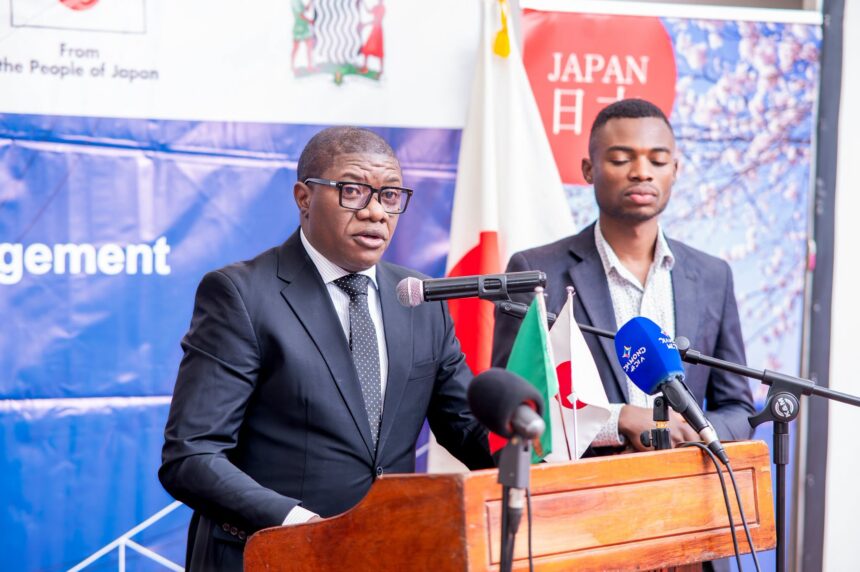
Speaking during the official launch, Central Province Permanent Secretary Dr. Milner Mwanakampwe expressed appreciation to the Government of Japan for its financial support towards the project. He stated that the contribution reflects the strong relationship between Zambia and Japan and demonstrates a shared commitment to developing sustainable solutions that benefit communities. Dr. Mwanakampwe explained that the project goes beyond managing electronic waste because it represents a broader effort to promote youth empowerment, enterprise development and environmental responsibility. He highlighted that environmental programmes can become powerful tools for creating jobs, encouraging innovation and supporting economic growth. The Permanent Secretary emphasized that practical initiatives such as this one can help communities build resilience while contributing to national development goals.
Dr. Mwanakampwe further explained that electronic waste presents both challenges and opportunities depending on how it is managed. When discarded improperly, electronic waste can release harmful substances that damage ecosystems and contaminate soil and water resources. However, when collected, processed and recycled responsibly, e-waste can become a valuable resource that supports business development and employment creation. Materials recovered from electronic products can be reused, reducing pressure on natural resources and supporting a circular economy approach. The project therefore seeks to change the perception of e-waste from a harmful waste stream into an opportunity for innovation, entrepreneurship and sustainable industrial development.
Japan’s Deputy Chief of Mission at the Embassy of Japan, His Excellency Mr. Horii Mizumoto, reaffirmed the strong relationship between Zambia and Japan while highlighting the importance of continued cooperation. He explained that the Japanese Government remains committed to working with Zambia to create more green employment opportunities for young people. He added that supporting initiatives such as the E-Waste Management for Youth Employment Project aligns with global efforts to promote sustainable development and environmental protection. Japan’s support reflects its continued partnership with Zambia in areas that improve livelihoods, strengthen communities and encourage environmentally responsible economic activities. The collaboration between the two countries demonstrates how international partnerships can support local solutions to global environmental challenges.
International Labour Organization Country Office Director for Zambia and Malawi, Mr. Wellington Chibebe, also commended the Government of Japan for supporting employment opportunities for young people through the project. He noted that e-waste is among the fastest-growing waste streams globally, creating urgent challenges for countries seeking sustainable waste management solutions. Mr. Chibebe revealed that Zambia generated an estimated 23 million kilograms of e-waste in 2022, showing the need for effective systems to manage electronic waste. He explained that proper management of this waste stream can create decent work opportunities while reducing environmental risks. The ILO’s involvement highlights the importance of linking environmental programmes with employment strategies that provide young people with skills for future industries.
The project also supports Zambia’s transition from a traditional linear economy to a circular economy that focuses on resource efficiency. Ministry of Green Economy and Environment Director of Environmental Management, Mr. Richard Lungu, explained that the initiative represents an important step toward promoting practices such as reducing waste, reusing products, repairing equipment, refurbishing materials and recycling resources. A circular economy approach allows countries to maximize the value of resources while minimizing environmental damage. Through this project, Zambia aims to strengthen systems that encourage responsible consumption and production while creating new opportunities for businesses and entrepreneurs. The shift toward a circular economy is expected to play an important role in achieving long-term environmental sustainability and economic resilience.
The launch event brought together representatives from various government institutions, labour organizations and environmental stakeholders. Participants included officials from the Ministry of Green Economy and Environment, the Ministry of Labour and Social Security, the Zambia Federation of Employers, the Zambia Congress of Trade Unions, the Zambia Environmental Management Agency and local authorities. The involvement of multiple stakeholders reflects the importance of cooperation in addressing e-waste challenges and developing sustainable solutions. Partnerships between government, private sector organizations and communities will be essential to ensuring the success and long-term impact of the project. By working together, stakeholders can create stronger systems for waste management while expanding opportunities for young entrepreneurs.
The E-Waste Management for Youth Employment Project represents a major milestone in Zambia’s efforts to promote green growth, youth employment and environmental protection. With support from the Government of Japan and technical collaboration from the ILO, the initiative provides a practical pathway for young people to participate in the emerging green economy. The project demonstrates that environmental challenges can also create opportunities when managed through innovation, skills development and inclusive policies. As Zambia continues its transition toward a cleaner and more sustainable economy, programmes that combine employment creation with environmental responsibility will remain essential. Through this initiative, the Government has reaffirmed its commitment to ensuring that no one is left behind in the country’s journey toward a greener and more resilient future.