

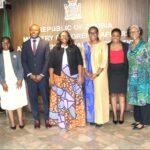





Zambia’s Minister of Mines and Minerals Development, Paul Kabuswe, has issued a strong warning to mining companies that fail to comply with the country’s local content laws, stating that there will be “no sacred cows” in the sector. His remarks came during the inauguration of the Minerals Regulation Commission Board on Wednesday, where he emphasized the importance of accountability, efficiency and stronger regulation within Zambia’s mining industry. The statement reflects the government’s increasing focus on ensuring that mining activities contribute more directly to local economic growth and employment opportunities. Zambia’s mining sector remains one of the country’s most important economic pillars, making regulatory compliance a critical national priority. Kabuswe’s comments signal a tougher stance toward companies that ignore laws designed to benefit Zambian citizens and businesses.
During the inauguration ceremony, Minister Kabuswe directed the newly appointed board to quickly move forward with the appointment of the Mining License Committee. He explained that the process had experienced delays because government wanted to carefully select individuals capable of effectively regulating the mining sector. According to the minister, the need for competent and trustworthy leadership was essential given the strategic importance of mining to Zambia’s economy. However, he stressed that the board must now act swiftly to ensure that the committee becomes operational without further delays. The Mining License Committee plays a central role in overseeing licensing decisions and maintaining transparency in the sector.
Kabuswe noted that local content laws are intended to ensure that Zambians receive meaningful benefits from the country’s mineral resources. These laws encourage mining companies to prioritize local suppliers, contractors and workers wherever possible. The government believes stronger enforcement of local participation requirements can help stimulate economic growth, create jobs and strengthen local industries linked to mining operations. By warning that there will be no exceptions for non-compliant companies, the minister made it clear that enforcement efforts will apply across the entire industry. The message also reflects broader efforts by government to ensure that foreign and local investors operate within Zambia’s legal and economic framework.
The minister also made candid remarks about his management style, revealing that he sometimes steps into other offices and micromanages processes in order to accelerate progress. Kabuswe said his involvement is often driven by the need to prevent delays and ensure that government objectives are achieved efficiently. While micromanagement is sometimes criticized in leadership discussions, the minister framed his approach as necessary for maintaining momentum in critical sectors like mining. He indicated that urgency is required because of the sector’s direct impact on national revenue, employment and economic stability. His comments offered insight into the pressure government officials face when trying to implement reforms and speed up administrative processes.
The inauguration of the Minerals Regulation Commission Board comes at a time when Zambia is working to improve governance and oversight within the mining industry. The sector has experienced growing attention from government due to its importance in attracting investment and supporting economic recovery. Stronger regulation is expected to improve investor confidence while also ensuring that mining operations comply with national standards and laws. The new board is expected to play a key role in strengthening oversight, improving efficiency and promoting transparency in licensing and regulatory matters. Government officials believe these changes are necessary for creating a more accountable and competitive mining environment.
Zambia’s mining industry has remained central to the country’s economy for decades, particularly through copper production and exports. However, debates around local participation and equitable economic benefits have continued to shape policy discussions. The government has increasingly emphasized the need for mining activities to generate wider economic opportunities for local communities and businesses. This includes ensuring that Zambians have access to employment opportunities, procurement contracts and value-chain participation linked to mining operations. Enforcement of local content laws is therefore seen as part of a larger national development strategy.
Minister Kabuswe’s remarks also underline the government’s determination to move away from slow administrative systems that can delay investment and sector growth. By urging the board to immediately prioritize the Mining License Committee appointment, he highlighted the importance of functional institutions in supporting mining sector reforms. Delays in licensing processes can affect investor decisions and project implementation timelines, making efficiency a critical issue. The minister’s call for urgency suggests that government wants to accelerate regulatory processes while maintaining accountability. Balancing speed with proper oversight remains an important challenge for the sector.
The Minerals Regulation Commission Board is expected to oversee several important responsibilities linked to mining governance, including regulation, licensing and compliance monitoring. Effective regulation is increasingly important as Zambia seeks to attract responsible investment while maximizing benefits from its mineral wealth. Government officials have repeatedly stressed that stronger institutions are necessary for supporting long-term sustainability in the industry. The appointment of qualified individuals to leadership positions is therefore viewed as essential for achieving these objectives. Stakeholders across the sector will likely watch closely to see how the board handles its responsibilities in the coming months.
Paul Kabuswe has delivered a strong message that Zambia’s mining sector will face stricter enforcement of local content laws and greater regulatory accountability. His warning that there will be no “sacred cows” for non-compliant mining companies reflects government efforts to ensure that the industry delivers broader benefits to Zambians. The inauguration of the Minerals Regulation Commission Board and the push to establish the Mining License Committee quickly are part of wider reforms aimed at strengthening governance and efficiency. Kabuswe’s remarks about personally intervening to speed up processes also reveal the urgency attached to mining sector transformation. As Zambia continues to position mining as a key driver of economic growth, stronger regulation and local participation are expected to remain central priorities.