





Zambia has intensified efforts to strengthen climate governance and improve the implementation of its Nationally Determined Contributions under the Paris Agreement through a major validation workshop held in Lusaka. The two-day Needs and Capacities Gap Assessment Validation Workshop brought together government officials, climate experts, development partners, civil society organisations, academics and private sector stakeholders to evaluate the country’s readiness to deliver on its climate commitments. Hosted at The Urban Hotel, the workshop formed part of the European Union-funded Enhancing Zambia’s NDC Implementation Project, commonly known as the EZ-NDC Project. The initiative seeks to identify institutional, technical and systemic challenges that continue to affect climate action implementation across the country. Government officials described the workshop as an important platform for aligning national climate priorities with practical implementation strategies that can support sustainable economic growth and environmental resilience.
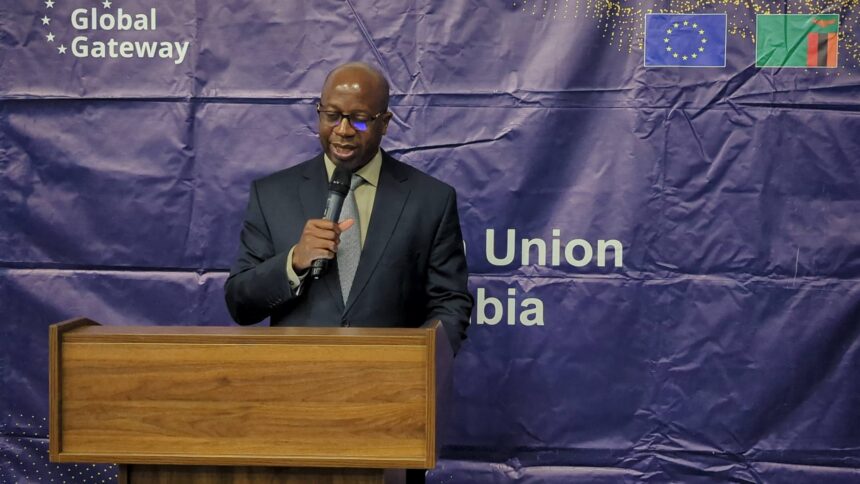
Speaking during the official opening of the workshop, Douty Chibamba said the validation exercise represents a major milestone in Zambia’s climate action journey. He explained that the nationwide assessment offers an evidence-based understanding of the institutional and technical capacities needed to effectively implement the country’s climate commitments. According to Dr. Chibamba, Zambia has made notable progress in establishing frameworks and governance structures to support climate action, but several important gaps still remain. These include limited coordination among institutions, shortages in technical and human resource capacity, weak data management systems and insufficient integration of climate considerations into development planning and budgeting processes at provincial and district levels. He stressed that climate change remains a national challenge that requires cooperation among government institutions, the private sector, civil society, academia and international cooperating partners.
The workshop also highlighted the growing importance of strong governance systems in achieving transparency and accountability in climate action. Dr. Chibamba noted that the EZ-NDC Project is helping Zambia strengthen Measurement, Reporting and Verification systems that are essential for tracking climate progress and supporting evidence-based policy decisions. He praised the inclusive nature of the assessment process, saying the participation of multiple stakeholders demonstrates increasing national consensus around climate priorities and collective ownership of solutions. Officials at the meeting acknowledged that climate governance extends beyond environmental protection and directly affects agriculture, infrastructure, health, energy security and economic development. The discussions further reinforced the need for long-term institutional strengthening to ensure that climate policies are effectively implemented at both national and sub-national levels.
Global Green Growth Institute Zambia Country Lead Angela Nontulya Heinonen said successful implementation of Zambia’s NDCs depends heavily on the country’s institutional ability to coordinate climate action, align financing and strengthen reporting systems. She explained that the Needs and Capacity Gap Assessment was designed to identify differences between institutional mandates and the actual capacity available to carry out climate programmes effectively. According to Ms. Heinonen, the assessment examined weaknesses in technical expertise, coordination mechanisms, institutional arrangements, financing structures and climate-related data systems. She added that the findings will help shape future updates to Zambia’s NDCs while also guiding targeted interventions aimed at strengthening governance systems and improving implementation capacity. Her remarks reflected the growing recognition that climate commitments require practical systems and technical support to move from policy into measurable action.
The European Union also reaffirmed its commitment to supporting Zambia’s climate ambitions and green growth agenda during the workshop. Speaking on behalf of the European Union Delegation to Zambia and COMESA, Lana Žutelija said the EZ-NDC Project represents a four-million-euro investment aimed at supporting the operationalisation of Zambia’s Green Economy and Climate Change Act and strengthening the country’s integrated MRV system. She explained that Zambia and the European Union continue to enjoy a strong partnership focused on sustainable investment, climate policy dialogue and economic transformation through green growth initiatives. Ms. Žutelija stated that reliable data systems, effective coordination mechanisms, strong institutions and improved technical capacity remain essential for Zambia to implement and report on its climate obligations successfully. She also highlighted that the project forms part of the European Union’s broader Global Gateway Initiative, which promotes sustainable infrastructure, digital transformation, human development and institutional strengthening in partner countries.
The workshop reflects Zambia’s broader determination to position climate governance at the centre of national development planning and economic reform. As climate challenges continue to affect agriculture, water security, energy production and livelihoods across the region, the country is increasingly focusing on building resilient systems capable of responding to environmental and economic pressures. The collaborative approach demonstrated during the validation exercise signals a stronger commitment to transparency, accountability and coordinated implementation of climate policies. Stakeholders believe that strengthening institutional capacity and improving governance systems will play a crucial role in helping Zambia meet its climate commitments while supporting inclusive growth and sustainable development. The continued support from international partners such as the European Union and GGGI also provides Zambia with valuable technical and financial backing as it works toward a more climate-resilient future.