







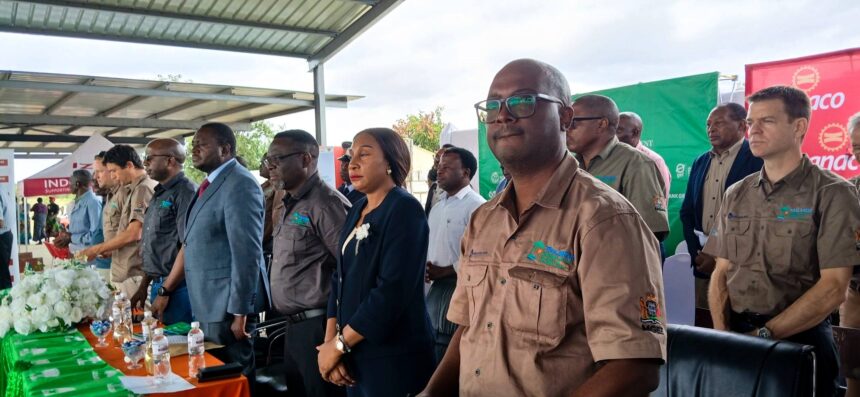
The Government of Zambia has officially launched the Transforming Landscapes for Resilience and Development II (TRALARD II) Project, a large-scale national initiative aimed at improving sustainable land management and strengthening climate resilience across key provinces. The launch was led by the Minister of Green Economy and Environment, Hon. Mike E Mposha, who was represented at the event in Monze by the Permanent Secretary, Dr. Douty Chibamba. The programme represents one of the country’s most ambitious environmental and climate adaptation efforts to date. It is designed to support communities while protecting natural ecosystems under increasing pressure from climate change and human activity. The initiative also signals Zambia’s commitment to integrating environmental protection with long-term economic development.
The TRALARD II Project is supported by a combined grant of 137 million United States dollars from international cooperating partners, including the World Bank Group, Nordic Development Fund, Climate Investment Fund, Least Developed Countries Fund, Global Environment Facility, and the Scaling Climate Action by Lowering Emissions initiative. This wide coalition of funding partners reflects strong global confidence in Zambia’s environmental strategy and implementation capacity. According to the Ministry, the project was developed in less than eleven months from concept to approval, a timeline the Minister described as highly efficient. He noted that delays in climate financing often increase adaptation costs and weaken mitigation efforts. The fast approval process is therefore seen as a key achievement in advancing urgent climate action.
TRALARD II will be implemented across five provinces, including Copperbelt, Luapula, Northern, Muchinga, and Southern Province, covering a total of 32 districts. The breakdown includes 10 districts in Southern Province, 4 in Copperbelt, 5 in Northern Province, 8 in Muchinga, and 5 in Luapula. The project is expected to directly benefit more than 600,000 people across these regions. It places natural capital such as land, forests, and water resources at the centre of its development approach. The focus is on balancing economic growth with environmental sustainability through strategic planning and inclusive governance.
A major component of the project includes the use of nature-based solutions and integrated land use planning to support multiple sectors such as agriculture, mining, infrastructure development, and conservation. Key activities will involve restoring degraded wetlands, reforesting damaged landscapes, and protecting riverbanks from erosion. The project will also promote climate-smart agriculture practices to help farmers adapt to changing weather patterns. In addition, investments will be made in community infrastructure such as irrigation schemes, water harvesting systems, canals, and water crossing points. These interventions are designed to strengthen resilience at community level while improving productivity and environmental protection.
The Minister emphasized that TRALARD II will prioritise smallholder farmers, women, youth, persons with disabilities, and pastoralists. He stressed the importance of equitable access to resources, secure land tenure, and meaningful participation in project activities. He also highlighted that the project includes an Emissions Reduction Programme in Muchinga Province aimed at generating carbon credits through sustainable land management. This initiative will enable Zambia to participate more effectively in international carbon markets. It is expected to create new opportunities for climate financing while supporting local development goals.
During the launch, the Minister called on traditional leaders to play an active role in supporting village-level land use planning and community forest governance. He also encouraged the private sector and financial institutions to move beyond traditional business models by developing tailored financial products that support green growth. He further urged stronger partnerships in financial literacy to ensure communities can fully benefit from climate-related investments. According to him, sustainable transformation requires collaboration across all sectors of society. He emphasized that no single institution can achieve the required change alone.
The Minister also delivered a strong message on long-term responsibility and environmental stewardship. He stated that decisions made today in managing natural resources will determine whether future generations inherit resilience or vulnerability. He further stressed that success will depend on strong partnerships between government, private sector actors, civil society, academia, and local communities. He reaffirmed government’s commitment to transparency and accountability in the implementation of TRALARD II. He added that resources will be carefully managed to build on the achievements of TRALARD I and deliver even greater impact.
Speaking at the same event, Chief Choongo of the Tonga people in Monze District commended government for including Southern Province among the beneficiary regions. He also welcomed the decision to involve all traditional leaders from Monze and Namwala districts in the implementation process. His remarks reflected strong support from local leadership for the project’s community-driven approach. Several other traditional leaders attended the launch, including Chief Monze, Chief Mwaanza, Chief Coona, Chief Ufwenuka, Chief Nalubamba, and Chief Habasonde. The event also brought together senior government officials, including provincial permanent secretaries from Southern, Copperbelt, and Northern Provinces, as well as representatives from the World Bank Group and other financial institutions.
The launch of TRALARD II marks a significant step forward in Zambia’s climate resilience agenda and sustainable development strategy. The project is expected to improve environmental management, strengthen rural livelihoods, and enhance national capacity to respond to climate change impacts. It also reinforces Zambia’s position as an active participant in global climate initiatives and green financing frameworks. With strong international backing and a broad implementation scope, TRALARD II is set to deliver long-term benefits for both people and ecosystems.