






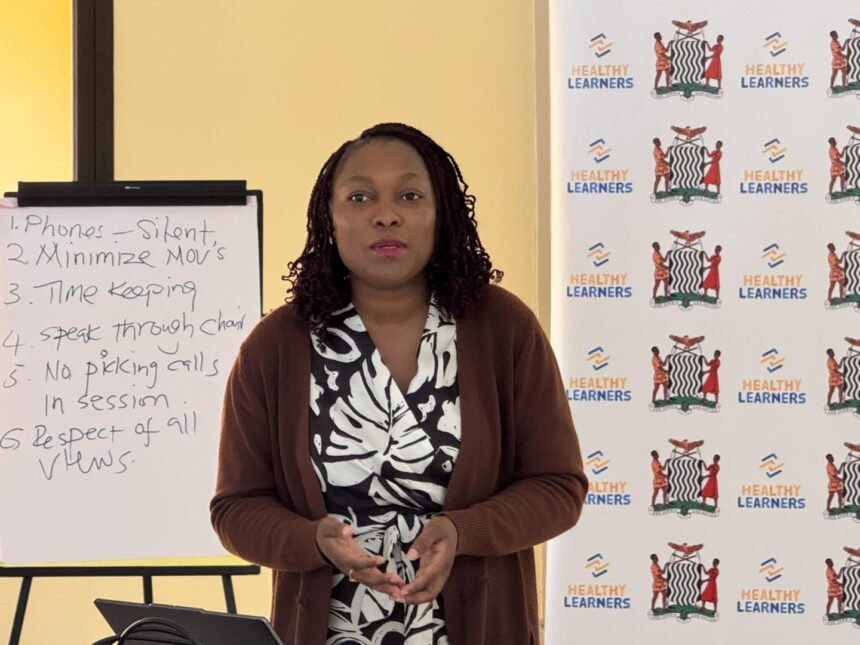
The Ministry of Health and Healthy Learners, through the School Health Programme, has taken a coordinated step to improve menstrual health and hygiene management across schools. Ministry of Health and Healthy Learners convened a broader Menstrual Health and Hygiene Management stakeholder meeting aimed at addressing gender inequalities that continue to affect girls in education. The meeting brought together key actors from the education sector, health sector, and development partners to align priorities and strengthen national responses. It focused on creating practical solutions that support girls who face barriers linked to menstrual health challenges. The discussions highlighted the need for stronger systems that protect dignity, improve school attendance, and ensure equal learning opportunities for all learners.
A major focus of the meeting was the identification of critical gaps in menstrual health services and policy frameworks within schools. Stakeholders examined the lack of clear technical standards that guide menstrual health management in educational settings, which has created inconsistencies in service delivery. Many schools still struggle with inadequate facilities, limited access to menstrual products, and insufficient guidance for teachers and health personnel. Participants emphasized that without clear standards, implementation remains uneven and difficult to monitor. The discussions also stressed the importance of embedding gender-transformative approaches into existing school health initiatives to ensure long term impact and sustainability.
The School Health Programme was identified as a key platform for delivering menstrual health interventions at scale, with the programme currently reaching more than one million learners nationwide. Stakeholders recognized its strong reach and potential to deliver structured education on menstruation and puberty in a consistent and age-appropriate manner. The meeting highlighted the importance of training peer supporters such as student health captains who can provide guidance and reduce stigma among learners. It also emphasized the need to strengthen access to menstrual health services within school health rooms so that girls can receive support when needed. In addition, participants called for improved referral systems and stronger monitoring frameworks to track progress and ensure accountability.
Another key outcome of the engagement was the call for stronger collaboration among implementing partners working in school health and gender programmes. Stakeholders agreed that fragmented efforts reduce impact and limit the ability to scale effective interventions. The meeting encouraged better integration of menstrual health and hygiene management into broader school health policies to ensure consistency across all regions. Partners also discussed the importance of aligning resources, sharing data, and coordinating programming to avoid duplication. This approach is expected to strengthen system efficiency and improve service delivery outcomes for learners.
The discussions concluded with a shared commitment to ensure that every girl has access to a safe, dignified, and supportive school environment. Participants agreed that menstrual health is not only a health issue but also an education and equality issue that requires sustained national attention. By strengthening policies, improving school based services, and expanding education efforts, stakeholders aim to reduce absenteeism and improve learning outcomes for girls. The collaboration between Ministry of Health, Healthy Learners, and development partners signals a stronger commitment to addressing long standing gaps. The outcomes of the meeting set a clear direction for building a more inclusive and supportive education system that prioritizes dignity, health, and equal opportunity for all learners.