




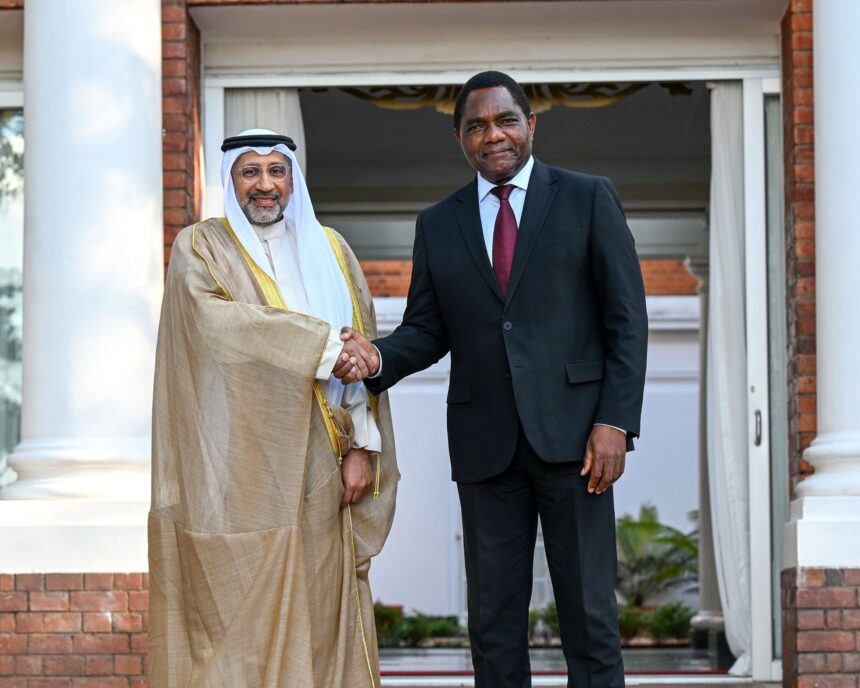
At a time marked by rising geopolitical tension and economic uncertainty, Hakainde Hichilema has delivered a firm message on the need for stronger global cooperation. He emphasized that the world cannot afford division when stability and growth depend on collective action. His remarks come as conflicts in the Middle East continue to disrupt global markets, supply chains, and investor confidence. He stressed that instability in one region has ripple effects across continents, affecting both developed and developing nations. This position reflects Zambia’s growing role in advocating for balanced global engagement and economic resilience.
During a key meeting with Arab Bank for Economic Development in Africa, President Hichilema outlined Zambia’s priorities for sustainable development and economic expansion. The discussion focused on strengthening partnerships that can unlock long term investment across Africa. He highlighted the importance of channeling resources into sectors that drive growth and job creation. Agriculture, energy, and mining were identified as strategic areas that can transform economies when supported by targeted funding and policy alignment. These sectors remain critical for Zambia, given their potential to boost exports, improve food security, and expand industrial capacity.
The ongoing conflict in the Middle East formed a central part of the discussion, with President Hichilema urging all parties involved to pursue peaceful solutions. He made it clear that prolonged instability threatens global economic recovery and places additional pressure on vulnerable economies. Zambia, like many countries, faces indirect impacts such as fluctuating fuel prices and disrupted trade routes. These challenges increase the cost of living and strain national budgets. His call for peace was not only diplomatic but also rooted in economic necessity, as stability is essential for predictable markets and sustained investment.
Energy security emerged as a critical concern during the engagement with BADEA, particularly regarding petroleum supply. Zambia has been working to secure reliable fuel sources at fair and manageable prices to protect both consumers and businesses. President Hichilema appealed to BADEA to support these efforts, recognizing the bank’s influence in facilitating development financing across the continent. Stable fuel prices are directly linked to transportation costs, food prices, and overall inflation. Addressing this issue is therefore a key part of the government’s broader strategy to ease the cost of living for citizens.
Beyond immediate concerns, the President reaffirmed his administration’s commitment to economic growth through strategic investment and policy reform. Zambia aims to position itself as an attractive destination for investors by improving infrastructure, strengthening institutions, and ensuring transparency. Partnerships with institutions like BADEA play a vital role in achieving these goals. By aligning international support with national priorities, Zambia seeks to accelerate development while maintaining economic stability. This approach reflects a broader vision of inclusive growth that benefits both urban and rural communities.
President Hichilema’s message underscores a clear and urgent reality that global challenges require shared solutions. His call for increased trade, expanded investment, and stronger partnerships highlights the interconnected nature of today’s world. Zambia’s engagement with BADEA demonstrates a proactive approach to securing economic stability despite external pressures. As conflicts continue to shape global dynamics, the emphasis on peace and cooperation remains essential. Through strategic dialogue and focused action, Zambia aims to navigate uncertainty while building a resilient and growing economy.