







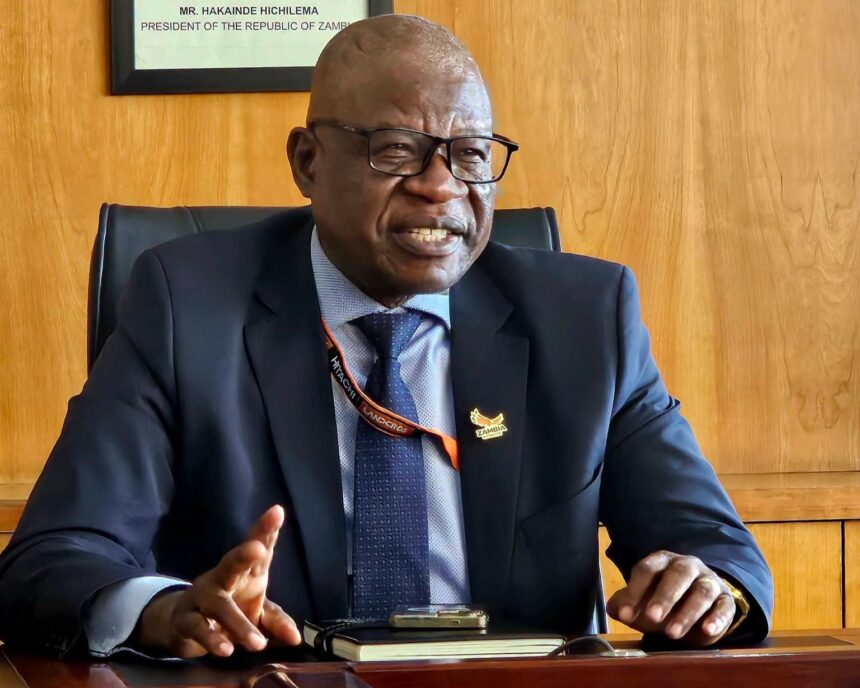
The Zambian government says it has attracted approximately $12 billion in investments into the mining sector over the past five years, highlighting the industry’s growing importance to the country’s economic development. Ministry of Mines and Minerals Development Permanent Secretary Dr Hapenga Kabeta disclosed the figure while speaking on the Ministry’s Podcast. He said the investment inflows form part of the government’s broader efforts to expand mining activity and increase copper production. The government has also set an ambitious target of producing three million metric tonnes of copper annually, a goal that will require significantly greater investment across the sector. According to Kabeta, Zambia would need approximately $30 billion in investment to achieve this production target and establish a clear trajectory for sustained growth in copper output.
Kabeta said the mining sector has experienced significant changes in the way investment and mining licences are managed under the current administration. He contrasted the government’s approach with what he described as practices that occurred before the United Party for National Development came into power. According to the Permanent Secretary, the previous Patriotic Front administration had relationships with certain investors that he believes were abused, resulting in a situation where one individual held about 87 mining licences. Kabeta said the UPND government has moved to change this situation and improve the way mining rights are administered. His comments reflect the government’s stated intention to promote a more structured and transparent mining sector while ensuring that Zambia’s mineral resources contribute more broadly to the national economy.
The reported $12 billion in mining investments represents a significant commitment to Zambia’s mineral resources and reflects the country’s position as one of Africa’s major copper-producing nations. Investment in mining can support production expansion, create employment and increase demand for goods and services from local businesses. It can also generate government revenue through taxes, royalties and other payments associated with mining operations. However, the benefits of increased investment depend on how effectively projects are managed and how much value remains within the Zambian economy. The government therefore faces the challenge of attracting capital while ensuring that mining activities contribute to broader economic development and provide opportunities for Zambian businesses and communities.
The three million tonnes per year copper production target represents a major increase in ambition for Zambia’s mining industry. Achieving such a target would require substantial expansion of existing mines as well as the development of new projects and supporting infrastructure. Kabeta said the country needs about $30 billion in investment to reach the target, illustrating the scale of the financial resources required. Such investment would likely need to support exploration, mine development, processing capacity, equipment, energy supply, transportation and other infrastructure needed for large-scale production. The government’s focus on attracting investment is therefore closely connected to its plans to expand copper output and strengthen Zambia’s position in the global copper market.
Kabeta also referred to the country’s trajectory of growth in copper production, indicating that the government has been working toward a longer-term expansion strategy. He noted that the three million metric tonnes target provides a clear direction for the sector and helps establish the scale of growth Zambia is seeking. The target comes at a time when copper is increasingly important to global industries linked to electrification, renewable energy and technological development. Rising demand for copper could create opportunities for Zambia to increase export earnings and attract additional investment into mining and mineral processing. The country will nevertheless need to address infrastructure, energy and regulatory challenges if it is to translate investment commitments into sustained increases in production.
The government’s comments on mining licences also point to the importance of effective regulation within the sector. Mining licences give investors the legal authority to explore for and extract mineral resources, making the licensing system a critical part of mineral resource management. Concentration of licences in the hands of a small number of individuals or companies can raise concerns about access to mining opportunities and the efficient use of mineral resources. Kabeta said the UPND government has taken steps to change what it views as problematic practices from the past. The broader objective is to create a mining environment where licences are properly administered and investment can support productive activity rather than simply the accumulation of mining rights.
For Zambia, attracting investment must also be balanced with the need to increase local participation in the mining value chain. Large mining projects can generate opportunities for local suppliers, contractors and service providers when procurement systems create meaningful access for Zambian businesses. Increased production can also support employment and stimulate economic activity in mining communities. The government will need to ensure that new investment produces measurable benefits while maintaining appropriate environmental, safety and labour standards. Strong regulation and effective monitoring will therefore remain important as Zambia seeks to expand its mining industry.
The $12 billion investment figure and the proposed $30 billion requirement for achieving three million tonnes of annual copper production demonstrate both the progress and the scale of the government’s ambitions. Zambia has attracted substantial capital into mining over the past five years, but reaching its production target will require continued investment and effective implementation of mining projects. The government’s approach to licensing, investor relations and mineral resource management will remain important factors in determining whether the sector can achieve sustained growth. The country also needs to ensure that increased copper production translates into stronger public revenues, local business opportunities and broader economic benefits. If the government can maintain investor confidence while strengthening regulation and local participation, the mining sector could play an even larger role in Zambia’s economic transformation.
Dr Hapenga Kabeta’s remarks therefore highlight a mining sector undergoing significant change as Zambia seeks to attract investment and dramatically increase copper production. The government’s reported $12 billion in investment over five years provides a foundation for further expansion, while the $30 billion investment requirement shows how much additional capital will be needed to reach the three million tonnes annual copper target. The administration’s efforts to reform mining licence management also form part of its broader strategy to improve governance and ensure that mineral resources are used productively. Achieving the government’s ambitions will depend on continued investment, reliable infrastructure, effective regulation and a strong focus on local economic benefits. With copper remaining central to Zambia’s economy, the success of this strategy could have a significant impact on the country’s future growth and position in the global mining industry.