







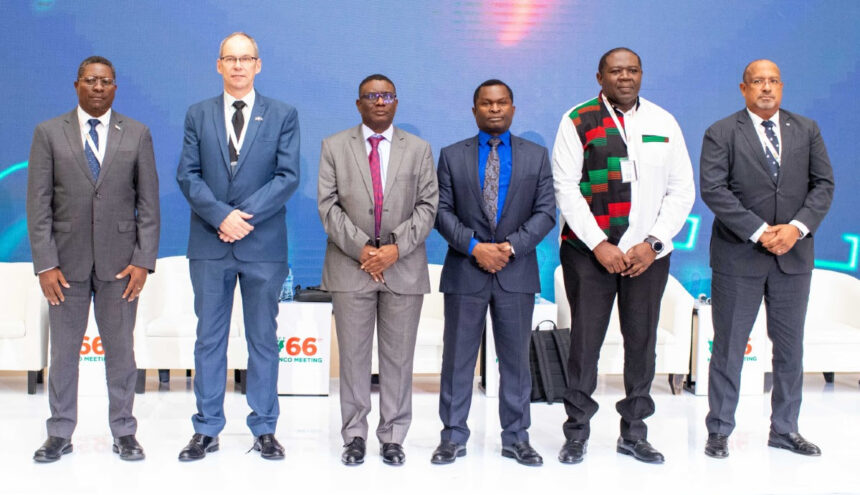
Zambia has underlined the importance of regional integration and climate resilience in energy planning during the 66th Southern African Power Pool (SAPP) Management Committee Meeting, held at the Mulungushi International Conference Centre on 12 March 2026. Speaking on behalf of Energy Minister Makozo Chikote, Permanent Secretary for Electricity, Eng. Arnold M. Simwaba, outlined Zambia’s broader energy strategy, noting that recent droughts have highlighted vulnerabilities in regional power generation. He emphasised that coordinated planning, cross-border projects, and climate-resilient solutions are essential to sustaining electricity supply and supporting economic growth. Eng. Simwaba highlighted initiatives such as the Zambia–Tanzania Interconnector, designed to link the Southern and Eastern African Power Pools, creating a regional market that stretches from Cape Town to Cairo. This project represents a foundational step towards the African Single Electricity Market (AFSEM), aiming to improve electricity access, reliability, and affordability across the continent.
Eng. Simwaba also stressed the importance of off-grid, grid-ready solutions to increase electricity access, noting that regional electricity coverage averages around 50 per cent. Expanding these solutions is critical to achieving equitable access and supporting rural and peri-urban communities. By combining grid expansion with decentralised systems, Zambia aims to provide reliable electricity for households, businesses, and industrial operations. Such efforts also complement broader regional integration, as interconnected power pools allow surplus generation to be shared across borders, reducing vulnerability to climate shocks. Zambia’s approach illustrates a commitment to balancing immediate energy needs with long-term sustainability and regional cooperation.
Eng. Mulenga Bwalya, Head of Business Development and Power Trading at Copperbelt Energy Corporation, highlighted the vital role of transmission infrastructure in maintaining regional stability. He cited expansions in the Zambia–DRC interconnector corridor, which increased transfer capacity from 210MW to 395MW, significantly enhancing reliability and efficiency across the network. Eng. Bwalya also acknowledged progress on the Zambia–Tanzania Interconnector and reaffirmed CEC’s commitment to renewable energy development. The company is completing its third solar plant in Kitwe, which will bring its total solar capacity to approximately 230MW. The integration of battery energy storage systems is designed to stabilise the grid and ensure renewable reliability, allowing intermittent generation sources like solar to support continuous power supply.
While prioritising renewable energy, CEC continues to explore firm and dispatchable power sources to maintain a balanced energy mix. Eng. Bwalya highlighted that operationalising Zambia’s Open Access Framework will encourage greater private sector participation, optimise transmission use, and attract new investment. These measures are intended to strengthen energy security, enhance regional power trade, and ensure that Zambia can meet growing demand while supporting neighbouring countries. The combination of renewable integration, infrastructure expansion, and private sector engagement positions Zambia as a leader in regional energy planning.
Zambia’s presentation at the 66th SAPP Management Committee Meeting reinforced its commitment to climate-resilient energy planning and regional integration. Through projects like the Zambia–Tanzania Interconnector, expansions in transmission corridors, and investment in renewable energy, the country is advancing energy security and sustainability. By combining national strategies with regional cooperation, Zambia aims to provide reliable electricity, attract investment, and support economic growth across Southern Africa. CEC and government collaboration demonstrates a shared commitment to unlocking new opportunities, fostering innovation, and ensuring that the energy sector underpins regional development and shared prosperity.