

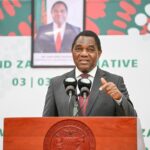

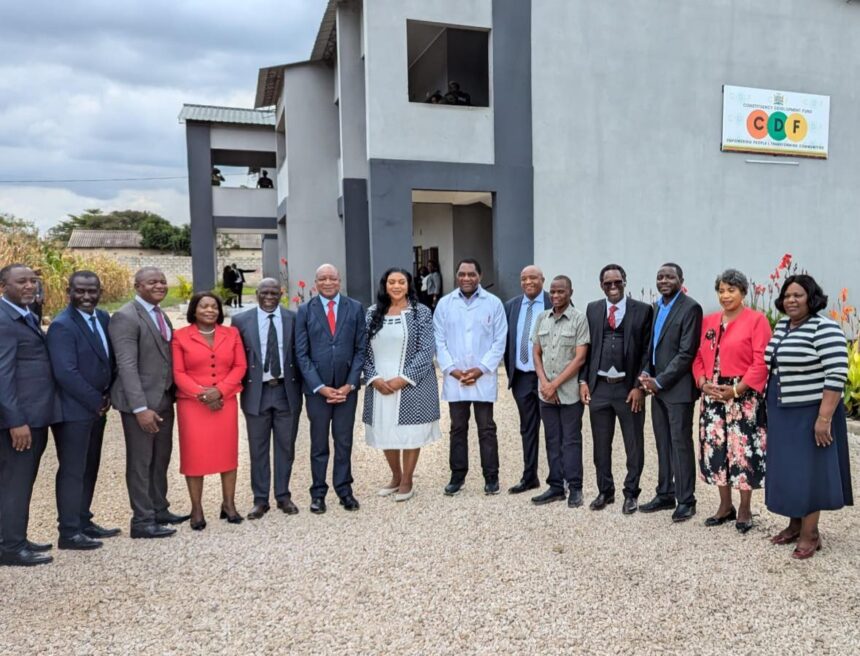
President Hakainde Hichilema visited Kanyama Constituency to oversee the implementation of the school feeding programme and to tour the newly constructed building at Twashuka Primary School. The building was funded through the Constituency Development Fund (CDF) and represents a significant investment in local education infrastructure. During his visit, the President highlighted the importance of combining free education policies with improved school facilities to create better learning environments. He emphasized that such initiatives open opportunities for all Zambian children to access quality education regardless of their background. The visit underscores the government’s commitment to strengthening education systems and supporting student welfare through targeted infrastructure and nutrition programmes.
The school feeding programme plays a crucial role in enhancing student attendance and learning outcomes. By providing meals, the programme addresses nutritional needs that are essential for cognitive development and sustained classroom participation. President Hichilema noted that the programme, alongside investments in school buildings, helps create conditions where children can fully benefit from free education policies. The newly constructed classroom building at Twashuka Primary School is designed to accommodate increasing enrolments, offering students a safe and conducive environment for learning. Government investment in such infrastructure ensures that schools keep pace with growing demand while improving overall education quality across constituencies.
President Hichilema also emphasized that the Constituency Development Fund is a critical tool for empowering local communities to take charge of their development priorities. By funding projects like school buildings, the CDF enables communities to address gaps in infrastructure that directly affect students’ learning experiences. The President stressed that every child in Zambia should have access to the opportunities provided by free education and modern school facilities. He encouraged communities to actively participate in monitoring and supporting such initiatives to maximize their impact. His remarks reinforced the message that education is both a national priority and a shared responsibility between government and citizens.
The visit to Twashuka Primary School demonstrates the tangible outcomes of government policies in action. Beyond providing meals, the combination of free education and improved infrastructure contributes to better student retention, enhanced learning, and long-term human capital development. President Hichilema’s engagement with local schools highlights the importance of continuous investment in education to ensure equitable access for all children. The initiatives in Kanyama Constituency serve as a model for other regions, showing how strategic funding and policy implementation can transform educational opportunities. This approach positions Zambia to achieve broader educational goals while fostering community involvement and sustainable development.
Overall, President Hichilema’s visit to Kanyama Constituency reflects a clear commitment to improving the quality and accessibility of education in Zambia. By linking free education policies with targeted infrastructure projects and supportive programmes like school feeding, the government is creating meaningful opportunities for children to succeed. The Twashuka Primary School project illustrates how strategic investments can directly impact students’ learning conditions and future prospects. Strengthening school facilities and ensuring nutritional support form a foundation for improved education outcomes nationwide. These measures reaffirm the government’s vision of equitable education and the role of community engagement in achieving sustainable development.