





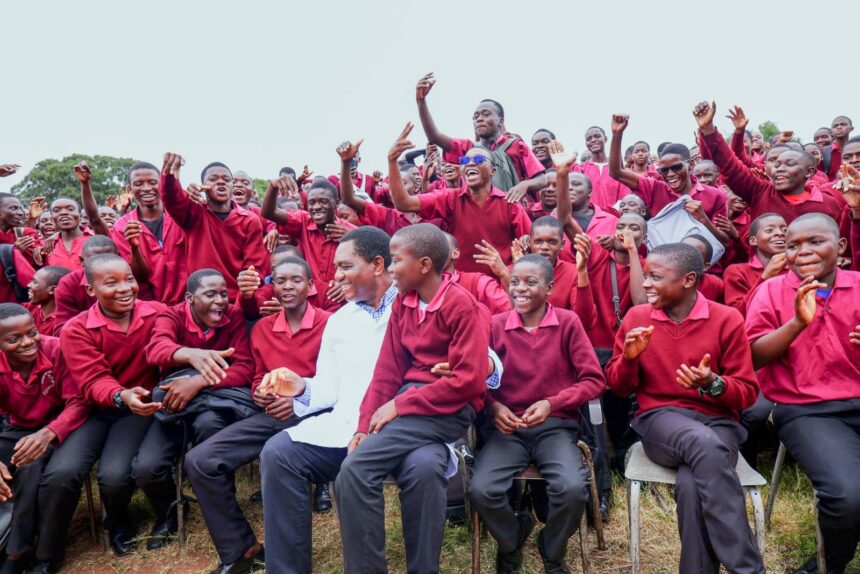
Yesterday afternoon, Kabulonga Boys Secondary School in Lusaka hosted the official ceremony marking the implementation of Zambia’s school feeding programme. The initiative forms a key part of the Government’s flagship policy of providing free education for all children in the country. President Hakainde Hichilema emphasized the importance of linking education with nutrition, noting that quality education extends beyond textbooks and classrooms to include the wellbeing of students. By providing nutritious, home-grown meals, the programme aims to improve learning outcomes, reduce absenteeism, and support the overall health of children. The event drew attention from educators, parents, and local community leaders who expressed optimism about the programme’s long-term benefits for students.
The school feeding programme is designed to supply balanced meals sourced from local farmers, creating a sustainable cycle that supports both education and agriculture. Each meal will contain essential nutrients needed for children to concentrate in class and engage in school activities with energy. Officials highlighted that this approach also reduces the financial burden on families, particularly in low-income communities, by ensuring that children receive at least one nutritious meal per day. Furthermore, the programme is expected to encourage higher enrollment and retention rates, as children are more likely to attend school regularly when meals are guaranteed. Stakeholders noted that the initiative will also foster partnerships between schools, local farmers, and suppliers, strengthening community involvement in educational development.
President Hichilema underscored that this programme reflects the Government’s commitment to a holistic approach to education. Beyond infrastructure and teaching resources, attention to nutrition and student welfare is crucial for building a productive and healthy future generation. He reiterated that free education policies must address all factors that influence learning, including access to food, to achieve meaningful progress. The initiative also aligns with broader national goals of food security, local economic support, and child development, making it a multi-dimensional investment in Zambia’s future. Officials present at the ceremony expressed confidence that this programme will become a model for other schools across the country, demonstrating the tangible impact of integrated educational policies.
The launch of the school feeding programme at Kabulonga Boys Secondary School marks a significant step toward enhancing education in Zambia. By providing nutritious, home-grown meals, the Government is addressing both immediate and long-term challenges faced by students and their families. The programme reinforces the principle that education quality is not limited to classroom instruction but also involves creating an environment where children can thrive physically and mentally. As the initiative expands to more schools, it promises to improve learning outcomes, support local economies, and ensure that free education is effective and inclusive. This milestone reflects Zambia’s commitment to building a healthier, more educated, and more equitable society.