





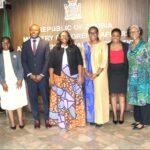


Honourable Museba Frank Tayali, MP, Minister of Transport and Logistics of the Republic of Zambia, made an official visit to the Southern African Development Community (SADC) Secretariat Headquarters in Gaborone, Botswana, on 22 January 2026. During the visit, he signed the North–South Corridor Memorandum of Understanding (MoU) and the Beira Development Corridor Agreement, key initiatives for regional transport and trade.
Minister Tayali was welcomed by Ms. Duduzile Simelane, Acting Deputy Executive Secretary for Regional Integration, alongside senior officials from the SADC Secretariat. The agreements target the development of strategic corridors that will enhance the movement of goods, promote intra-regional and international trade, and transform transport routes into smart economic corridors. These projects are expected to drive industrialisation, create jobs, and stimulate sustainable economic growth across the SADC region.
The Minister emphasized that these corridors are more than transport routes; they are catalysts for regional value chains, industrial development, inclusive growth, and trade facilitation. He reaffirmed Zambia’s commitment to the objectives of the North–South Corridor and expressed the country’s interest in hosting the North–South Corridor Management Institution once it is established. Minister Tayali also highlighted Zambia’s ongoing investments in transport and logistics infrastructure, including road and rail networks, inland dry ports, and one-stop border posts, which provide a strong foundation for enhanced regional connectivity.
Acting Deputy Executive Secretary Ms. Simelane commended Zambia for its dedication to corridor development. She emphasized the North–South Corridor as a critical driver of regional infrastructure, noting that improved accessibility and mobility are essential for economic growth. Once fully implemented, the North–South Economic Corridor is expected to transform the region by enhancing trade efficiency and supporting integration initiatives.
The North–South Corridor links seven SADC Member States and eight regional corridors. It accounts for approximately 60 percent of regional trade by volume and directly serves nearly half of the SADC population, with long-term benefits expected for all member countries. The Beira Development Corridor complements this by connecting the Lobito Corridor, enabling port-to-port access between the Indian Ocean at the Port of Beira and the Atlantic Ocean at the Port of Lobito. Together, these corridors will improve the efficiency of goods and people movement, enhancing regional trade competitiveness.
Minister Tayali was accompanied by Zambia’s High Commissioner to Botswana, Her Excellency Ambassador Pamela M. Chisanga; Mrs. Irene Tembo, Acting Director for Planning and Monitoring in the Ministry of Transport and Logistics; and Ms. Antonina Chisanga, Principal Legal Counsel. SADC officials accompanying Acting Deputy Executive Secretary Simelane included Dr. George Ah-Thew, Acting Director of Infrastructure, and Ms. Chikondi Nsusa, Senior Programme Officer for Transport.
These agreements reflect Zambia’s commitment to regional cooperation and economic integration within the SADC framework, marking a significant step in strengthening transport and trade networks across southern Africa.